
Livraison le jour même ou le lendemain

Qualité garantie

Débloquez vos offres de bienvenue: Livraison GRATUITE | Jusqu'à -80 % | 30 jours d'essai gratuits à JoyPlus
Téléchargez l'application
With remote work becoming the norm and long hours spent in front of a screen, our relationship with the workspace has been completely transformed. Sitting for hours on end has consequences: tension, pain, and general discomfort, with the back bearing the brunt. In this context, the ergonomic office chair is no longer a luxury but a crucial investment in your health and productivity.
Faced with a plethora of options, it's hard to know where to start. This guide is here to provide clear benchmarks and practical advice to help you find the comfortable office chair that's right for you, free from marketing jargon.
Before diving into our top picks, let's review the essential criteria for making the right choice.
An excellent ergonomic office seat must adapt to your body shape, not the other way around. That's the golden rule. Here are the must-have adjustments:
The upholstery of your chair plays a major role in your comfort, especially after several hours.
The base and casters ensure your chair's stability and mobility. A five-star base (made of metal or reinforced nylon) is the standard for optimal weight distribution. The gas lift, which controls the height, must be certified to meet safety standards. Finally, choose casters suited to your flooring (hardwood or carpet) to protect your floors and move silently.
As a product expert for Joybuy, I've sifted through dozens of models to bring you a balanced selection that meets different needs and budgets.
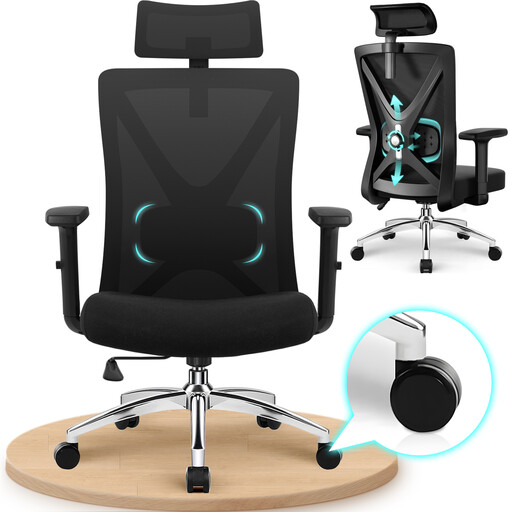
Why we love it: This model stands out for its exceptional level of customisation. The lumbar support is adjustable in height (6 cm) and depth (3 cm)—a rare feature at this price point, offering surgical precision.
Advantages:
Who is it for? For demanding professionals, whether working from home or in the office, who want a tailor-made chair to actively relieve back tension.
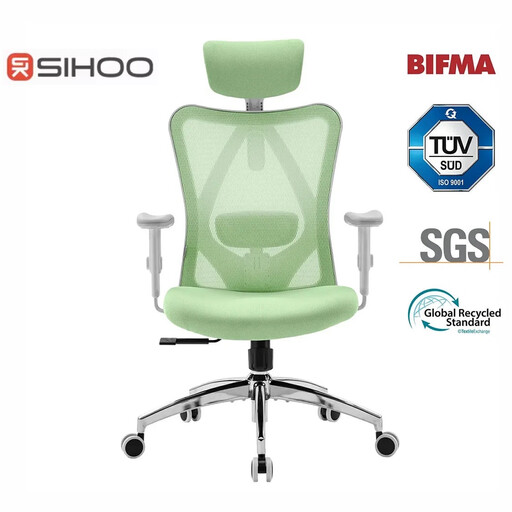
Why we love it: The Sihoo M18 is designed around full-body support (head, back, hips, arms). Its BIFMA certification is a guarantee of safety and durability, validated by rigorous testing. The Morandi Green colour adds a welcome touch of style.
Advantages:
Who is it for? For those between 1.67 m and 1.88 m (5'6" to 6'2") looking for a versatile and reliable adjustable office chair for both work and study.
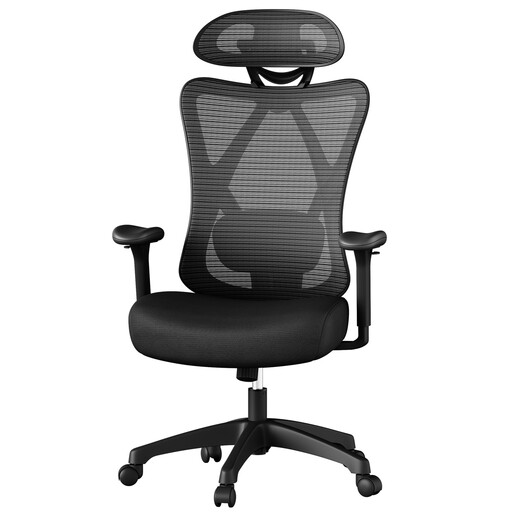
Why we love it: This Ochama model is the efficient choice. It offers an excellent balance between essential ergonomic features and a controlled price. It gets straight to the point, with no unnecessary frills.
Advantages:
Who is it for? Perfect for students and remote workers who want a reliable and comfortable office chair for long sessions, without any hassle.
None of these models caught your eye? Perhaps you're looking for a specific feature, like a high-performance adjustable headrest? A good headrest is essential for relieving neck strain, especially during breaks or moments of reflection.
? Discover our complete collection of chairs with adjustable headrests to find the model that's right for you.
1. What is the difference between a standard office chair and an ergonomic one? Simply put, a standard chair is a "one-size-fits-all" solution, whereas an ergonomic office chair is a "custom-fit" solution for your body. It adapts to you through its multiple adjustments (height, lumbar support, armrests, tilt) to promote a healthy posture, reduce pressure on the spine, and ensure long-lasting comfort.
2. How do you properly adjust an ergonomic office chair? First, set the seat height so your feet are flat on the floor and your knees are at a 90° angle. Next, adjust the depth to leave a gap of 2 to 3 fingers between the edge of the seat and the back of your knees. Position the lumbar support in the small of your back. Finish with the armrests: your forearms should rest on them with your shoulders completely relaxed.