
Livraison le jour même ou le lendemain

Qualité garantie

Débloquez vos offres de bienvenue: Livraison GRATUITE | Jusqu'à -80 % | 30 jours d'essai gratuits à JoyPlus
Téléchargez l'application
Whether you're working from home, in the middle of a long gaming session, or pulling an all-nighter studying, your back is under constant strain. Far from being a gimmick, an ergonomic office chair is a true investment in your health and productivity.
But with an overwhelming number of models on the market, how do you navigate the options? This guide is here to decode the marketing jargon and give you the keys to making an informed choice.
Before you dive in, let's review the features that truly make a difference. Here are the key characteristics to look for to find the comfortable office chair that's right for you.
A good adjustable office chair should adapt to your body, not the other way around. Look for the following adjustments:
Back pain is often the wake-up call that prompts a chair upgrade. An office chair with lumbar support is designed to follow the natural curve of your lower back. Whether it's fixed or, ideally, adjustable in height and depth, this feature is essential for maintaining good posture and preventing tension from building up over the hours.
Far from being mere accessories, armrests relieve tension in your shoulders and neck. To save space, an office chair with flip-up armrests is a smart solution, allowing it to slide effortlessly under your desk at the end of the day.
When it comes to materials, two main types dominate the market:
To put theory into practice, here are three models that caught our eye, each catering to different needs and budgets.
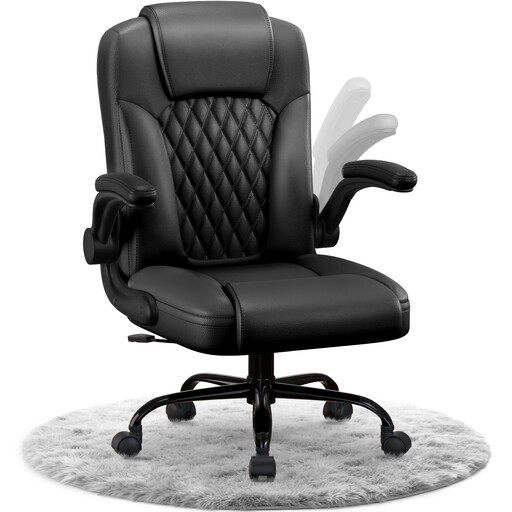
Why we love it: This chair combines the elegance of synthetic leather with a design built to last. Its high weight capacity and essential adjustments make it a sensible choice for heavy-duty use.
Key Features:
Who is it for? For those looking for a sturdy chair capable of supporting a higher weight, who also value the aesthetics and easy maintenance of synthetic leather.

Why we love it: The focus here is on full postural support, from the lower back to the neck, thanks to an S-shaped backrest, adjustable lumbar support, and a headrest. Its breathable mesh upholstery makes it the perfect ally for long remote work days, especially when the temperature rises.
Key Features:
Who is it for? The ideal choice for those who spend long hours in front of their screen and require impeccable postural support from the lumbar to the cervical spine, without sacrificing thermal comfort.
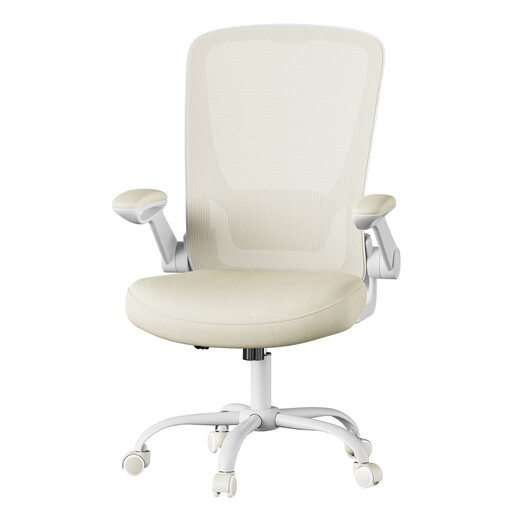
Why we love it: With its beige color and clean lines, this chair moves away from the traditional office look to bring a touch of softness and modernity to your home. It packs essential ergonomic features into a more compact and stylish design.
Key Features:
Who is it for? For those looking for a swivel office chair that is as beautiful as it is comfortable, and who refuse to sacrifice their home decor for the sake of ergonomics.
A good chair is the first step. But for a truly ergonomic workstation, you need to think bigger. The height of your desk, for example, is just as crucial for preventing strain in your arms and shoulders.
To take it a step further and create a dynamic workspace, a sit-stand desk is the perfect complement. It allows you to easily alternate between sitting and standing, a practice highly recommended by physical therapists to combat a sedentary lifestyle.
? Discover our selection of folding and height-adjustable desks
Simply put, a standard chair is a "one-size-fits-all" seating solution, often with no adjustments. In contrast, an ergonomic office chair is a customizable tool. Its multiple adjustments (height, backrest, armrests, lumbar support) allow it to adapt to your body to promote good posture and prevent common musculoskeletal disorders (MSDs).
Here is a simple 3-step method:
Expect an adjustment period of a few days to a week. If your body has grown accustomed to poor posture, the active support of an ergonomic chair might feel unusual at first. That's a good sign! It means your body is readjusting to a healthier alignment.