Joybuy Insights

Ergonomic Office Chairs for Back Pain Relief: A Buyer’s Guide

Whether you're working from home or in the office, spending hours glued to a chair often leads to discomfort. Poor posture, back pain, neck strain... it's the perfect recipe for a drop in productivity. Investing in an ergonomic office chair isn't a luxury; it's a necessity for your well-being. The problem? The market is saturated with marketing promises that are often misleading. To avoid falling into the trap, here are the most common pitfalls to watch out for.

  • The "Fully Adjustable" Trap... in Theory: Many chairs promise an avalanche of adjustments. In reality, their range of motion is often so limited it's practically useless, or the mechanisms simply lack durability and give out after a few months.
  • The Illusion of Instant Comfort: Ultra-plush padding might feel appealing for the first few minutes. Be wary! It often hides a critical lack of structure and support. The result: after a few hours, your body slumps, and aches and pains start to creep in.
  • Materials Unsuited for Daily Use: Entry-level faux leather might look the part, but it lacks breathability and often ends up cracking and peeling within a few months. In contrast, a mesh office chair provides excellent ventilation—a real bonus during long workdays, especially in the summer.

The 3 Essential Criteria for a Smart Purchase

To ensure you don't regret your purchase, focus on the features that truly matter for your posture and comfort. Here are the three points to scrutinize.

1. Lumbar Support: The Cornerstone of Your Back Health

When seated, the lower back takes the biggest hit. A good ergonomic office chair must absolutely offer lumbar support worthy of the name. There are several types:

  • Fixed Support: The curve is built into the backrest with no possible adjustment. This is a basic solution that will only work if its shape perfectly matches your body.
  • Height-Adjustable Support: This allows you to adjust the support's position to precisely fit the curve of your lower back. It's the bare minimum for regular use.
  • Depth-Adjustable (or 3D/Dynamic) Support: The gold standard. It allows you to adjust not only the height but also the pressure exerted against your back. Some models, like the SIHOO chair, go even further with support that dynamically adapts to your movements.

2. Adjustment Mechanisms: More Than Just Seat Height

A truly ergonomic chair adapts to you, not the other way around. Beyond basic seat height adjustment, check for the following features:

  • Seat Depth: Essential for properly supporting your thighs without the edge of the seat cutting off circulation behind your knees.
  • Adjustable Armrests: Ideally height-adjustable (1D), but 2D, 3D, or 4D models (which also adjust for depth and angle) are a real plus for relieving shoulder and neck strain. Flip-up armrests are also a clever feature for sliding the chair under a desk.
  • Tilt Mechanism: A simple tilting system is common, but a synchronous mechanism, where the seat and backrest tilt in concert, provides far superior support in all positions.

3. Choosing Your Material: Mesh, Fabric, or Leather?

The upholstery of your work-from-home chair directly impacts comfort, durability, and even maintenance.

  • Mesh: Ultra-breathable, the mesh office chair is the top choice for those who spend long hours seated, especially in the summer. It distributes pressure well, but be mindful of its quality: a low-end mesh will quickly lose its tension.
  • Fabric: Comfortable and available in a vast range of colours, it's the quintessential versatile option. Its Achilles' heel? It's more prone to stains and less breathable than mesh.
  • Leather or Faux Leather (PU): Valued for its premium look and ease of cleaning. Genuine leather is a durable but costly investment. Faux leather, which is more affordable, is a risky bet: its quality varies dramatically, and entry-level versions age very poorly (cracking, premature wear).

Finally, an office chair with a headrest is an undeniable advantage if you suffer from neck tension, especially for relaxing or during moments of deep thought.

Ergonomic Office Chairs We Recommend

Because every user is unique, here is our selection of models for different needs and budgets to help you make a clear choice.
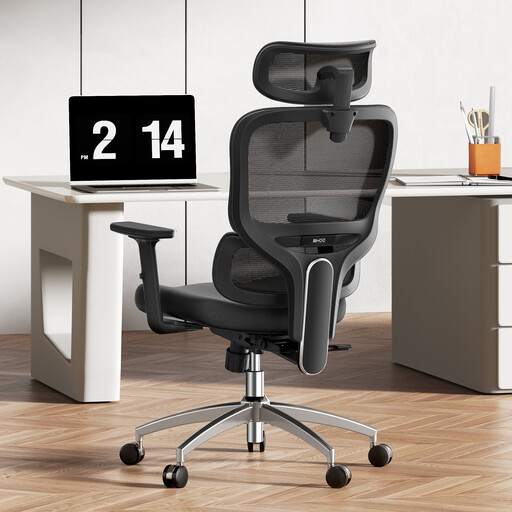
IDEAL FOR: LONG WORK-FROM-HOME DAYS
SIHOO Ergonomic Office Chair - Adjustable Desk Chair with 3D Dynamic Lumbar Support

SIHOO Ergonomic Office Chair - Adjustable Desk Chair with 3D Dynamic Lumbar Support

Why we recommend it: Perfect for intensive use, this SIHOO chair focuses on fine-tuned adjustments for tailor-made support. Its breathable mesh back and dynamic lumbar support make it the ideal companion for endless workdays.

How it avoids the pitfall

It avoids the gimmicky "fully adjustable" trap by offering truly effective 3D lumbar support and an adjustable headrest—features that make all the difference in daily use.

Its key feature

Its dynamic lumbar support, which adapts to your movements for constant support and active pressure reduction on your vertebrae.
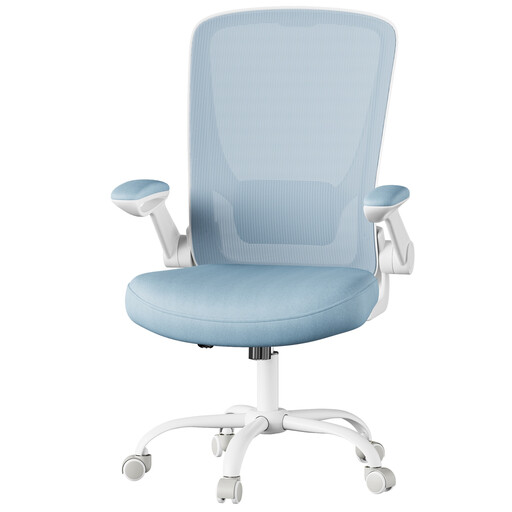
IDEAL FOR: SMALL SPACES AND TIGHT BUDGETS
JOYFURNOS Mesh Office Chair, Ergonomic Swivel Chair, Flip-up Armrests

JOYFURNOS Mesh Office Chair, Ergonomic Swivel Chair, Flip-up Armrests

Why we recommend it: Perfect for a first-time setup or a home office where every inch counts. It delivers the ergonomic essentials (curved backrest, adjustable height) and adds a very clever feature: flip-up armrests for optimised storage.

How it avoids the pitfall

This model doesn't overpromise with dozens of adjustments. It focuses on the essentials: good basic support and a smart space-saving solution. An honest and pragmatic choice.

Its key feature

Its flip-up armrests allow the chair to slide completely under the desk. An immediate space-saver, both visually and physically.
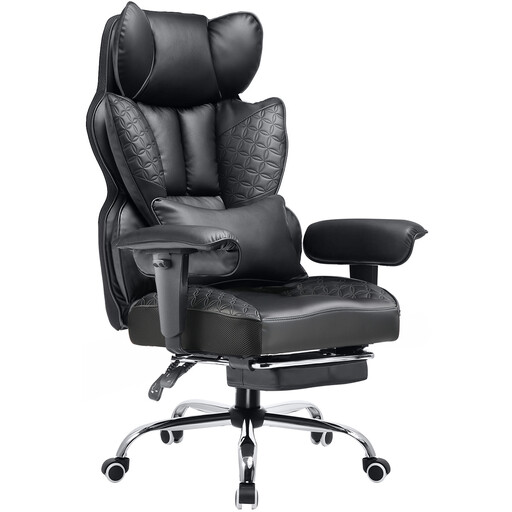
IDEAL FOR: FANS OF XXL COMFORT
GTPlayer Big and Tall Office Chair with Footrest

GTPlayer Big and Tall Office Chair with Footrest

Why we recommend it: This executive chair is built for absolute comfort. Its high back, generous PU leather upholstery, and retractable footrest create a true cocoon for working, as well as for taking a proper relaxing break.

How it avoids the pitfall

It avoids the "instant comfort" trap that lacks support by combining generous padding with a robust frame designed for heavy loads. The support remains reliable, even in a nearly reclined position.

Its key feature

The integrated footrest and generous recline instantly transform your workstation into a relaxation chair.

Need More Options?

Explore our full selection of products that meet our selection criteria and current safety standards.

Frequently Asked Questions (FAQ)

What is the lifespan of an ergonomic office chair?

It all depends on the quality of its components (gas lift, casters, mechanism) and materials. An entry-level model will hardly last more than 1 to 2 years. Conversely, a well-designed chair (steel frame, quality materials) can last for 5 to 10 years, or even longer. A good indicator is the length of the warranty offered by the manufacturer.

Is lumbar support really essential?

Yes, and it's non-negotiable for prolonged use. It helps maintain the natural "S" curve of the spine, thereby reducing pressure on the intervertebral discs and preventing lower back pain. Without this support, your back muscles are constantly working to maintain your posture, which inevitably leads to fatigue and muscle tightness.

How do I properly adjust my ergonomic office chair?

The simple 3-step method:

  1. Seat Height: Your feet should rest flat on the floor, with your knees bent at an approximately 90-degree angle.
  2. Seat Depth: You should be able to fit 2 to 3 fingers between the edge of the seat and the back of your knees.
  3. Lumbar Support: It should fit right into the small of your back to support it without pushing you forward. Meanwhile, your shoulders should remain in contact with the backrest.