
Livraison le jour même ou le lendemain

Qualité garantie

Débloquez vos offres de bienvenue: Livraison GRATUITE | Jusqu'à -80 % | 30 jours d'essai gratuits à JoyPlus
Téléchargez l'application
Spending hours at your desk, whether for remote work, studying, or gaming, takes a toll on our well-being. Poor posture is the start of trouble: back pain, waning concentration, and chronic fatigue. Yet, the market is saturated with models that promise the world. How can you distinguish a wise investment from a purchase you'll regret after just a few months?
The most common mistake is to trust vague marketing promises. Many chairs are labelled "ergonomic" without offering the essential adjustments, while others sacrifice material quality for the sake of design. The result: uncomfortable products with a limited lifespan. Our goal is to give you the keys to an informed choice, based on objective and verifiable criteria.
Before you decide, you first need to understand what separates a truly good ergonomic office chair from a basic seat. Beyond appearances, three technical criteria are non-negotiable to guarantee your comfort and the product's longevity.
Lumbar support is arguably the most crucial element. Its role is to maintain the natural curve of your lower back to prevent your posture from slumping and to avoid excessive pressure on your vertebrae.
The upholstery plays a key role in comfort and durability. A breathable mesh chair is often a favourite among those who spend hours at their desk. Mesh allows for excellent air circulation, which prevents overheating and sweat. Be careful, though: check that the mesh is high-quality, taut, and durable, otherwise it may sag over time. While fabric and leatherette can offer a more premium feel, they are generally less breathable and show signs of wear more quickly.
A truly ergonomic chair should adapt to you, not the other way around. Make sure you find at least the following adjustments:
Finally, certifications like BIFMA or SGS aren't just for show. They guarantee that the chair has passed rigorous tests for strength, stability, and durability. It's a guarantee of a reliable and safe product.
Because every user is unique, here is our selection of models that check all the right boxes for specific profiles and needs.
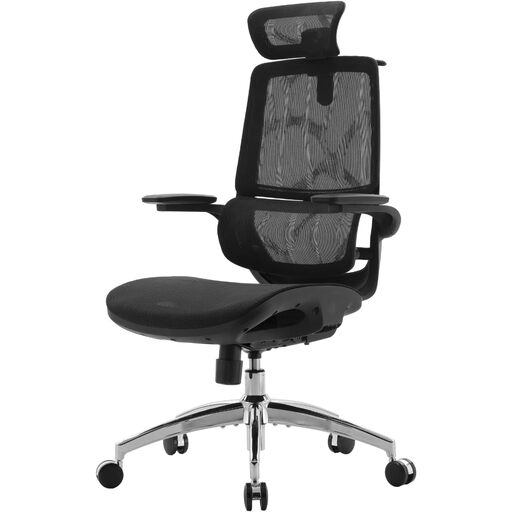
Perfect for a home office where every inch counts. This chair combines full ergonomics with a compact design, ideal for small spaces.
It goes beyond the "ergonomic" label. The proof: its dual backrest and adaptive lumbar support track your posture in real-time, complemented by synchronised 3D armrests.
The 80° flip-up armrests allow the chair to slide completely under the desk, a real space-saver. The BIFMA and SGS certifications are a guarantee of sturdiness.
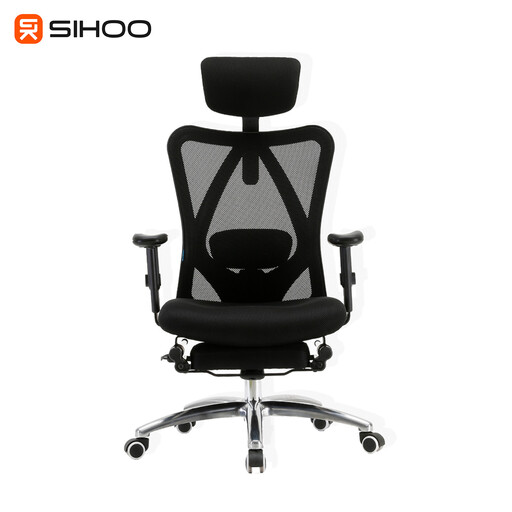
Ideal for those who spend endless days at their desk and are looking for a comfortable office chair that transforms into a relaxing cocoon for breaks.
This model doesn't sacrifice durability for comfort. It combines a breathable mesh backrest with a high-density foam seat that prevents the sagging typical of low-end models.
The adjustable footrest and high, reclining backrest turn this chair into a true haven of peace for breaks. The five adjustment zones allow for fine-tuned customisation.
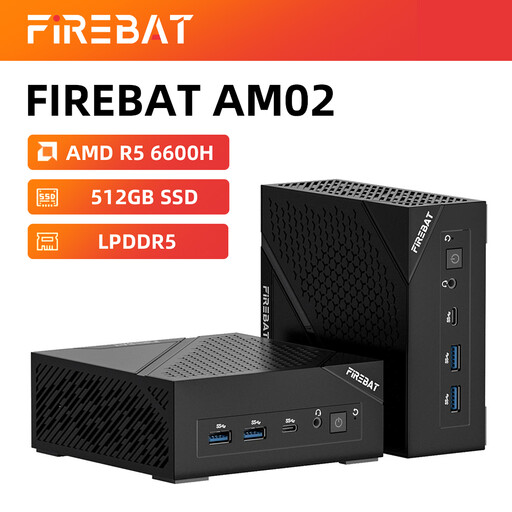
For those who view their home office setup as a complete system. Because ergonomics isn't just about the chair; it's about the entire environment. A mini office PC frees up crucial desk space, promoting better posture.
No more cluttered desks that force you into bad postures. By replacing a bulky PC tower, it clears the space needed for ideal positioning of your monitor, keyboard, and mouse.
Its specs are solid (AMD 6600H, 16GB LPDDR5) for intensive office work, multitasking, and even casual gaming, all in a format that fits in your hand. For connectivity, it's future-proof with WiFi 6 and a 2.5G Ethernet port.
Discover our full selection of products that meet our quality criteria and the most demanding safety standards.
A proper ergonomic chair must offer a full suite of adjustments to fit your body. The essentials are: seat height, armrest height and position, a backrest tilt mechanism, and an effective lumbar support (ideally adjustable or adaptive). The presence of certifications like BIFMA is also an excellent sign of quality.
A breathable mesh chair promotes air circulation, an undeniable advantage for staying cool during long hours, especially in hot weather. Fabric, on the other hand, often offers a warmer feel but retains more heat and can be trickier to maintain. Ultimately, it's a matter of personal preference and your tolerance for heat.
While an office chair is not a substitute for medical advice, a well-designed model plays a crucial preventive role. By providing adequate support, especially for the lumbar region, and encouraging a healthy posture (feet flat, back straight, forearms supported), an ergonomic chair drastically reduces strain on your spine and muscles. This can help alleviate, or even prevent, the pain typically caused by maintaining a poor posture for hours on end.