
Livraison le jour même ou le lendemain

Qualité garantie

Débloquez vos offres de bienvenue: Livraison GRATUITE | Jusqu'à -80 % | 30 jours d'essai gratuits à JoyPlus
Téléchargez l'application
Whether you're working from home or in the office, spending hours sitting down has become our daily reality. The downside? Discomfort and back pain, which are all too common. An ergonomic office chair is no longer a luxury, but an essential work tool.
The problem is, it's easy to get lost in the marketing jungle and end up with a disappointing model. Our mission: to help you decipher the spec sheets to make a truly informed choice. Here are the 3 pitfalls to avoid and the criteria that really matter.
Nothing is more frustrating than investing in an ergonomic chair that turns out to be uncomfortable after a few months. Here are the most common hidden flaws:
To avoid these disappointments, focus on a few technical features that are non-negotiable. They make all the difference between a gimmick and a real investment in your well-being.
The number one criterion for a good ergonomic chair with lumbar support is its adaptability. Forget fixed supports. Look for a system that is at least adjustable in height and depth. The best models go even further with dynamic or adaptive lumbar support: it follows the movements of your back throughout the day for constant, tailored support. This is a crucial point for anyone prone to back pain.
A good adjustable office chair must offer armrests that can be adjusted on multiple axes. Here's what these terms mean:
These adjustments allow you to perfectly align your arms with your work surface, thereby relieving your shoulders and neck.
For heavy use, especially when working from home, the recline mechanism is a key feature. Opt for a synchronous mechanism: the seat and backrest tilt in sync, respecting your body's natural angle.
For those who like to take breaks or have a mixed-use setup (work and leisure), an office chair with an integrated footrest is an option to consider. It transforms a simple office chair into a true relaxation seat. This feature is also highly valued in an ergonomic gaming chair.
Because every user is unique, here is our selection of models that cater to specific profiles, all evaluated based on the quality criteria we've just outlined.
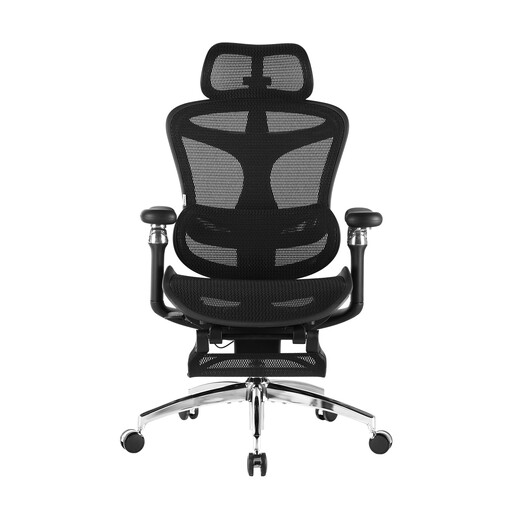
Why this model? For those who work 8-hour days (and longer), the ability to make micro-adjustments is vital. This model offers an extreme level of customization, built for intensive use.
Its dynamic lumbar support follows your movements, unlike rigid and ineffective supports. The 6D armrests ensure perfect support for every task, eliminating the shoulder strain caused by fixed armrests.
The combination of ultra-soft 6D armrests and dynamic support provides tailored comfort, designed to go the distance during long workdays.
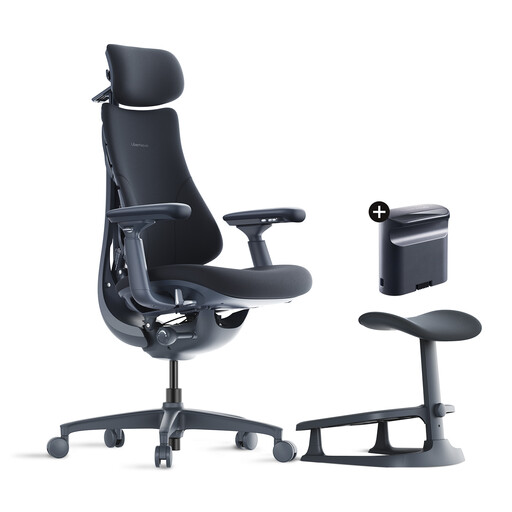
Why this model? Perfect for the home office, where the chair is used for work as well as for breaks, or even a Netflix session. A true chameleon, stylish and versatile.
Its integrated footrest and generous 160° recline allow for a true relaxation posture, light-years away from the simple tilt of entry-level chairs.
The combo of adaptive lumbar support for work and an integrated footrest for relaxation makes it an incredibly effective two-in-one solution.
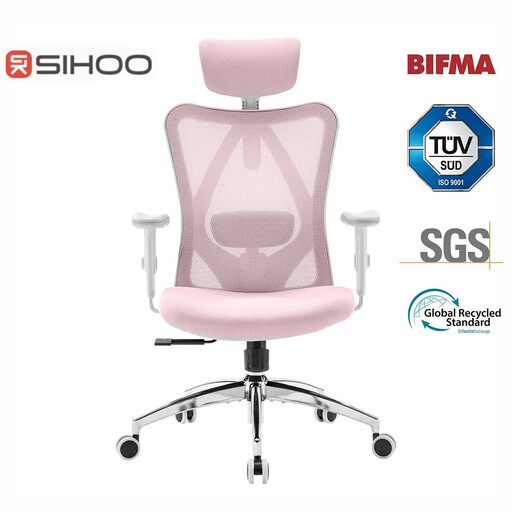
Why this model? For students or remote workers looking for reliable ergonomic support without breaking the bank on complex features.
It includes a truly adjustable lumbar support and headrest, allowing it to escape the "one-size-fits-all" trap of basic chairs. Its mesh is built to last.
It focuses on the essential ergonomic adjustments (lumbar, headrest, height) to offer excellent long-term value for money.
We have selected a full range of products that meet our selection criteria and current safety standards.
The lifespan of an ergonomic office chair depends on the quality of its materials. A metal frame, a certified gas lift (e.g., BIFMA), and high-density mesh or fabric are indicators of durability. On average, a good quality model can last between 5 and 10 years with normal use. The manufacturer's warranty is also an excellent indicator of the confidence they have in their product.
The choice of upholstery is a matter of preference and use:
A proper adjustment is just as crucial as the quality of the chair. Here are the basics: