
Livraison le jour même ou le lendemain

Qualité garantie

Débloquez vos offres de bienvenue: Livraison GRATUITE | Jusqu'à -80 % | 30 jours d'essai gratuits à JoyPlus
Téléchargez l'application
With the widespread adoption of remote work and home study spaces, our interiors have been transformed. A kitchen chair might work for a few hours, but after a full day, your back, shoulders, and neck will quickly make their presence felt. Investing in an ergonomic office chair is no longer a luxury, but a necessity for protecting your back, comfort, and concentration.
Faced with an overwhelming number of options, it's easy to get lost. This guide is here to provide you with clear benchmarks and practical advice. The goal: to help you find the perfect seat for your needs and your space, cutting through the marketing jargon.
Before comparing models, let's review the criteria that truly make a difference. Here are the key points to check to make the right choice.
A good office chair should adapt to your body, not the other way around. It all comes down to a few fundamental adjustments:
Comfort is also a matter of feel and aesthetics. The chair's upholstery plays a key role in both comfort and durability:
The design of the office chair is no longer a minor detail. It's an integral part of your decor. Whether it's a sleek, professional style or a cosier armchair, the important thing is that it blends harmoniously into your room.
Consider the space you have available. A large executive chair may seem appealing, but will it be functional in a student's room? Take your measurements! Check the available space under your desk (height and width) to ensure the chair, with or without armrests, will slide under it smoothly. Also, think about the casters: they should be suitable for your flooring (hardwood, carpet, tile) to prevent scratches and ensure smooth movement.
To move from theory to practice, here is our selection of three models with distinct profiles, combining functionality, comfort, and style.
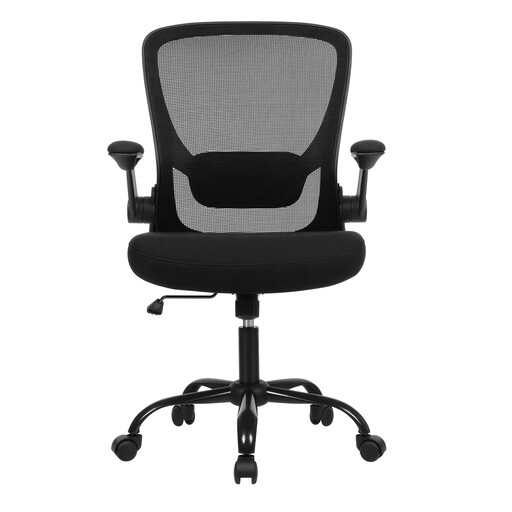
Why it stands out: This model is the archetype of a great chair for remote work. It checks all the boxes of modern ergonomics: a curved backrest, adjustable lumbar support, and flip-up armrests. That last feature is a real bonus for optimising space after the workday is done.
Key Features:
Who is it for? The perfect choice for remote workers and students who spend long hours in front of their screens and are primarily seeking lasting comfort through precise adjustments.
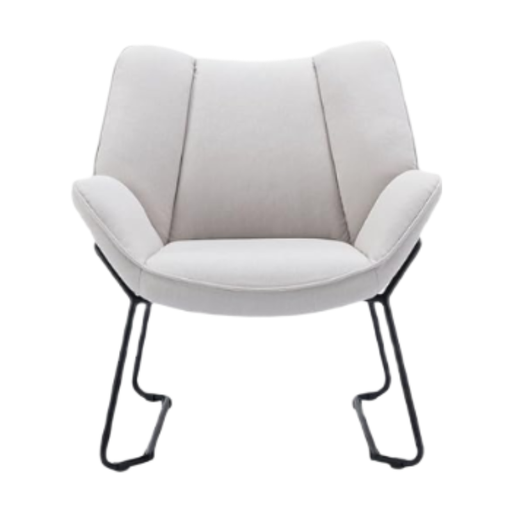
Why it stands out: Here is proof that an office chair can be synonymous with elegance. With its chenille fabric and black metal legs, it breaks the mould of traditional office furniture to find its place in a living room or bedroom. It's an excellent example of a designer office chair.
Key Features:
Who is it for? For those who want a stylish office nook in their living space and prioritise looks as much as comfort for occasional use.
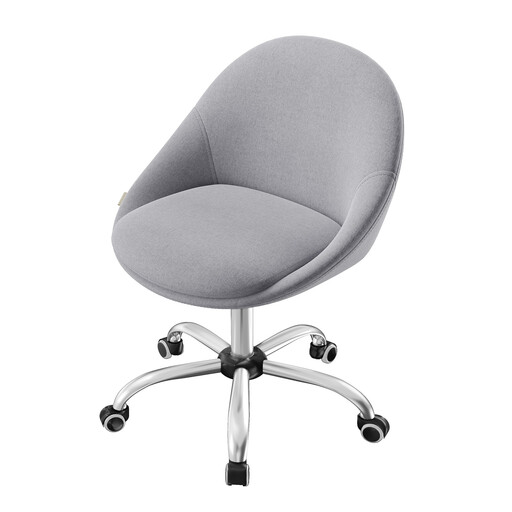
Why it stands out: Simplicity and versatility are the keywords here. Its compact design and lack of armrests make it the perfect solution for small spaces. It tucks completely under a desk or table, freeing up precious physical and visual space.
Key Features:
Who is it for? The ideal solution for students, small spaces, or anyone looking for a functional and stylish accent chair.
Does our selection not cover all your needs? If you're looking for a different style, other materials, or different shapes, the choice remains vast. A more plush armchair, for example, might be a better fit for your living room.
Discover our complete collection of upholstered armchairs to find that hidden gem that will elevate your interior.
1. Is lumbar support really necessary? For occasional use, you can do without it. However, for more than two hours a day in a seated position, it becomes essential. It helps maintain the natural curve of the spine, reducing pressure on the intervertebral discs and thus preventing lower back pain.
2. How do I properly adjust my office chair? Follow these three simple steps:
3. What is the average lifespan of an office chair? It all depends on the quality of the materials and your usage. Generally, a good quality office chair can last between 5 and 10 years. The tell-tale signs of wear include a gas lift that sinks on its own, flattened padding, or a mechanism that creaks with every movement.