
Livraison le jour même ou le lendemain

Qualité garantie

Débloquez vos offres de bienvenue: Livraison GRATUITE | Jusqu'à -80 % | 30 jours d'essai gratuits à JoyPlus
Téléchargez l'application
Remote work, marathon days at the office... our backs have never been under so much strain. The result: a poor chair has immediate consequences, leading to back pain, bad posture, and lost productivity. But with a jungle of options out there, how can you separate fact from fiction and distinguish marketing claims from real ergonomic benefits?
This guide is designed to bring you clarity. As product experts, our mission is to provide clear, objective advice to help you find THE ergonomic office chair that’s right for you—no fluff, just facts.
Before diving into our selection, let's review the key points to check to make an informed choice.
To protect your back, any office chair worthy of the name must offer impeccable lumbar support. There are two main types:
Good lumbar support is simply the key to preventing fatigue and tension in your lower back after hours of work.
An ergonomic chair only reveals its full potential when it is perfectly adjusted to your body. Check for the following adjustments:
The choice of materials directly impacts the comfort and lifespan of your chair. The breathable mesh office chair (or mesh) is particularly popular: it ensures excellent air circulation, which is ideal for staying cool.
To ensure you're investing in a sturdy and safe model, look for a BIFMA-certified or SGS-certified chair. These labels, awarded by independent organisations, guarantee that the product has undergone drastic strength and durability tests.
Here are a few models that caught our attention for their features and design, suitable for different uses and budgets.
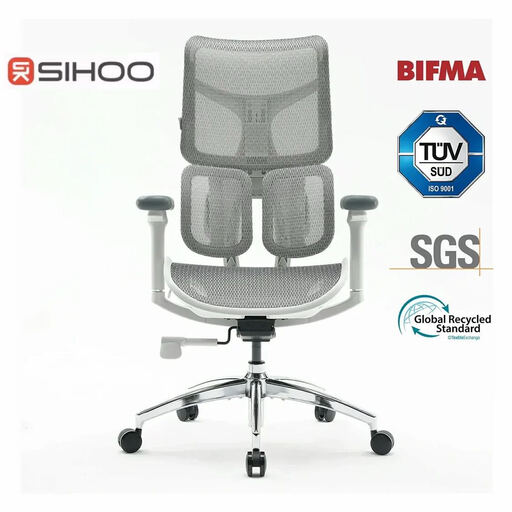
What Sets It Apart
The SIHOO Doro S100 plays in the big leagues. It's designed for those who demand comprehensive, ultra-personalised support. Its dynamic dual-spring lumbar support mechanism adapts to your posture in real time, providing enveloping support. Its modern, sleek design, especially the white office chair version, conceals advanced engineering.
Key Features
Who Is It For?
For remote work professionals and anyone who spends more than 8 hours a day seated and wants a high-end solution to actively prevent back pain.
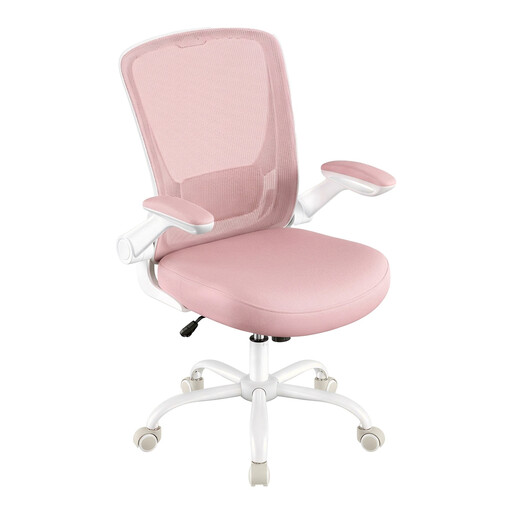
What Sets It Apart
This Ochama model gets straight to the point: simplicity and efficiency. It packs essential ergonomics into a compact, clean design. Its trump card for small spaces? Flip-up armrests that allow it to slide completely under a desk.
Key Features
Who Is It For?
For students, occasional remote workers, or anyone looking for a smart solution for an optimised workspace. It's a functional chair for remote work that meets fundamental needs without getting lost in complex adjustments.
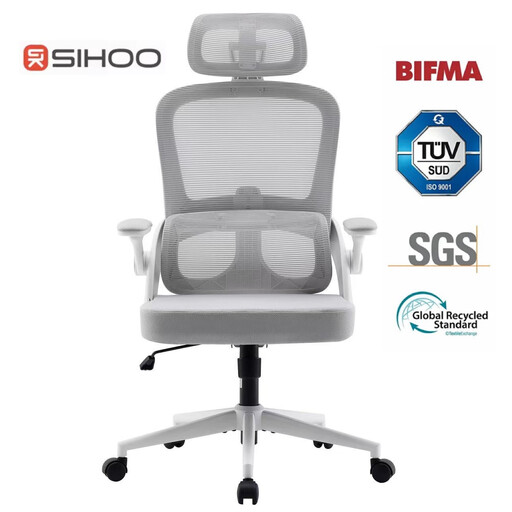
What Sets It Apart
The SIHOO M102C strikes the perfect balance between advanced features and a controlled price. It includes adjustments you'd expect to find on much more expensive models, like 3D adjustable armrests and independent lumbar support. A remarkably versatile and comfortable office chair.
Key Features
Who Is It For?
For a very broad audience, from office workers to gamers, who want an ultra-versatile, durable, and comfortable chair without breaking the bank.
Our selection is just a starting point, as choosing a chair is ultimately a personal decision. If the clean design of the white models has caught your eye, feel free to explore other options.
? See more white ergonomic office chair models
Sitting for hours in a bad chair is a surefire recipe for neck, shoulder, and lower back pain, not to mention the pressure it puts on your spine. An ergonomic chair, in contrast, is designed to conform to your body's shape, maintain a healthy posture, reduce muscle strain, and improve comfort. The result: better concentration and overall well-being.
Rule #1: seat height. Your feet should be flat on the floor with your knees bent at a 90° angle. Next, adjust the seat depth, then the lumbar support to fill the curve of your back. Finally, set the armrests so your shoulders are relaxed. Don't hesitate to experiment and fine-tune these settings during the first few days—it's essential!
It all depends on the quality of the materials and the intensity of use. An entry-level model might last 2 to 3 years, whereas a high-quality, BIFMA-certified chair can last for 5, 10, or even more years. Rely on certifications: they are the best indicator of durability, as they prove that key components (gas lift, casters, frame) have been tested to withstand intensive use.
By the Joybuy Product Expert Team