
Livraison le jour même ou le lendemain

Qualité garantie

Débloquez vos offres de bienvenue: Livraison GRATUITE | Jusqu'à -80 % | 30 jours d'essai gratuits à JoyPlus
Téléchargez l'application
The rise of remote work has turned our homes into offices, often putting a major strain on our backs. Let's be clear: the dining room chair isn't designed for an eight-hour workday. The solution seems obvious: investing in an ergonomic office chair. The problem is, the market is a marketing jungle where it's easy to be swayed by promises that lead to quick buyer's remorse.
As a product expert at Joybuy, my mission is to help you cut through the noise. I'll guide you through avoiding the common pitfalls and identifying the criteria that truly matter—for the sake of your back... and your wallet.
But before we dive into spec sheets, let's start with the classic mistakes that prove costly (for both your back and your wallet).
To avoid these disappointments, focus on the features that make a real difference. These are the objective criteria that separate a marketing gimmick from a true ally for your work.
A good ergonomic office chair must offer much more than a simple curved back. The non-negotiable feature: an office chair with adjustable lumbar support. Every spine is unique. Being able to adjust the height, and sometimes the depth, of this support allows it to fit perfectly into the small of your back. This guarantees perfect posture throughout the day. A fixed support is a bad idea in disguise that will only suit a small minority of people.
Far from being an afterthought, armrests are essential for relieving tension in the shoulders and neck. A chair with flip-up armrests proves to be particularly versatile. You can lower them to rest your arms while typing, then flip them up to slide the chair under your desk and save space. This is a major asset for a remote work office chair, where every square inch counts.
The material of your chair has a direct impact on your comfort over long hours.
Enough theory—let's get practical. Here is our selection, designed for different needs and budgets, applying the criteria we've just discussed.
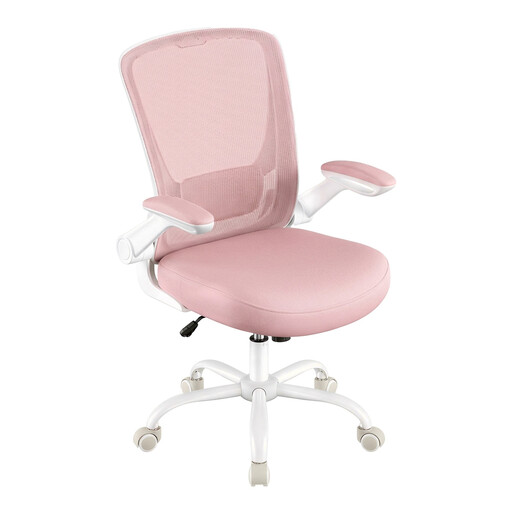
Why this model? Perfect for those who switch between tasks and want to optimize their space. The mesh back provides excellent ventilation, while the flip-up armrests allow you to store the chair in a flash.
This chair goes beyond the simple "ergonomic" label by offering real adjustments (height, lumbar) and genuinely useful armrests.
The versatility of the flip-up armrests and the breathable mesh back, perfect for heavy use.
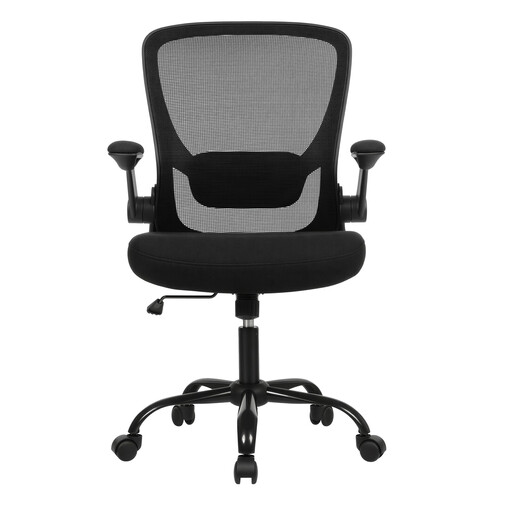
Why this model? Excellent for students or young professionals who want essential ergonomics without breaking the bank. Its versatile design and solid construction make it a smart first investment.
It focuses on the essentials (lumbar support, quality seat, flip-up armrests) and proves that an accessible price can come with real ergonomic features.
Unbeatable value for money that doesn't skip any of the essential ergonomic adjustments.
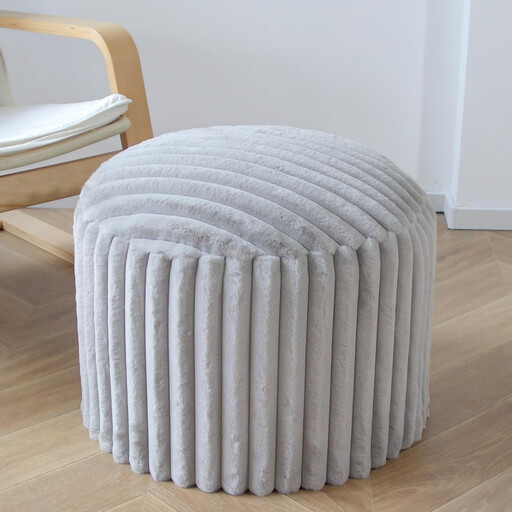
Why this accessory? It's the perfect complement for total ergonomics. Used as a footrest, it's a game-changer. Elevating your legs promotes blood circulation and relieves pressure on the lower back.
Instead of aiming for an overpriced chair with an often gimmicky built-in footrest, this external solution is more flexible, more stylish, and compatible with any seat.
Its versatility (footrest or extra seat) and softness bring a cozy and functional touch to the workspace.
Once you've chosen your chair, don't overlook the details that transform a simple office corner into a true wellness space. A simple accessory like a cozy faux fur cushion can add a touch of personality and comfort for break times.
To fine-tune your setup, discover our selection of accessories that combine style and well-being, all approved by our experts.
Start with the "90-degree rule." Your feet should be flat on the floor (or a footrest), forming a 90° angle at your knees. Your elbows should also form a 90° angle when your forearms are resting on the desk. Adjust the seat height accordingly. Finally, position your monitor at eye level so you don't have to look down or up.
The lifespan obviously depends on the quality of the materials and the intensity of your use. An entry-level model will show its limits (flattened foam, squeaky mechanism) after 2 to 3 years. Conversely, a well-made chair (metal base, sturdy casters, high-density foam) can easily last you 5 to 10 years, or even longer.
For occasional use, no. However, if you spend more than two hours a day sitting, the answer is a resounding yes. It helps maintain the natural curve of your spine, which prevents you from slouching and wards off the chronic pain and fatigue that result from it.