
Livraison le jour même ou le lendemain

Qualité garantie

Débloquez vos offres de bienvenue: Livraison GRATUITE | Jusqu'à -80 % | 30 jours d'essai gratuits à JoyPlus
Téléchargez l'application
Whether you're working from home or in the office, spending hours sitting down has become a part of our daily lives. The downside? Nagging back pain and persistent fatigue. Far from being a gimmick, an ergonomic office chair is an essential investment to protect your health and stay productive.
However, the market is flooded with confusing marketing promises. Many models labelled "ergonomic" are so in name only. As the Head of Product Recommendations at Joybuy, my role is to guide you through this jungle and help you make an informed choice—one that's tailored to your actual needs, not marketing hype.
Here are the 3 most common mistakes to avoid:
To avoid falling for the hype, focus on concrete features. Remember the golden rule: a good ergonomic work-from-home chair must adapt to you, not the other way around.
True ergonomics is all about adjustability. Prioritise an office chair that offers several independent adjustment points:
Long-term comfort is directly linked to the quality of the materials.
Safety and smooth movement depend on the lower part of the chair.
To help you make your choice, here are a few models that target different needs.

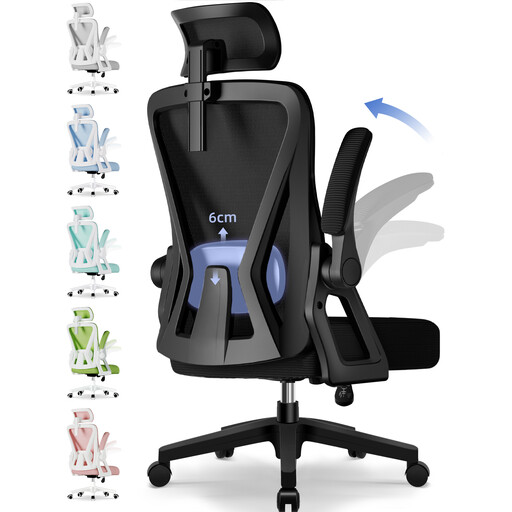
Why we recommend it: Perfect for those seeking essential ergonomics for full workdays, without breaking the bank on superfluous options. It checks all the boxes for comfortable remote work.
Unlike deceptively "stylish" chairs, it offers real adjustments: an adjustable lumbar support and a headrest. We're talking concrete customisation, not just a vague curved shape.
Its flip-up armrests are a real bonus: the chair slides under the desk in a flash. A valuable space-saver when working from home.
Why we recommend it: Designed for those who work long days of 8+ hours. Its sturdiness and wide recline range allow you to effortlessly switch between phases of concentration and relaxation breaks.
No more fear of the base giving out. With its 150 kg weight capacity and certified gas lift, it guarantees rock-solid stability, even under heavy use.
Its recline of up to 135° is not a gimmick. It allows for true back relaxation, ideal for stretching and releasing tension built up after hours of work.
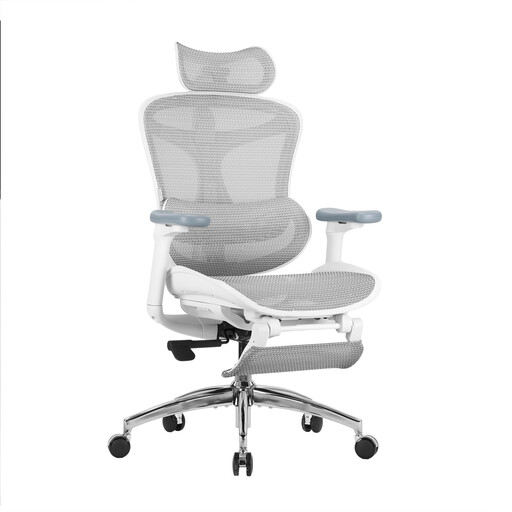
Why we recommend it: For the most demanding users and those prone to back pain. It offers support that follows your body's movements in real time, a far cry from classic static support.
This goes beyond a simple adjustable lumbar support. Its dynamic lumbar support continuously adapts to your posture. Gone is the single, fixed setting; the chair works with you.
Its ultra-soft 3D armrests and dynamic lumbar support provide tailor-made comfort that constantly adjusts to your body's micro-movements.
Explore our full selection of products that meet our strict selection criteria and current safety standards.
It all depends on the build quality and your usage. An entry-level model will last 2 to 3 years. In contrast, a well-made chair (metal base, certified gas lift, dense foam) will easily last you 5 to 7 years, or even longer. Proper maintenance (tightening screws, cleaning casters) will further extend its lifespan.
Sit all the way back in the chair with your back straight. Adjust the support's height so it fits perfectly into the small of your back (your natural curve). It shouldn't push you forward or leave a gap. If the depth is adjustable, set it to feel firm but comfortable support, without any unpleasant pressure points.
This is a matter of personal preference. The mesh backrest is the champion of breathability—a real plus for avoiding sweat, especially in the summer. It also conforms very well to the shape of your back. On the other hand, an upholstered backrest (fabric, leather, etc.) offers a cosier, more enveloping feel but retains more heat. So the choice comes down to ventilation (mesh) versus plush comfort (upholstered).