
Livraison le jour même ou le lendemain

Qualité garantie

Débloquez vos offres de bienvenue: Livraison GRATUITE | Jusqu'à -80 % | 30 jours d'essai gratuits à JoyPlus
Téléchargez l'application
Whether working from home or in the office, we spend more and more time sitting down. Prolonged poor posture takes a heavy toll: tension in the back, neck, and shoulders that undermines not only your well-being but also your productivity. An ergonomic office chair is no longer a luxury, but a true investment in your daily health and comfort.
But with an overwhelming number of options, how do you navigate the market? This guide is here to demystify the choices and give you the keys to selecting the perfect chair, without the unnecessary marketing jargon.
Before jumping into specific models, it's crucial to understand the criteria that truly make a difference. Here are the essential points to check to make an informed choice.
A good adjustable office chair should adapt to your body, not the other way around. Make sure it offers these fundamental adjustments:
Back pain is often the wake-up call that prompts the search for a new work-from-home chair. An office chair with lumbar support is designed to follow the natural curve of your spine. Some models offer fixed support, while others have a cushion that's adjustable in height and depth. This feature is a must-have if you spend more than four hours a day sitting.
The upholstery of your chair has a direct impact on comfort and ease of maintenance.
To put theory into practice, here are three models that caught our eye, each catering to a specific user profile and budget.
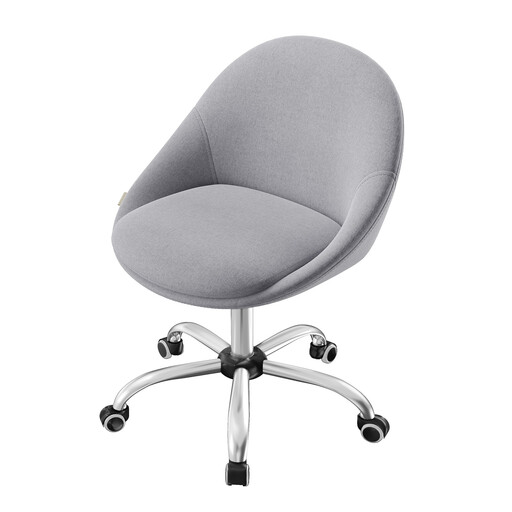
Why we love it: For its Scandinavian look and versatility. Its clean lines and cotton-linen upholstery make it as decorative as it is functional, perfect for small spaces.
Pros:
Who is it for?: Ideal for students, occasional remote work, or anyone looking for a compact and stylish solution without breaking the bank.
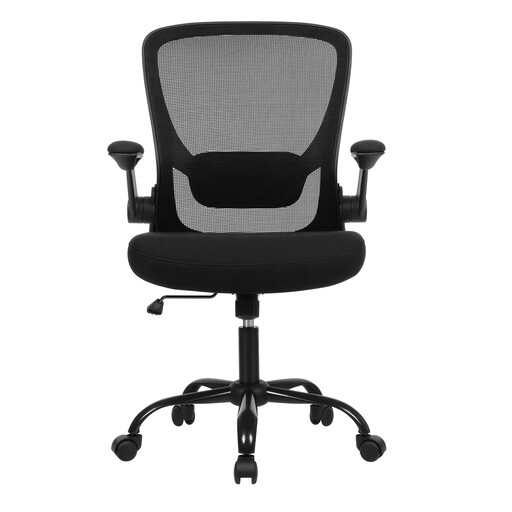
The balanced choice: This model checks all the boxes for a great entry-level ergonomic chair. It includes essential features like adjustable lumbar support and flip-up armrests, which are very practical for saving space.
Pros:
Who is it for?: The sensible choice for regular remote workers or office employees looking for a reliable and versatile chair that won't blow the budget.
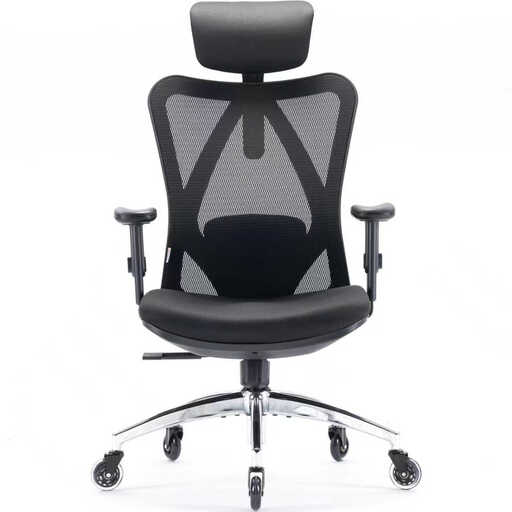
For demanding users: The Sihoo M18 plays in the big leagues with an arsenal of adjustments for tailor-made comfort. With its five adjustment zones, including an office chair with a headrest, it offers comprehensive support, and its BIFMA certification is a guarantee of durability.
Pros:
Who is it for?: For heavy users (8+ hours/day), gamers, and anyone who wants top-tier adjustability to prevent or relieve pain related to sitting posture.
Our selection is just a glimpse. If the comfort and elegance of fabric appeal to you, our full collection is sure to inspire.
Discover our complete collection of fabric chairs
1. What is the difference between a standard office chair and an ergonomic one? A standard chair offers basic comfort. An ergonomic office chair, on the other hand, is a tool designed to actively support your body. Thanks to its multiple adjustments (height, depth, lumbar, armrests), it adapts to your body shape to reduce the risk of musculoskeletal disorders (MSDs).
2. How long does it take to get used to an ergonomic chair? Allow a few days, or even a week. At first, an ergonomic seat might feel a bit firm because it encourages your body to adopt a better posture. This is the time it takes for your back to readjust! Take the time to test all the settings to find your ideal configuration.
3. Is a headrest essential on an office chair? Not necessarily. An office chair with a headrest is most useful if you like to lean back to relax or if you suffer from neck pain. For work in an upright or slightly forward-leaning position, it is often unnecessary.