
Livraison le jour même ou le lendemain

Qualité garantie

Débloquez vos offres de bienvenue: Livraison GRATUITE | Jusqu'à -80 % | 30 jours d'essai gratuits à JoyPlus
Téléchargez l'application
Whether you work from home or in the office, spending hours glued to your chair can quickly become a nightmare for your back. Far from being a luxury, an ergonomic office chair is a true investment in your daily health and comfort. Yet, faced with a jungle of options and marketing promises, making the right choice can feel like an uphill battle. As a product expert at Joybuy, my mission is to help you demystify this market. Let's forget the advertising jargon and focus on what really matters: here are the pitfalls to avoid and the objective criteria for finding the office seat that's made for you.
On paper or in photos, many models look perfect. But the reality is often less rosy after a few months of use. Here are the three essential points to watch out for to avoid regretting your purchase.
lumbar support. Don't be fooled: effective support must be adjustable in height and, ideally, in depth to perfectly match the curve of your spine. A simple fixed bulge is at best useless, at worst counterproductive, as it can force you into poor posture.office chair not only uncomfortable but downright harmful to your posture.To make an informed choice, set aside the marketing and analyse the technical features that directly impact your comfort and health.
A good office seat should adapt to you, not the other way around. Scrutinise the presence and range of the following adjustments:
back pain.swivel chair worthy of the name must offer a recline function. The gold standard? A "synchronous" mechanism (where the seat and backrest tilt in concert) with a multi-position tilt lock.The lifespan of your chair is directly linked to the quality of its components.
To illustrate these criteria in practice, here is our selection of models, each tailored to a specific profile and budget.
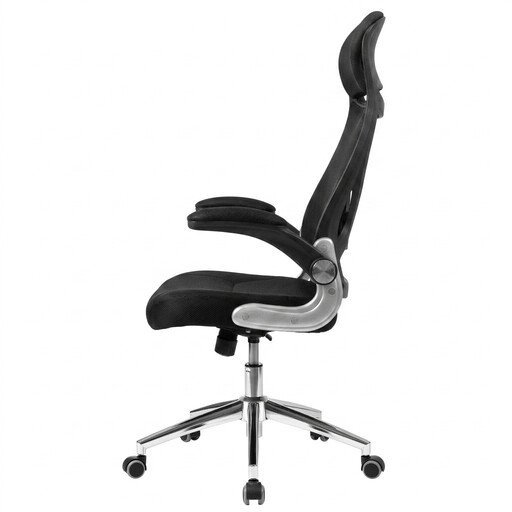
Why it stands out: Perfect for the home office where versatility is key. It checks the essential ergonomic boxes (headrest, recline function) while remaining practical for optimising space.
It avoids the "one-size-fits-all" pitfall thanks to its flip-up armrests, which accommodate more body types and make storage easier. The mention of dense foam is a good sign for durability.
The flip-up armrests are the key asset for small spaces. The presence of a headrest and integrated lumbar support offers welcome comfort for medium-length work sessions.
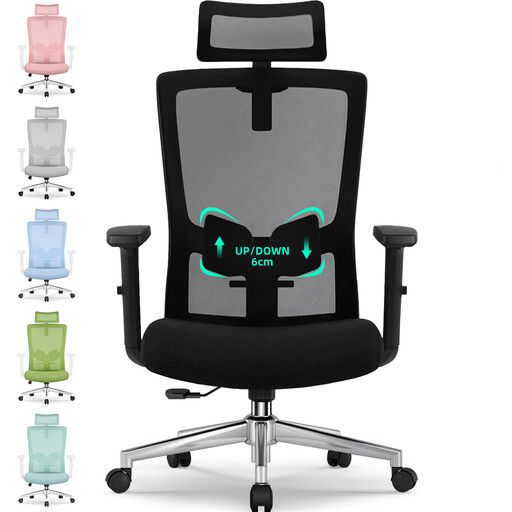
Why it stands out: Built for those who spend more than 8 hours a day sitting. The focus is on advanced customisation for tailor-made support, from the neck to the lower back, and rock-solid durability.
It tackles the "phantom lumbar support" pitfall head-on with a support that's adjustable by 6 cm. On the durability front, the BIFMA and SGS certifications for the gas lift and base are a seal of confidence, attesting to over 120,000 test cycles.
Its high level of adjustability: lumbar support, headrest (adjustable by 11 cm and tilts to 120°), and a backrest that reclines up to 135°. The certified components promise a safe and lasting investment.
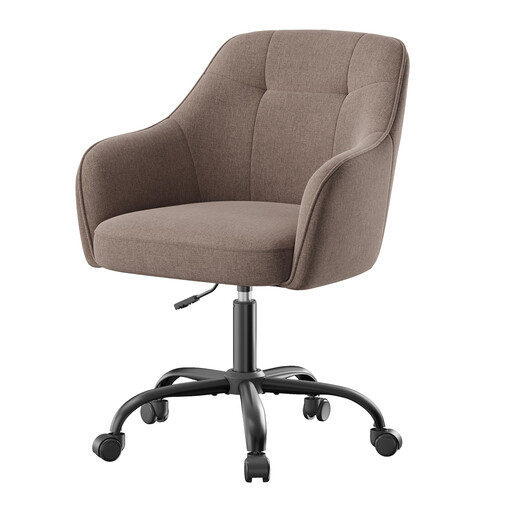
Why it stands out: Ideal for a student or a secondary office, where looks matter as much as basic comfort. Its modern design and soft-touch fabric blend harmoniously into a bedroom or living room.
This model has the merit of being honest: it doesn't oversell itself. It offers essential comfort (ergonomic backrest, decent padding) without pretending to be something it's not. Its niche: style and sufficient comfort for moderate use.
Its sleek design and pleasant fabric upholstery set it apart from more austere office chairs. Assembly is simple and quick, making it a practical and stylish solution.
We have curated a complete selection of products that meet our quality criteria and current safety standards.
The lifespan depends heavily on the quality of the materials and the intensity of your use. An entry-level model may show signs of wear (sagging foam, failing gas lift) in 1 to 2 years. In contrast, a chair with certified components (like BIFMA or SGS) and high-density foam can easily last between 5 and 10 years with regular maintenance.
For anyone sitting for more than two hours a day, proper lumbar support is essential. It helps maintain the natural curve of the lower back (the lumbar lordosis), which reduces pressure on the intervertebral discs and prevents fatigue and back pain. Adjustable support is always preferable, as it allows for precise positioning tailored to your body.
A few simple points to check: when seated, your feet should rest flat on the floor, with your knees at an approximately 90-degree angle. There should be a gap of 2 to 3 fingers between the edge of the seat and the back of your knees. Finally, the armrests, if adjustable, should allow your forearms to rest comfortably without shrugging your shoulders. Some manufacturers provide a recommended user height range, which is an excellent benchmark.