
Livraison le jour même ou le lendemain

Qualité garantie

Débloquez vos offres de bienvenue: Livraison GRATUITE | Jusqu'à -80 % | 30 jours d'essai gratuits à JoyPlus
Téléchargez l'application
With the widespread adoption of partial or full-time remote work, our homes have transformed into offices. Spending eight hours or more on an unsuitable dining chair or stool can quickly lead to back, neck, and shoulder pain. An ergonomic office chair is no longer a luxury, but an essential investment in your well-being and productivity.
With an overwhelming number of options on the market, it can be difficult to know where to start. This guide is here to demystify the market and help you choose the perfect chair for your needs, without getting lost in marketing jargon.
Before looking at specific models, it's crucial to understand the features that make all the difference. Let's review the essential criteria for making an informed decision.
An ergonomic chair should adapt to your body, not the other way around. Look for models that offer multiple adjustment points:
The upholstery of your chair has a direct impact on your comfort, especially during long workdays or on hot summer days.
A breathable mesh office chair is a very popular option. This material allows for excellent air circulation, preventing heat and sweat build-up. It also provides flexible support that conforms to the shape of your back. The seat, meanwhile, is often made of high-density foam to ensure long-lasting comfort without sagging over time.
Some chairs go the extra mile to enhance your experience. An office chair with a built-in footrest, for example, is a major plus for taking breaks or moments of reflection. It allows you to elevate your legs, reduce pressure, and fully relax without leaving your workstation. This is an increasingly sought-after feature for a versatile work-from-home chair.
To guide you, our editorial team has vetted several promising models. Here is our selection of chairs that stand out for their design and features.
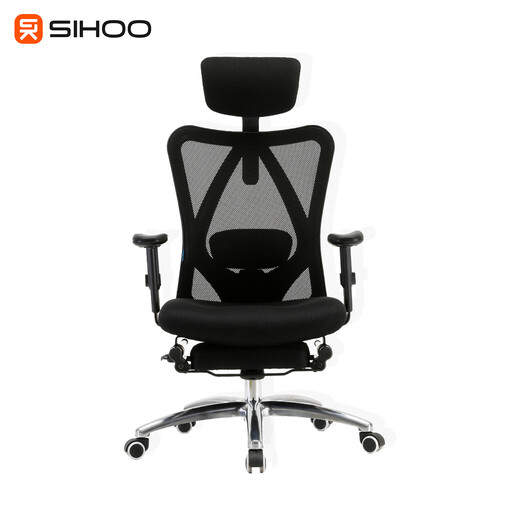
What sets it apart The Sihoo M18JT stands out with its comprehensive, comfort-focused feature set. It not only includes the five essential ergonomic adjustments (back support, headrest, height, tilt, armrests) but also adds an adjustable footrest. This feature makes it particularly suitable for long work sessions that require relaxing breaks.
Highlights
Who is it for? Remote professionals and heavy users looking for a comfortable and versatile office chair that allows them to both work and relax in the same space.
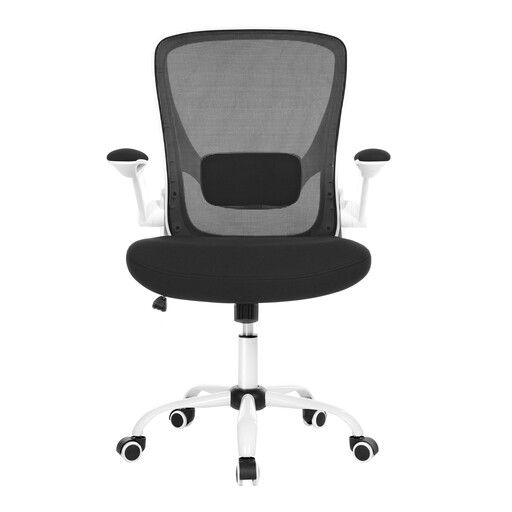
What sets it apart This Ochama chair addresses a very specific need: space optimisation. Its flip-up armrests allow it to slide completely under a desk, freeing up space in a student's room or a small home office. Its two-tone design also gives it a modern and versatile aesthetic.
Highlights
Who is it for? Students, people working in small spaces, or anyone who prioritises functionality and space-saving design without sacrificing basic ergonomic adjustments.
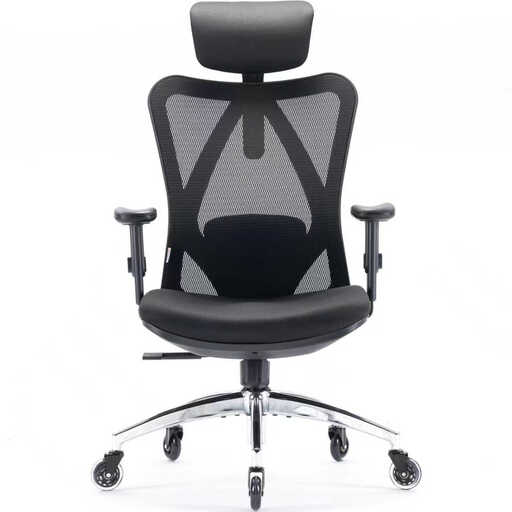
What sets it apart The Sihoo M18 is a reliable choice in the ergonomic chair market. It focuses on the essentials but delivers them with impeccable build quality. Equipped with the five fundamental ergonomic adjustments and upgraded, exceptionally quiet castors, it is designed for heavy, long-term use.
Highlights
Who is it for? Professionals and anyone looking for a reliable, robust, and fully adjustable office chair for daily, prolonged use, whether at home or in a corporate office.
If the understated style of our selection doesn't appeal to you, or if you simply want to explore other options, there's no shortage of choices. To brighten up your workspace, why not dare to choose a bolder colour?
Discover our selection of orange office chairs to combine comfort and design.
A standard office chair often offers only the bare minimum, with just a simple height adjustment. An ergonomic chair, in contrast, is designed to adapt to your body. It provides multiple adjustment points (lumbar support, armrests, seat depth, tilt, headrest) to maintain a healthy posture, reduce fatigue, and prevent musculoskeletal disorders (MSDs) associated with prolonged sitting.
Start with the seat height: your feet should be flat on the floor and your knees bent at a 90-degree angle. Next, adjust the lumbar support to fit the natural curve of your back. Set the armrest height so your shoulders are relaxed and your forearms are parallel to the desk. Finally, position the headrest to support your neck when you lean back.
An adjustment period of a few days to a week is completely normal. An ergonomic chair encourages correct posture, which may engage your muscles differently. If you were used to slouching, you might feel slight discomfort at first. This is often a sign that your body is realigning into a healthier posture.