
Livraison le jour même ou le lendemain

Qualité garantie

Débloquez vos offres de bienvenue: Livraison GRATUITE | Jusqu'à -80 % | 30 jours d'essai gratuits à JoyPlus
Téléchargez l'application
Remote work, freelancing, studying… Spending hours at a desk has become a daily reality for millions. We often focus on the computer, but forget that choosing an ergonomic office chair is just as crucial for protecting your back and maintaining focus. Yet, faced with the jungle of available models, it's easy to fall for marketing traps. This guide breaks down the essential criteria and debunks common myths to help you make the right choice.
The market is flooded with models making tempting promises. Before you decide, beware of these common mistakes that can cost you dearly in both comfort and health.
To make the right investment, focus on the features that truly matter for your posture and daily well-being.
This is the non-negotiable criterion. A good office chair with lumbar support isn't just a cushion placed at the lower back. Effective support must be adjustable in height, and ideally in depth, to perfectly match the natural curve of your spine. It prevents slouching and maintains a healthy posture throughout the day.
Seat height adjustment is fundamental. Your feet should rest flat on the floor, with your knees forming an angle of about 90 degrees. The backrest's tilt mechanism is just as important. A simple rocking mechanism is sufficient for occasional use, but for an intensive remote work chair, a synchronous mechanism, where the seat and backrest tilt in a coordinated manner, offers much more dynamic and natural support.
The choice of material impacts comfort, durability, and maintenance.
Rather than an endless list, here are targeted options for different user profiles to help you find the model that truly meets your needs.
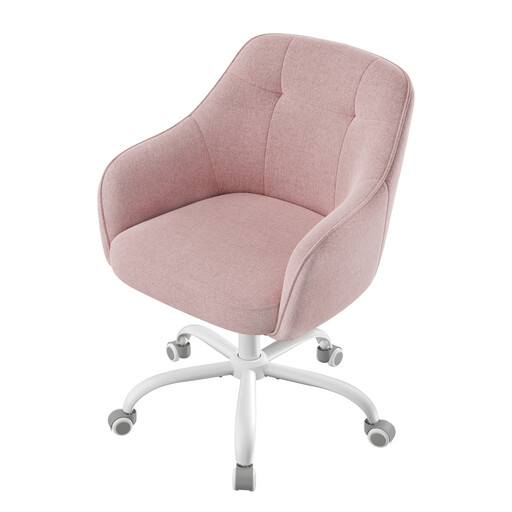
Our Take: Perfect for students or occasional remote work, this chair combines a refined aesthetic with essential comfort. Its modern design and soft color integrate beautifully into a bedroom or home office without overwhelming the space.
This chair doesn't pretend to be an ultra-technical workstation. It focuses on the essentials: good padding for a few hours of use, reliable height adjustment, and a solid base, thus avoiding the trap of unnecessary complexity.
Its fresh look and easy assembly make it a practical and stylish solution for quickly setting up a stylish and functional office nook.

Our Take: Designed for those who spend over 6 hours a day at their screen. It includes all the key adjustments for long-lasting support: a breathable mesh back, adjustable lumbar support, a headrest, and flip-up armrests for a welcome space-saving feature.
It avoids the "short-lived comfort" trap by relying on structural support built to last. The S-shaped backrest and adjustable lumbar support ensure correct posture, while the mesh prevents discomfort from heat.
Its fully adjustable ergonomics (height, tilt, lumbar, headrest) and flip-up armrests make it a true Swiss Army knife, as versatile as it is functional.
Explore our full selection of products that meet our quality criteria and current safety standards.
The lifespan of a chair depends on the quality of its components, its usage, and its maintenance. An entry-level model will show signs of wear after 1 to 2 years, whereas a well-designed and comfortable office chair can easily last between 5 and 10 years. The maximum static load capacity and the warranty period are excellent indicators of a model's durability.
For perfect posture, follow these few steps:
A headrest is not mandatory, especially if you tend to work with a straight back. However, a chair with a headrest becomes highly valuable if you like to lean back to think or take a call. It provides invaluable support for the neck and cervical spine, which helps release built-up tension in the shoulders and upper back.