
Livraison le jour même ou le lendemain

Qualité garantie

Débloquez vos offres de bienvenue: Livraison GRATUITE | Jusqu'à -80 % | 30 jours d'essai gratuits à JoyPlus
Téléchargez l'application
Whether you work from home or in the office, long hours of sitting often put a strain on your back. Far from being a luxury, an ergonomic office chair is a true investment in your daily health and well-being. But with the jungle of available models, it can be hard to know where to start.
This guide breaks down the essential selection criteria to help you choose the right chair for you, without the unnecessary marketing jargon.
Before you dive in, it's crucial to understand the features that make all the difference. Let's review the points you should never overlook for a successful purchase.
A good office chair with lumbar support is fundamental to maintaining the natural curve of your spine. Sitting for hours without proper support is the perfect recipe for causing or worsening back pain. Opt for models with lumbar support that is adjustable in height and, if possible, in depth. The goal is to precisely tailor the support to your body shape to reduce pressure on your lower back.
An ergonomic chair should adapt to you, not the other way around. The range of adjustments is therefore a major criterion. Here are the essential adjustments:
The upholstery of your chair has a direct impact on your comfort, especially after several hours of use. A mesh office chair is often praised for its breathability. It promotes air circulation, which is ideal for preventing overheating and sweating. High-density foam seats, on the other hand, offer excellent cushioning and ensure better durability. The final choice will depend on your preferences and the temperature of your remote work space.
To put theory into practice, we've selected three models that caught our attention for their specific features and design.
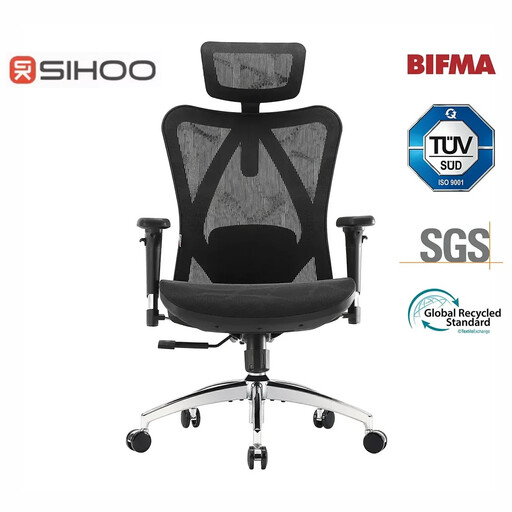
Why it stands out: The Sihoo M57S is an excellent all-rounder that checks all the ergonomic boxes. Its high backrest made of mesh provides full back support and perfect ventilation. The adjustable lumbar support and 3D armrests allow for precise adjustments, suitable for all body types and work postures.
Key features:
Who is it for? Ideal for professionals looking for a comprehensive, breathable, and fully adjustable chair to get through long work hours without discomfort.
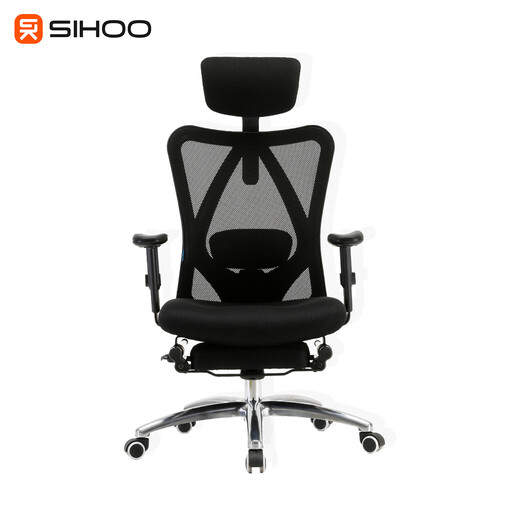
Why it stands out: The Sihoo M18JT takes comfort to the next level by integrating an adjustable footrest. This feature makes it an excellent reclining office chair, perfect for taking a real break or thinking in a relaxed state. In addition to its five ergonomic adjustments (backrest, headrest, height, tilt, armrests), it effectively relieves pressure on the legs.
Key features:
Who is it for? Perfect for those who are glued to their desks and want to be able to switch into total relaxation mode during their breaks without leaving their workstation.
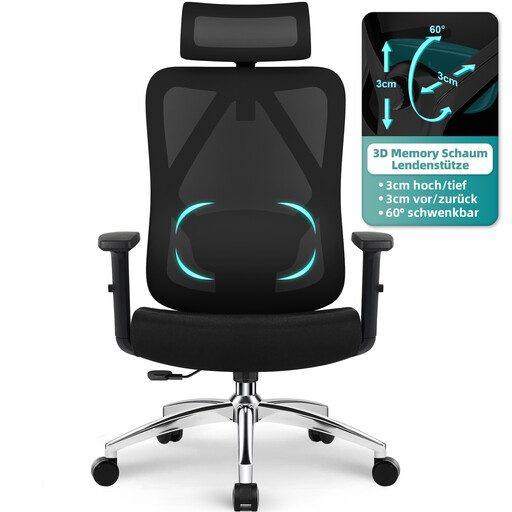
Why it stands out: This GTIMEX chair focuses on sophisticated lumbar support and heavy-duty robustness. Its 3D memory foam lumbar support is adjustable in height, depth, and rotation, ensuring constant, tailored contact with your lower back. Its maximum load capacity of 200 kg and its aluminium alloy base make it a particularly stable and durable choice.
Key features:
Who is it for? Recommended for larger individuals or those who demand the ultimate in lumbar support and a heavy-duty chair that guarantees safety and comfort.
Our selection highlights models with varied profiles, but the market is full of other hidden gems. If you want to explore more chairs designed for comfort and ventilation, feel free to browse our collection.
? Discover our full range of chairs with Breathable Lumbar Support to find your perfect match.
A standard office chair often provides only the bare minimum, with few or no adjustments. In contrast, an ergonomic office chair is designed to hug and support your body to maintain a healthy posture. It features multiple adjustments (height, lumbar support, armrests, tilt) to adapt to your body shape, which helps limit fatigue and prevent common MSDs (musculoskeletal disorders).
The lifespan of an ergonomic chair varies greatly depending on the quality of its materials, its construction, and your usage. A high-quality model with a metal or aluminium alloy base and certified components (like BIFMA) can easily last for 5 to 10 years, if not longer. Think of it as a long-term investment in your comfort and health.
For an optimal setup, here is the checklist to follow: