
Livraison le jour même ou le lendemain

Qualité garantie

Débloquez vos offres de bienvenue: Livraison GRATUITE | Jusqu'à -80 % | 30 jours d'essai gratuits à JoyPlus
Téléchargez l'application
Whether you're working from home or in the office, spending hours sitting in front of a screen has become a daily reality. This sedentary lifestyle, without the right equipment, comes at a high cost: back pain, fatigue, and decreased productivity. In this context, an ergonomic office chair with lumbar support is no longer a luxury, but a crucial investment in your health and comfort.
This guide breaks down the essential criteria and presents our selection of the best models available today—all without the unnecessary marketing jargon—to help you make an informed decision.
But before you jump on the first model you see, it's important to understand what separates a simple seat from a true ally for your back. Here are the points you should never overlook.
Support for the lumbar region (the lower back) is fundamental for maintaining a healthy posture and preventing fatigue. Entry-level models often feature just a simple curve in the backrest. More advanced options offer dynamic lumbar support, which adjusts in depth and height to perfectly match the natural curve of your spine. This is a decisive factor for anyone looking to put an end to back pain.
A comfortable office chair is one that adapts to you, not the other way around. Here are the adjustments you should look for:
The upholstery has a direct impact on comfort, especially when you spend hours in the chair. A breathable mesh finish is often favoured for its ability to promote air circulation—a major plus for preventing overheating and moisture build-up. Fabric and leather are other options, each with its own benefits in terms of feel and maintenance. As for the frame, it must be sturdy, with a steel or aluminium base to ensure stability.
Our editorial team has reviewed several models to bring you a selection that caters to various needs and budgets, from occasional remote work to intensive daily use.

Why it stands out: This model is an excellent starting point for anyone looking to improve their comfort without breaking the bank. It covers the ergonomic fundamentals: a curved backrest, adjustable lumbar support, and a headrest. Its clever feature? Flip-up armrests, perfect for sliding the chair under a desk to save space.
Key features:
Who is it for? Ideal for remote workers or students with limited space who need a versatile and functional work-from-home chair for daily use.
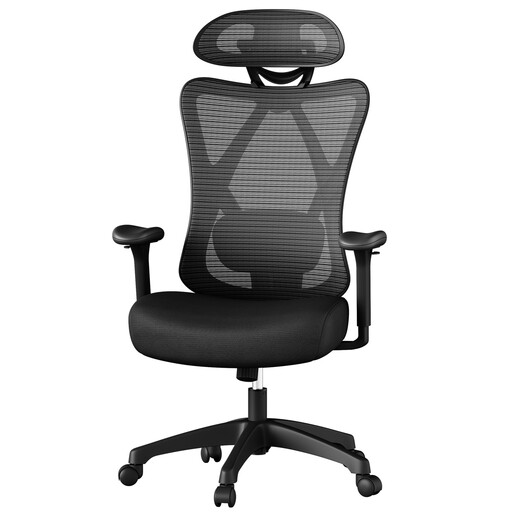
Why it stands out: This chair is a step up, offering a higher weight capacity (150 kg) and more extensive adjustments. The soft lumbar cushion adapts to the user's needs, while multiple backrest recline angles allow for an easy transition from a focused work posture to a relaxed position.
Key features:
Who is it for? A smart choice for larger body types or anyone who spends long hours in front of their screen and will appreciate its solid build and relaxation features.
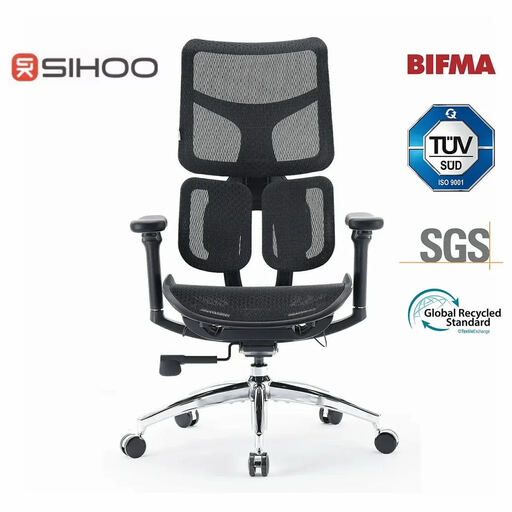
Why it stands out: The SIHOO Doro S100 is designed for those who refuse to compromise on ergonomics. Its major innovation is the dual dynamic lumbar support which, according to the manufacturer SIHOO, automatically adjusts across 6 axes for continuous back support. Paired with 4D armrests and an aluminium frame, it takes customisation and support to the next level.
Key features:
Who is it for? For professionals, gamers, and anyone who spends more than 8 hours a day seated. It's the ideal solution for those seeking a highly adjustable chair, optimal postural support, and a way to actively prevent back pain.
If the classic office chair aesthetic doesn't appeal to you, other options are available. Gaming chairs, for example, often feature a bolder design while still incorporating ergonomic features.
? Discover our selection of black gaming chairs to explore alternatives.
Adjustable lumbar support is crucial because every body is unique. It allows you to position the support precisely at the curve of your lower back, ensuring constant and effective contact. This helps maintain a neutral posture, reduces pressure on the intervertebral discs, and limits the risk of lower back pain.
An adjustment period of a few days to a week is common. If you were previously using a non-supportive chair, your body has likely developed poor postural habits. An ergonomic chair encourages you to sit up straight. At first, this may feel unusual or even slightly uncomfortable, but it's a sign that your postural muscles are re-engaging.