Spending hours at a desk, whether for remote work, studying, or gaming, can quickly become a nightmare for your back and neck. An ergonomic office chair is not a luxury, but a true investment in your health and productivity. Yet, faced with a saturated market and vague marketing claims, it's hard to navigate the options.
Before making a purchase, it's crucial to know how to avoid the most common pitfalls that can turn a promising buy into a costly regret.
- The 'gimmicky' lumbar support trap: Many chairs feature a lumbar cushion, but it's often fixed or poorly positioned. A true office chair with lumbar support must offer height and, ideally, depth adjustment to perfectly conform to your body shape.
- The illusion of immediate comfort: Thick padding or entry-level faux leather might feel comfortable for the first five minutes. But after a few hours, heat builds up, the foam compresses, and the support vanishes. The quality of the materials is what makes all the difference in the long run.
- The term 'ergonomic' used indiscriminately: The word is sometimes thrown around for chairs that lack essential adjustments. A genuine adjustable computer chair must allow you to fine-tune much more than just the seat height.
Key Criteria to Check Before Buying
To make an informed choice and avoid disappointment, focus on these objective technical features. They are the true guarantees of a comfortable office chair designed for heavy use.
1. Lumbar Support: Static or Dynamic?
Supporting the lumbar curve is fundamental to preventing back pain. This is where the real difference lies:
- Static support: This is often a fixed bulge in the backrest or a simple cushion. Its effectiveness is limited because it adapts neither to your posture nor to your size.
- Dynamic or adjustable support: This is THE feature to look for. It allows you to adjust the height and sometimes the prominence of the support so that it perfectly fits the curve of your lower back. This is what distinguishes a simple seat from a true work tool that cares for your posture.
2. Adjustment Mechanisms: Beyond Just Height
An ergonomic chair should adapt to you, not the other way around. Check for the following adjustments:
- Seat height: Essential for your feet to rest flat on the floor with your knees at an approximate 90° angle.
- Adjustable armrests: Ideally in height (2D), or even in depth and angle (3D or 4D). Properly adjusted armrests relieve tension in the shoulders and neck. Flip-up armrests are a significant advantage for optimising space.
- Tilt mechanism: A synchronous tilt mechanism, where the seat and backrest recline in a coordinated manner, is far superior to a simple centre-tilt. It promotes dynamic posture and better blood circulation.
3. Upholstery: Mesh, Fabric, or Faux Leather?
The choice of material has a direct impact on comfort, durability, and maintenance.
- Mesh back: This is the top choice for its breathability. Air circulates freely, a decisive advantage during long workdays or in the summer.
- Fabric upholstery: It often offers a softer and warmer feel. Ensure it is high-quality and treated for abrasion resistance for better longevity.
- Faux leather (PU): Easy to clean and often with a more "premium" look, it has an Achilles' heel: poor breathability. A good choice for moderate use or in a well-air-conditioned room.
Recommended Office Chair Picks
Instead of an endless list, we've matched leading models with user profiles to help you find the right fit.
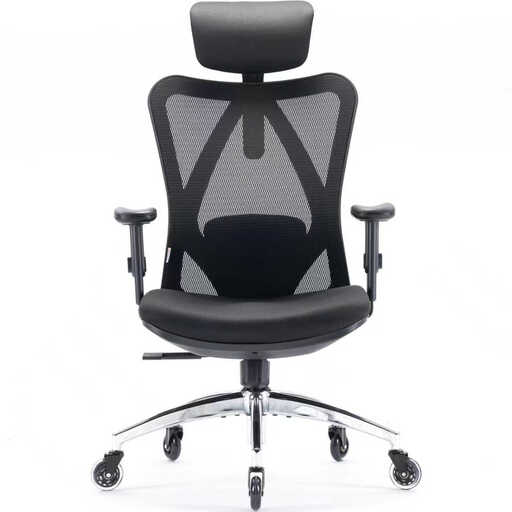
IDEAL FOR: THE INTENSIVE REMOTE WORKER
Why it's a match: Perfect as a daily remote work chair. This model focuses on extensive customisation to ensure comfort and support throughout an 8-hour workday and beyond.
How It Avoids the Pitfall
It goes beyond the simple "ergonomic" label by offering five distinct adjustment points (back support, headrest, height, tilt, armrests), ensuring a custom fit.
Key Advantage & Strengths
The breathable mesh back and W-shaped seat reduce pressure on the legs and promote air circulation: major assets for long work sessions.
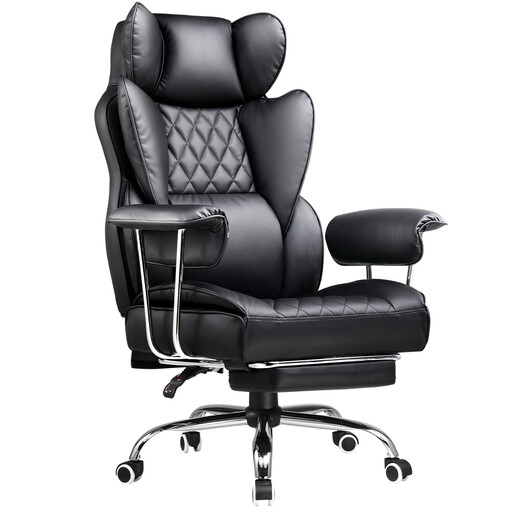
IDEAL FOR: THE VERSATILE GAMER
Why it's a match: This type of gaming chair is built for long sessions, alternating between focus and relaxation. The high back, deep recline, and footrest are perfect for gaming, but also for watching movies or simply unwinding.
How It Avoids the Pitfall
It doesn't just offer basic seating comfort. It integrates features dedicated to relaxation (footrest, near-flat recline) that address a need ignored by classic office chairs.
Key Advantage & Strengths
Versatility is its strong suit. It transforms from a functional work seat into a true relaxation chair thanks to its integrated footrest and wide recline range.
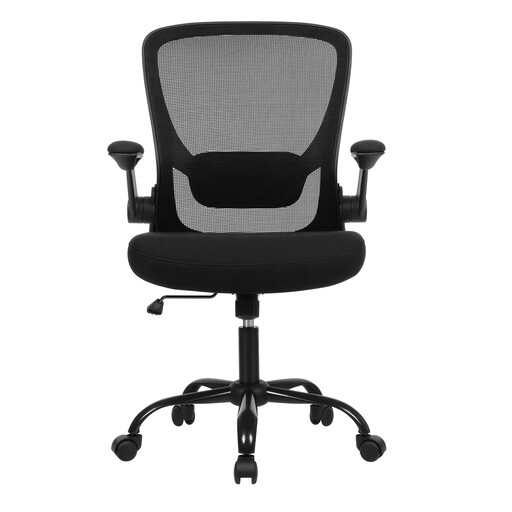
IDEAL FOR: SMALL SPACES & TIGHT BUDGETS
Why it's a match: Perfect for a home office where every square inch counts. It provides essential ergonomic adjustments without the frills, along with a clever storage solution.
How It Avoids the Pitfall
It doesn't sacrifice functionality for price. It includes adjustable lumbar support and flip-up armrests—practical features often missing from entry-level models.
Key Advantage & Strengths
Its flip-up armrests allow the chair to slide completely under the desk, a significant space-saver in a small room. The fabric upholstery provides a pleasant and comfortable feel.
Looking for other options?
We have compiled a complete and up-to-date selection of products that meet our strict selection criteria and current safety standards.
Frequently Asked Questions (FAQ)
How do you properly adjust your office chair to prevent back pain?
Here is a simple 3-step method:
- Adjust the seat height: Your feet should be flat on the floor, with your thighs parallel to the ground.
- Adjust the lumbar support: Position it in the small of your back to feel firm but comfortable support.
- Position the armrests: Your elbows should form a 90° angle, with your shoulders relaxed, when your hands are on the desk.
What is the average lifespan of an ergonomic office chair?
The lifespan depends on the quality of the components (mechanism, gas lift, casters) and the intensity of use. A well-maintained mid-range model can easily last between 5 and 7 years. The first elements to show signs of wear are usually the upholstery and the seat foam.
Should I choose a mesh or fabric backrest?
There is no single answer; it all depends on your preferences and your environment.
- Choose mesh if you tend to get hot or if your office has poor ventilation. It offers unparalleled airflow.
- Choose fabric if you prefer a softer feel and a warmer look. It is often perceived as cosier to the touch.