
Livraison le jour même ou le lendemain

Qualité garantie

Débloquez vos offres de bienvenue: Livraison GRATUITE | Jusqu'à -80 % | 30 jours d'essai gratuits à JoyPlus
Téléchargez l'application
Remote work has become widespread, and with it, long hours spent at a desk. Prolonged poor posture can quickly lead to back pain and chronic fatigue. Far from being a gimmick, an ergonomic office chair is a real investment in your health and productivity.
But with an overwhelming number of options and sometimes opaque marketing jargon, how do you make the right choice? Don't worry. We've broken down the essential criteria for you and selected models that stand out for their design and features. Follow our guide to find the chair that will change your daily life.
Before jumping on the first model you see, it's crucial to understand what makes a difference. Here are the key points to check to find the perfect comfortable office chair for your body type and usage.
A good ergonomic chair should adapt to your body, not the other way around. Its adjustment capabilities are therefore the number one criterion.
The upholstery of your chair plays a crucial role in your comfort, especially after several hours. The mesh back is particularly popular, and for good reason. It provides excellent ventilation, preventing overheating and sweating. Its flexibility allows it to perfectly conform to the shape of your back while ensuring firm support.
How can you be sure of a chair's sturdiness? Rely on certifications; they are a reliable indicator. The BIFMA (Business and Institutional Furniture Manufacturer's Association) standard is a benchmark that guarantees the product has undergone drastic tests for safety, durability, and performance. In Europe, the EN 1335 standard is its equivalent, attesting that the chair complies with safety and dimensional requirements for professional use.
We have selected several models that meet different needs and budgets, whether you're working from home, in the office, or even in the middle of a gaming session.
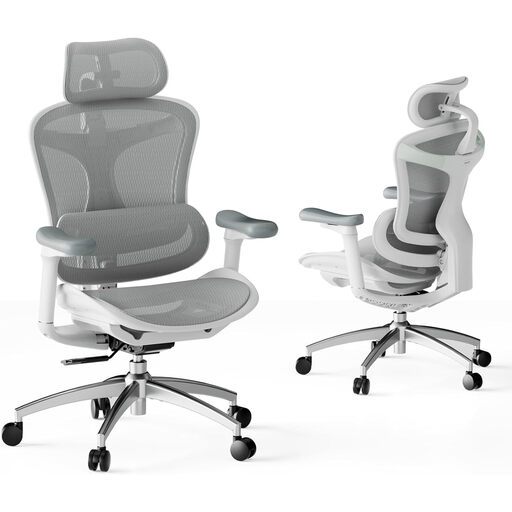
Why it stands out: The SIHOO Doro C300 is all about support that contours to your every move. Its dynamic lumbar support adjusts to your posture in real-time, providing constant support without you even thinking about it. Its intelligent, weight-sensitive mechanism manages the recline for truly relaxing breaks.
Benefits:
Who is it for? Ideal for professionals who spend long hours at their desk and demand active, uncompromising support throughout the day.
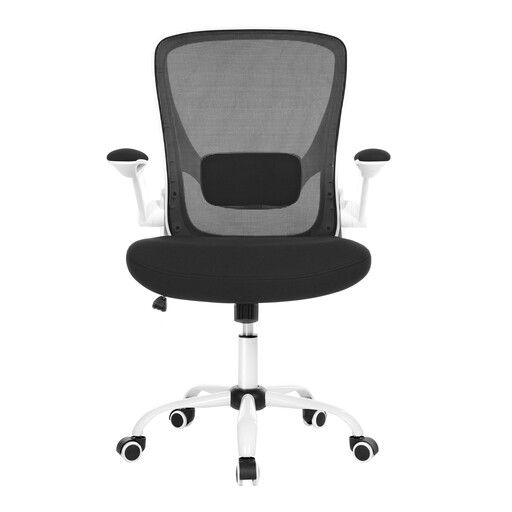
Why it stands out: This Ochama model gets straight to the point with impressive efficiency. Its main asset? Its flip-up armrests, an ultra-practical feature for small spaces. They allow the chair to be slid completely under the desk for maximum space-saving.
Benefits:
Who is it for? Perfect for students, occasional remote workers, or those with limited workspace. It's the smart, accessible solution to improve comfort without breaking the bank.
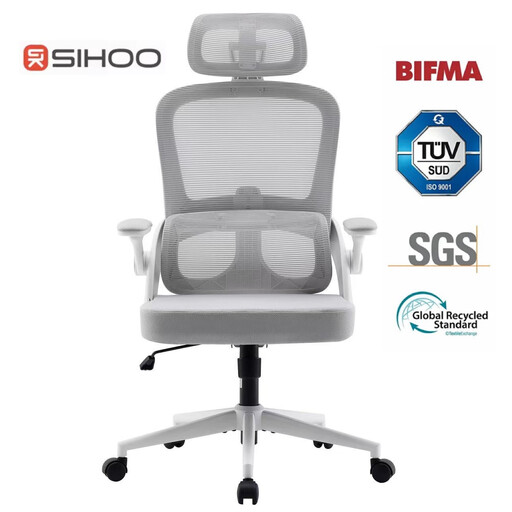
Why it stands out: The SIHOO M102C is the champion of compromise between comprehensive adjustments and an accessible price. Its independent, adjustable lumbar support, with a 6 cm range, allows for very precise adjustment in the lower back. Its wide seat is also a real bonus, suiting many body types.
Benefits:
Who is it for? An ultra-versatile choice that will suit the vast majority of users. We particularly recommend it for those looking for precise lumbar support or who appreciate a more generous seat.
If these models don't tick all your boxes, don't worry. Choosing a chair is a very personal decision: it depends on your body type, your habits, and your workspace.
We have a wider range of chairs designed to improve your posture and comfort. Explore other options, compare features, and find the one that's right for you.
Discover our entire collection of ergonomic chairs with lumbar support
Absolutely. An ergonomic chair is designed to support the body in a healthy, natural posture. By ensuring proper alignment of the spine, particularly with adjustable lumbar support, it reduces pressure on the intervertebral discs and eases muscle tension. It helps prevent the onset of pain or relieve existing discomfort, which is often caused by poor posture.
It all depends on the quality of the materials, the design, and your usage. An entry-level model will last 2 to 3 years, while a high-quality chair, often BIFMA certified, is designed to last 7 to 10 years, or even longer. A good indicator? The warranty period: 3 years or more is often a sign of the manufacturer's confidence in their product's durability.
Here are the key steps for an optimal basic setup: