Spending long hours at a desk, whether at home or in the office, can quickly become a nightmare for your back. An ergonomic office chair is no longer a luxury, but a crucial investment in your well-being and productivity. But with an overwhelming number of options, how do you separate fact from fiction and distinguish essential features from marketing jargon?
As product experts at Joybuy, our mission is to arm you with the right information. This guide gets straight to the point: breaking down the essential criteria and presenting a selection of chairs with a proven track record, for all needs and body types.
How to Choose the Right Ergonomic Office Chair
Before you fall for a particular model, let's go back to basics. What truly defines a good ergonomic chair? Here are the three pillars to examine closely.
1. The Importance of Adjustments: Lumbar Support and Armrests
A good chair is, first and foremost, a chair that adapts to you, not the other way around. Customisation is the cornerstone of ergonomics. Pay close attention to the following points:
- Lumbar support: Essential for matching the natural curve of your spine, it should be adjustable in height and depth to prevent the infamous "end-of-day pain." Some models offer adaptive lumbar support that follows your movements.
- Adjustable armrests: Whether they're 3D (height, forward/backward, pivot) or 4D (adding side-to-side adjustment), don't overlook them! They are essential for relieving tension in your shoulders and neck. Flip-up armrests are also a clever option for sliding the chair under your desk.
- Seat height and depth: An adjustable office chair should allow you to place your feet flat on the floor with your knees at a 90-degree angle.
2. Choosing Materials: Breathable Mesh or Dense Padding?
The upholstery isn't just about aesthetics; it determines your long-term comfort.
- A mesh office chair is the champion of breathability. Air circulates freely, a real bonus during long workdays or summer heatwaves. Quality mesh also provides flexible support and distributes pressure evenly.
- The seat, on the other hand, often benefits from high-density foam. Its purpose? To ensure lasting comfort without flattening after six months. The "waterfall" shape of the seat edge is designed to reduce pressure on the back of your thighs and improve blood circulation.
3. Game-Changing Features: Headrest, Footrest, and Recline
Often seen as gimmicks, these options can be a radical game-changer, especially for heavy use.
- A swivel chair with a headrest provides real support for the neck and head, perfect for micro-breaks or for leaning back to think.
- An office chair with a footrest is the holy grail of versatility. It transforms your workstation into a relaxation pod for a power nap or a moment of rest.
- The backrest recline mechanism, with the ability to lock in multiple positions, gives you the flexibility to change your posture throughout the day. A must-have to avoid staying in a fixed position.
Our Ergonomic Office Chair Selection
Let's get practical. Here are three models that caught our attention, each tailored to a specific user profile.
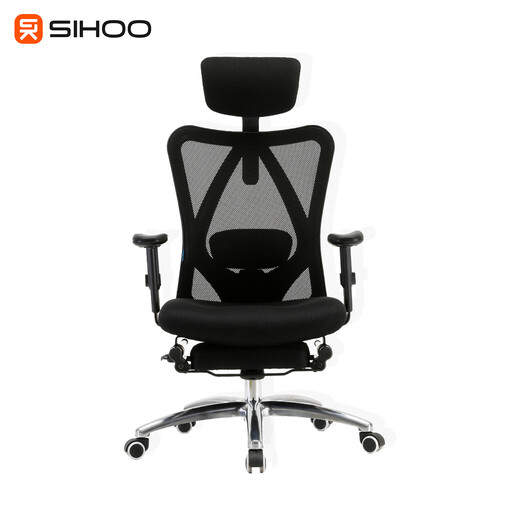
Why it stands out: This chair is the archetype of the ultra-complete model. It checks all the ergonomic boxes and adds a retractable footrest, making it as effective for working as it is for relaxing.
Key features:
- Multiple adjustments: Lumbar support, headrest, seat height, armrests, and recline—everything is adjustable.
- Breathable comfort: The breathable mesh backrest ensures excellent air circulation.
- Integrated footrest: Perfect for stretching or taking a break without leaving your desk.
- Robust design: The aluminium base and SGS & BIFMA certification attest to its sturdiness, supporting up to 150 kg.
Who is it for? Ideal for intensive remote work enthusiasts looking for an "all-in-one" chair that can adapt to long work sessions as well as truly restorative breaks.
See details for the Sihoo M18JT
Ochama Swivel Chair: The Essentials of Ergonomic Comfort

Why it stands out: This no-frills model gets straight to the point. It focuses on well-thought-out ergonomics and a smart design, with a major advantage for small spaces: its flip-up armrests.
Key features:
- Effective back support: The S-curved backrest with adjustable lumbar support promotes good posture.
- Comfortable seat: The 8 cm thick foam cushion and 53 cm wide seat reduce pressure on the hips.
- Flip-up armrests: A real plus for saving space and sliding the chair under any desk.
- Silent mobility: The casters are designed to be smooth and not scratch floors.
Who is it for? Perfect for students or for a home office setup. It's the sensible choice: a reliable and clever computer chair with lumbar support, without breaking the bank.
Discover the Ochama Swivel Chair
SIHOO M59AS: Adaptive Lumbar Support
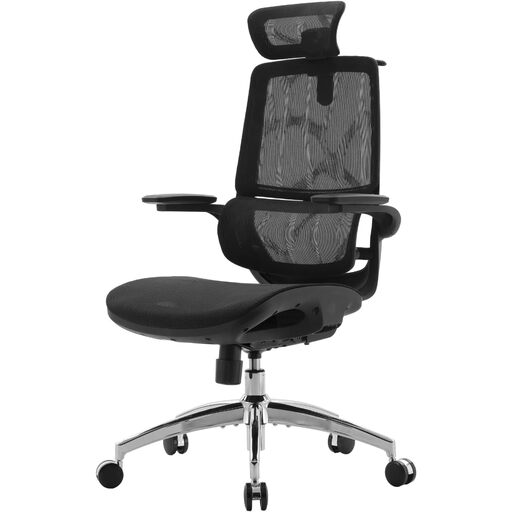
Why it stands out: With this chair, it's all about the backrest. Its two-part design and adaptive lumbar cushion follow your every move for dynamic, personalised support in real time.
Key features:
- Dynamic support: The lumbar support constantly adjusts. A real relief for those prone to back pain.
- Synchronised 3D armrests: They recline with the backrest so your arms are always well-supported. They also flip up to 80°.
- Ergonomic seat: The wide, saddle-shaped cushion is designed to conform to the body's shape and relieve pressure.
- Certified quality: Compliant with BIFMA and SGS standards, with an alloy steel frame supporting up to 150 kg.
Who is it for? For those who don't compromise on their back health and are looking for advanced support technology for an active and healthy posture throughout the day.
Explore the SIHOO M59AS
Looking for a Different Setup?
A good chair is the foundation. But for a truly ergonomic setup, the desk is just as crucial. The combination of the two can transform your posture and boost your productivity.
Discover our selection of Black and Red Gaming Desks to create a complete and harmonious work or gaming environment.
Frequently Asked Questions (FAQ)
What's the difference between a standard office chair and an ergonomic one?
A standard office chair offers only basic support. In contrast, an ergonomic office chair is a machine designed to adapt to your body. Thanks to its multiple adjustments (height, lumbar support, armrests, recline), it promotes a healthy posture, reduces pressure on the spine, and prevents pain associated with long hours of sitting.
How do I adjust an ergonomic chair to prevent back pain?
For a fine-tuned setup, follow these 5 steps:
- Seat height: Sit down and adjust the height so your feet are flat on the floor and your knees are at a 90° angle.
- Seat depth: Leave a space of two to three fingers between the edge of the seat and the back of your knees.
- Lumbar support: Adjust the support to fit the natural curve of your lower back.
- Armrests: Set them so your forearms rest comfortably, with your shoulders relaxed.
- Backrest: Recline it slightly backward (around 100-110°) for an active yet relaxed working position.
How long does a good ergonomic office chair last?
The lifespan depends on the quality of the materials and the intensity of use. A good model, with certifications like BIFMA or SGS, is generally designed to last for 7 to 10 years. Regular maintenance, such as tightening screws and cleaning surfaces, can extend its longevity.


