
Livraison le jour même ou le lendemain

Qualité garantie

Débloquez vos offres de bienvenue: Livraison GRATUITE | Jusqu'à -80 % | 30 jours d'essai gratuits à JoyPlus
Téléchargez l'application
Whether you're working remotely or in the office, spending hours sitting down has become a part of our daily lives. And with it comes a host of lower back pain and postural fatigue. The ergonomic office chair market promises the world, but it's easy to get lost in marketing jargon that often hides questionable comfort and durability.
As the Head of Product Selection at Joybuy, I'm here to help you cut through the noise. Let's set aside the lofty promises and focus on what truly matters. Here are the most common pitfalls to avoid and the objective criteria for making the right choice.
To avoid these traps, focus on objective technical features. Here are the points you absolutely must check before you buy.
A good ergonomic office chair must offer deep customisation. Scrutinise the following adjustments:
A chair's lifespan is directly dependent on the quality of its components.
A good chair is the cornerstone of your comfort, but its effectiveness is multiplied in a well-designed workspace. Pairing it with a height-adjustable desk (or sit-stand desk) allows you to alternate positions, stimulate blood flow, and combat a sedentary lifestyle. It's an excellent complement for anyone who spends more than 4 hours a day sitting.
The Ochama Height-Adjustable Desk, for example, offers a smooth transition between 72 and 120 cm in height, with memory presets for daily convenience.
Rather than a laundry list, we've selected models that cater to specific profiles and needs, based on the objective criteria defined above.
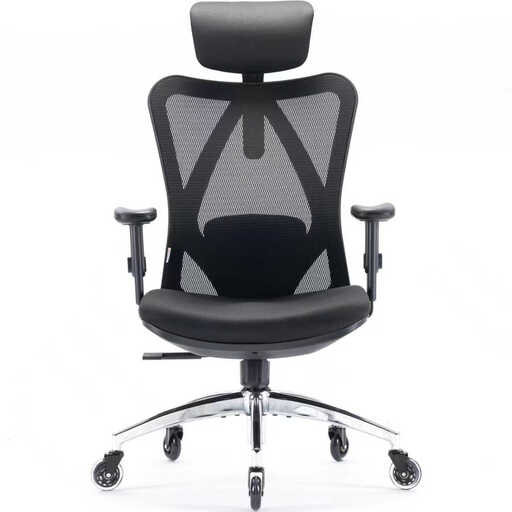
Why this model: Ideal for daily remote work, this chair offers a remarkable balance between comprehensive features and an accessible price point. It perfectly meets the needs of those seeking reliable comfort for 8-hour days without breaking the bank.
It goes beyond the "ergonomic" label. It offers 5 distinct adjustment points (lumbar support, headrest, height, tilt, armrests), providing true personalisation.
Its high-quality breathable mesh backrest ensures excellent thermal comfort, while the W-shaped seat reduces pressure on the legs. The entire chair is BIFMA certified.
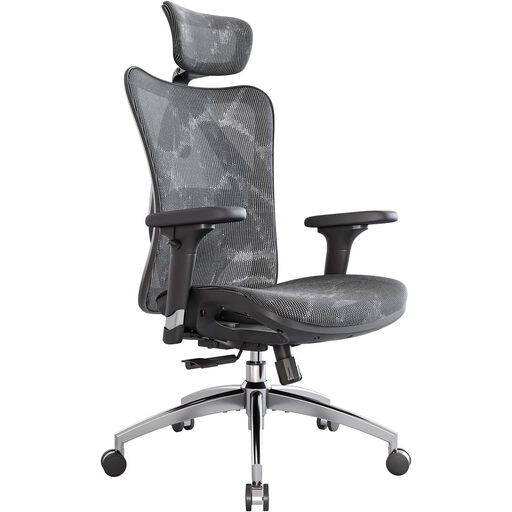
Why this model: For those seeking a more advanced solution for back pain, this model goes all-in on support. Its S-shaped backrest follows the curve of the spine, and its 3D armrests provide optimal support for the arms and shoulders.
It moves beyond mere aesthetics to focus on function. The 3D armrests and contoured backrest are technical assets that provide a tangible benefit to posture, far from purely decorative designs.
Its fully adjustable 3D armrests and S-shaped backrest ensure superior spinal support. Its steel alloy frame guarantees rock-solid durability.
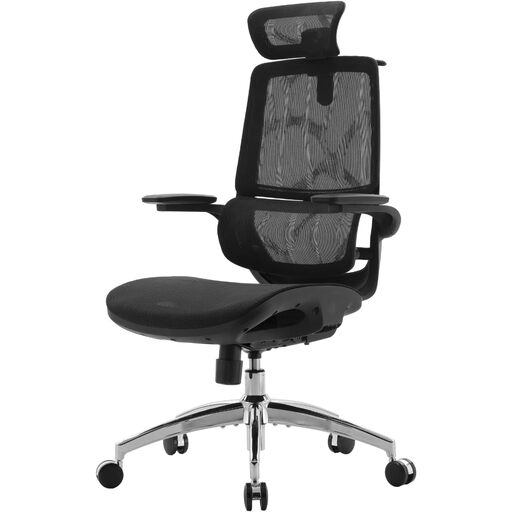
Why this model: Perfect for apartments or home offices where every square inch counts. Its flip-up armrests allow the chair to slide neatly under the desk, freeing up space without sacrificing comfort.
It proves that a compact form factor doesn't mean cutting corners on materials. It includes adaptive lumbar support and an articulated backrest—premium features in a space-saving design.
Its 80° flip-up armrests offer maximum space saving. The dynamic lumbar support automatically adjusts to your every move.
Discover our full selection of products that meet our selection criteria and European safety standards.
Its longevity primarily depends on the quality of its materials and construction. An entry-level model will show signs of wear in just 1 to 2 years. A well-made chair with a metal frame, durable mesh, and a certified gas lift can easily last you 5 to 10 years. The warranty is an excellent indicator: 3 years or more, as seen on Sihoo models, is a sign of the manufacturer's confidence in their product's durability.
A good initial setup involves a few simple steps:
Yes, provided the mesh is of very high quality. Its advantages include excellent breathability (especially appreciated in the summer) and firm support that is evenly distributed across the back. Be careful, however, as low-quality mesh will stretch over time and lose all its benefits. For those who prefer a softer feel, the ideal compromise remains a high-density foam seat combined with a mesh back.