
Livraison le jour même ou le lendemain

Qualité garantie

Débloquez vos offres de bienvenue: Livraison GRATUITE | Jusqu'à -80 % | 30 jours d'essai gratuits à JoyPlus
Téléchargez l'application
Whether you work from home or in an office, the reality is the same: long hours spent in front of a screen put a strain on our bodies. Poor posture always comes at a cost, in the form of tension and pain. Far from being a luxury, investing in an ergonomic office chair is a necessity to protect your back, well-being, and focus.
But with an overwhelming number of options on the market, it's hard to know where to start. Our guide is here to provide clear benchmarks and practical advice to help you choose the ergonomic office chair that's right for you, without getting lost in marketing jargon.
Before you start comparing models, it's crucial to understand the criteria that truly make a difference. Here are the three key points to check to make an informed choice.
A good office chair with lumbar support is designed to conform to the natural curve of your spine. Inadequate support can lead to slouching and lower back pain. Prioritise models with lumbar support that is adjustable in height and depth. This allows you to position it precisely in the small of your back for optimal support throughout the day. It's a non-negotiable feature for anyone looking for a computer chair for back pain.
A chair's comfort also depends on its materials. A breathable mesh office chair offers a significant advantage: it promotes air circulation. Unlike leather or thick fabric upholstery, mesh prevents the build-up of heat and moisture—a major benefit during long work sessions, especially in the summer. It also offers great flexibility to accommodate body movements while ensuring firm support.
Ergonomics is all about a chair's ability to adapt to your body, not the other way around. Beyond lumbar support, check for the following adjustments:
To guide you, we have scrutinised several models based on their technical specifications, modularity, and design. Here is a selection of chairs from the SIHOO brand that cater to different needs.
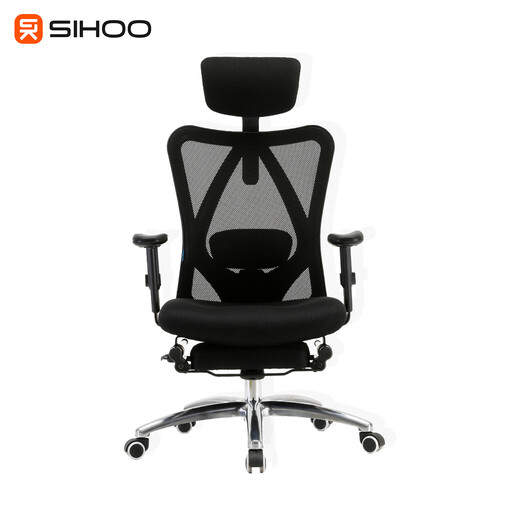
Why it stands out: This model is distinguished by its integrated and adjustable footrest. This feature transforms the chair into a true relaxation space, perfect for stretching or taking a short break between intensive tasks.
Advantages:
Who is it for? This chair is an excellent option for professionals who spend very long days at their desk and appreciate being able to quickly switch from a focused work position to a relaxed one without leaving their station.
Why it stands out: The SIHOO M18 gets straight to the essentials of ergonomics. It builds on the excellent foundations of the range and focuses on the fundamental adjustments for a healthy posture. A reliable choice.
Advantages:
Who is it for? Ideal for users looking for a no-frills ergonomic office chair that still has all the necessary adjustments for intensive daily use, whether at home or in a traditional office environment.
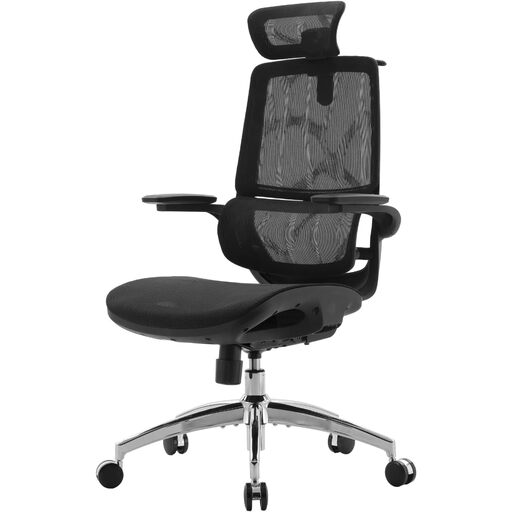
Why it stands out: This model is distinguished by its 80° flip-up armrests and its two-part backrest structure. These features make it particularly suitable for versatile or compact workspaces.
Advantages:
Who is it for? This chair is a smart solution for people working in a compact space, students, or anyone who needs a versatile chair that can be easily tucked away when not in use.
Do the models presented not quite meet your expectations? Would you like to explore other styles and features? Feel free to browse our complete collection. There you will find a wider range of solutions to furnish your workspace.
Discover our complete collection of office desks and chairs
1. What is the difference between a standard office chair and an ergonomic chair?
A standard chair offers basic support, whereas an ergonomic office chair is designed with multiple adjustment points (height, lumbar support, armrests, tilt) to adapt to the user's body. The goal is to promote good posture, reduce pressure points, and minimise fatigue during prolonged use.
2. Can an ergonomic office chair really relieve back pain?
Yes, a good ergonomic chair is designed to promote better posture by supporting the natural curve of the spine. By reducing slouching and distributing weight correctly, it can greatly help prevent the tension and discomfort associated with poor sitting positions. It is not a substitute for medical advice in cases of chronic pain, but it is an excellent tool for daily prevention and comfort.
3. How long does it take to get used to a new ergonomic chair?
A short adjustment period is normal. If you were previously using an unsuitable chair, your body may need a few days to a week to get used to this new, better-supported posture. Take the time to experiment with the different settings to find the configuration that works best for you.