
Livraison le jour même ou le lendemain

Qualité garantie

Débloquez vos offres de bienvenue: Livraison GRATUITE | Jusqu'à -80 % | 30 jours d'essai gratuits à JoyPlus
Téléchargez l'application
Remote work is here to stay, and with it, long hours spent in front of a screen. This new routine has revealed a silent enemy: the discomfort and pain caused by poor posture. Far from being a luxury, an ergonomic office chair is now an essential investment to protect your health and boost your productivity.
But with an overwhelming number of options on the market, how do you find the right one? Don't worry. We've done the legwork for you, providing clear benchmarks and practical advice to help you choose THE chair that fits your needs, cutting through the marketing jargon.
Before diving into our selection, let's review the three essential criteria that will make all the difference.
A chair, no matter how sophisticated, will only be effective if it adapts perfectly to your body type. Look for a model that offers a maximum number of adjustment points:
Back pain is often the first symptom of poor seating. A good chair with lumbar support is therefore not an option. Ideally adjustable in height and depth, it must perfectly match the natural curve of your lower back. Its role? To maintain a healthy posture, reduce pressure on the intervertebral discs, and ultimately, prevent fatigue and chronic pain.
The upholstery of your chair plays a crucial role in your daily comfort, especially if you spend long hours in it.
Don't overlook the density of the seat foam either. High-density foam is a guarantee of lasting comfort and a seat that won't sag after a few months.
Now that we've covered the basics, here is our selection of models that caught our eye. There's something for every profile and budget.
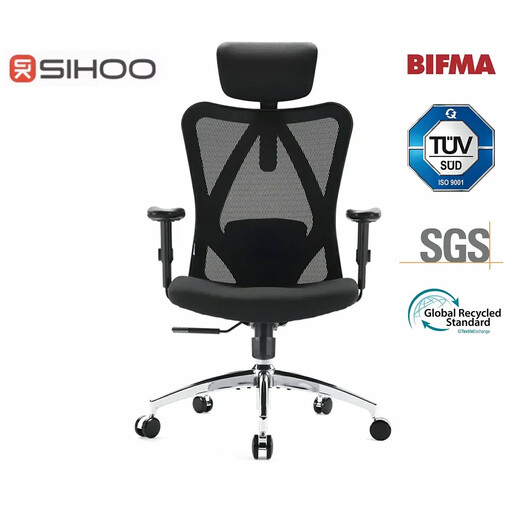
What sets it apart The SIHOO M18 makes no compromises on ergonomics. With its five adjustment zones (back support, headrest, seat height, tilt, and armrests), it adjusts to your body with pinpoint precision. Its BIFMA-certified design is a guarantee of sturdiness and safety, supporting a weight of up to 150 kg.
Key Strengths
Who is it for? The ideal companion for professionals engaged in intensive remote work and anyone who spends more than six hours a day sitting. It's the smart investment for those who want a complete and durable solution to say goodbye to sedentary-related pain.
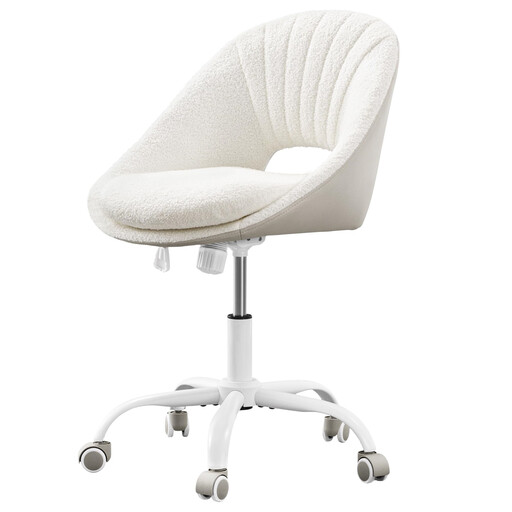
What sets it apart This HaluPeit model breaks the mould with its refined aesthetic and fluffy Sherpa fabric upholstery. More than just an office chair, it's a true decorative piece that invites relaxation. Its rocking function makes it a hybrid seat, perfect for juggling between focus and well-deserved breaks.
Key Strengths
Who is it for? For those who want to create a home office that is as stylish as it is comfortable, without the sometimes austere look of technical chairs. Perfect for moderate use, it will appeal to people looking for a versatile seat, halfway between work and relaxation.
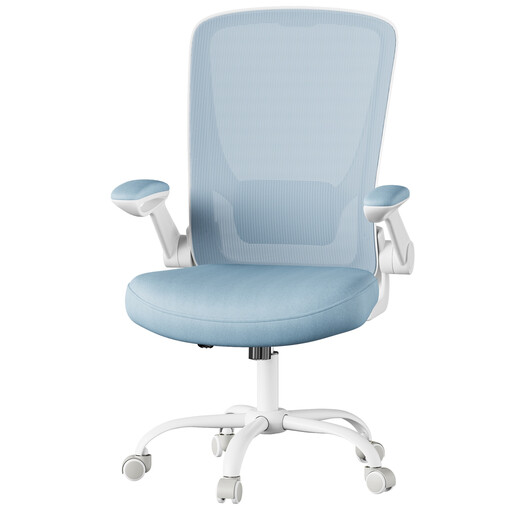
What sets it apart The Ochama chair is all about practicality and space optimisation. Its key feature? Flip-up armrests, a simple but brilliant idea that allows it to slide completely under the desk when the day is done. The perfect solution for small spaces.
Key Strengths
Who is it for? The ideal solution for students, apartment-based remote workers, or anyone with limited office space. An excellent entry point into the world of ergonomics that doesn't sacrifice the essentials.
Our selection covers three distinct profiles. If none of these models ticks all your boxes in terms of design, features, or budget, don't worry: other options await you.
Feel free to explore our complete collection to find the perfect fit that will integrate seamlessly into your workspace. ? Discover our full range of home office chairs and desks
1. How do I properly adjust my office chair? Start with the height: your feet should be flat on the floor and your thighs parallel to the ground. Next, adjust the lumbar support so it supports the natural curve of your back. Finally, adjust the armrests so your shoulders are relaxed and your forearms are horizontal when typing.
2. What is the lifespan of an office chair? It all depends on the quality of the materials and your usage. An entry-level model will typically last between 2 and 5 years. On the other hand, a high-quality chair, especially one that is BIFMA-certified, can easily last you 7 to 10 years or more with minimal maintenance.
3. Is a mesh or fabric backrest better? There's no single answer; it's all a matter of preference! Mesh is unbeatable for ventilation and is very easy to clean. Fabric, on the other hand, is often considered cosier and warmer, in addition to offering a wider range of colours. Our advice: if you tend to get hot or for intensive use, mesh stands out as the most pragmatic choice.