
Livraison le jour même ou le lendemain

Qualité garantie

Débloquez vos offres de bienvenue: Livraison GRATUITE | Jusqu'à -80 % | 30 jours d'essai gratuits à JoyPlus
Téléchargez l'application
Spending hours glued to your desk, whether at home or in the office, can quickly become a nightmare for your back. An ergonomic office chair is no longer a luxury, but an essential investment in your health and productivity. The problem is, the market is flooded with models making often misleading marketing promises. How can you tell the difference between a true ally for your back and a gadget you'll bitterly regret?
As a product selection expert at Joybuy, my mission is to help you see things more clearly. Let's cut through the marketing jargon and get straight to the point: here are the pitfalls to avoid and the criteria that truly matter when making the right choice.
The excitement of a new purchase can quickly fade. To prevent your investment from turning into a source of back pain, here are the three most common pitfalls to be aware of.
To ensure you choose a comfortable computer chair that will stand the test of time, don't lose sight of these three decisive criteria.
This is THE crucial point for preventing back pain: support for your lumbar arch. A good ergonomic office chair must offer adjustable lumbar support, at a minimum in height, to position it precisely in the small of your back. More advanced models also offer depth adjustment to modulate the intensity of the support. A fixed support is a risky bet, as it's unlikely to perfectly match your body shape.
Long-term comfort is directly linked to the quality of the materials.
A truly adjustable office chair offers more than just a single lever for height. The adjustments that make all the difference are:
To move from theory to practice, here is our selection of models that check all the boxes, each tailored to a specific user profile.
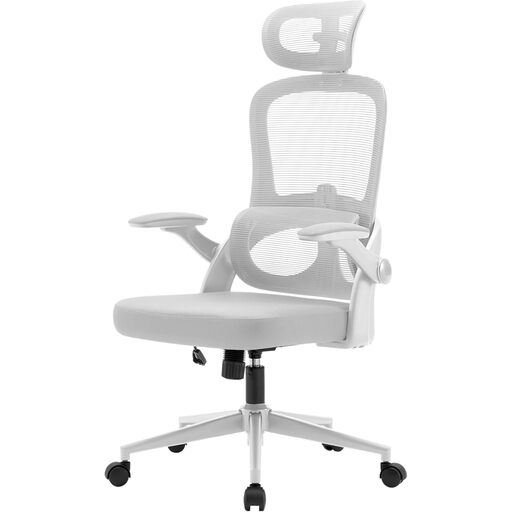
Why it stands out: Designed for work marathons, this chair provides total support. Its independent, height-adjustable lumbar support allows for millimetre-perfect positioning, a must-have for anyone who spends more than 8 hours a day seated.
It avoids the trap of superficial "ergonomic design". Here, the lumbar support is an independent piece, adjustable over 6 cm, ensuring perfect contact with the small of your back—a far cry from fixed, ineffective curved backrests.
Its 3D armrests can also be flipped up to easily slide it under a desk. Its wide, high-quality foam seat is built for long sessions, with BIFMA certification as a guarantee of durability.
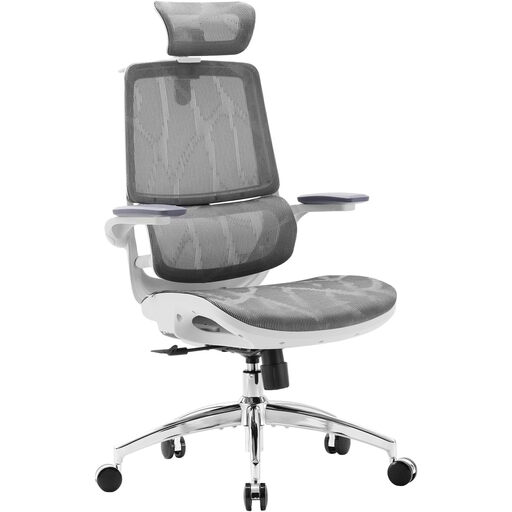
Why it stands out: Perfect for offices that double as living rooms or studios. Its armrests flip up to 80°, freeing up space to store the chair or to play guitar without obstruction.
It debunks the "one-size-fits-all" myth. Its two-part backrest conforms to the spine, while its adaptive lumbar support follows your every move for continuous dynamic support.
Its 3D armrests follow the backrest's recline, a real bonus. The dual-backrest design ensures targeted support and optimal ventilation.
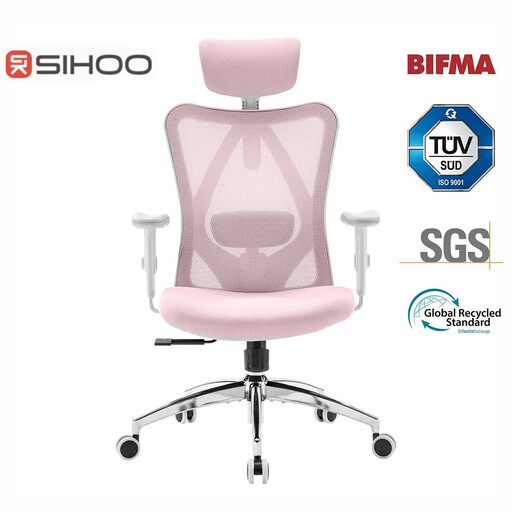
Why it stands out: This is the ideal entry point to true ergonomic comfort without breaking the bank. It combines all the essential adjustments (head, lumbar, height) in a reliable and well-designed chair.
More than just an "ergonomic" label, it offers true 4-zone adjustment (head, back, hips, armrests). Its BIFMA certification is a guarantee of durability, helping you avoid the pitfall of low-grade materials that wear out prematurely.
An unbeatable features-to-price ratio. Its breathable mesh backrest forms an "S" shape that continuously supports the back. Perfect for builds between 1.68 m and 1.88 m (5'6" and 6'2").
We have selected a full range of products that meet our quality criteria and current safety standards.
For an optimal basic setup:
It all depends on the quality of its components (gas lift, casters, mechanism) and materials (fabric, foam, frame). A model certified by BIFMA or T?V, like those from the SIHOO brand, has been tested for strength and durability. With normal use, a quality chair can last you 5 to 10 years, or even longer. The warranty period is also an excellent indicator of the manufacturer's confidence in its product.
Not necessarily. High-quality technical mesh offers support that is both firm and flexible, conforming to the shape of your back. Its main advantage is its breathability, which is unbeatable over long periods. A padded backrest might feel more 'cosy' at first, but it will be warmer and may sag over time if the foam is of poor quality. It's primarily a matter of preference, but for intensive use, mesh is often the most popular solution.