
Livraison le jour même ou le lendemain

Qualité garantie

Débloquez vos offres de bienvenue: Livraison GRATUITE | Jusqu'à -80 % | 30 jours d'essai gratuits à JoyPlus
Téléchargez l'application
Working from home, studying, gaming sessions… Long hours spent sitting put a heavy strain on our bodies. Poor posture quickly leads to back, neck, and shoulder pain. Investing in an ergonomic office chair is therefore not a luxury, but a necessity to maintain your comfort and focus throughout the day.
With an overwhelming number of options available, it can be tough to know where to start. This guide is here to help you decode the essential features and make the right choice based on your needs and your space.
Before you start shopping, it's crucial to understand the features that make a real difference. Here are three key points to examine closely.
Lower back support is non-negotiable. A good office chair with lumbar support helps maintain the natural curve of your spine, relieving pressure on your vertebrae. Ideally, this support should be adjustable in height and depth to perfectly fit your body shape. Also, be sure to check for other available adjustments: seat height, backrest tilt, and, on the best models, seat depth.
The upholstery has a direct impact on your comfort and ease of maintenance.
Armrests are essential for relieving tension in the shoulders and neck. The most versatile models offer adjustable armrests (height, width, depth, and even angle: the famous "4D" armrests). For small spaces, flip-up armrests are a brilliant solution: they allow you to slide the chair completely under the desk for maximum space-saving.
To guide you, we've selected three models that cater to various needs and budgets, whether you're working from home, a student, or a gamer.
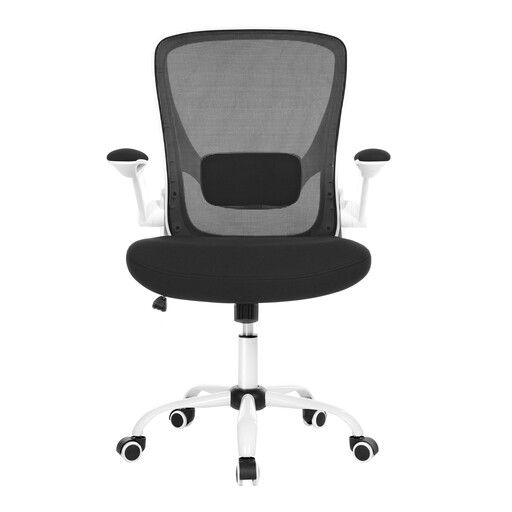
Its key feature: This model strikes the right balance between essential ergonomic features and everyday practicality. Its two-tone design fits easily into a modern office or a student's room, and its flip-up armrests make it an excellent choice for small spaces.
Pros:
Who is it for? Remote workers and students looking for a functional, comfortable solution designed for compact spaces.
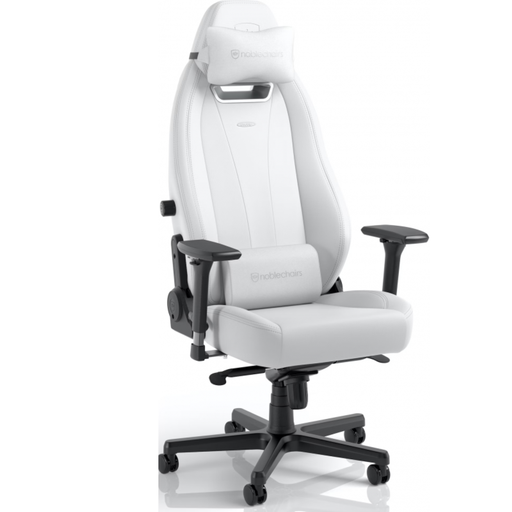
Its key feature: The Noblechairs Legend is a high-end gaming chair that makes no compromises on adjustments and material quality. Its high-tech PU leather upholstery and myriad of customisation options make it a top-tier choice for intensive use.
Pros:
Who is it for? Demanding gamers and professionals who spend very long hours at their desk and are looking for maximum adjustability and unwavering support.
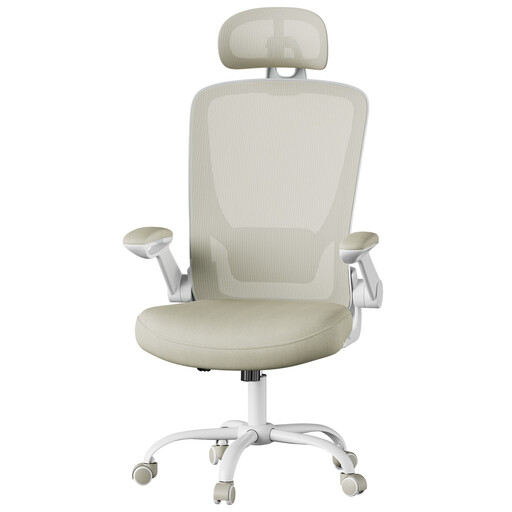
Its key feature: This model is a step up, incorporating an adjustable headrest in addition to lumbar support. Its light beige colour and clean design bring a touch of elegance to the workspace, without compromising on ergonomic features.
Pros:
Who is it for? Those looking for complete ergonomic support (back and neck) for long workdays, without sacrificing their office's style.
Our selection focuses on models that prioritise ergonomics for intensive use. But design is also a matter of personal taste. If you want to explore a wider variety of shapes, colours, and materials to find that perfect gem that will match your interior, feel free to browse our complete collection.
? Discover our range of contemporary chairs for more inspiration.
While both aim for long-term comfort, their philosophies differ. The ergonomic office chair often favours a more understated design and adjustments focused on work posture (lumbar support, adjustable armrests). The gaming chair adopts a bolder aesthetic (bucket-seat style, bright colours) and includes features designed for relaxation, such as a deep backrest recline for breaks between gaming sessions.
The lifespan of a chair depends on the quality of its components (mechanism, gas lift, castors, upholstery) and the intensity of its use. An entry-level model might last 2 to 3 years, whereas a well-made, properly maintained chair can last you for 5 to 10 years, and sometimes much longer.
For a perfect posture, follow these simple steps: