
Livraison le jour même ou le lendemain

Qualité garantie

Débloquez vos offres de bienvenue: Livraison GRATUITE | Jusqu'à -80 % | 30 jours d'essai gratuits à JoyPlus
Téléchargez l'application
Spending hours in front of a screen, whether for work or play, takes a serious toll on your body. A quality chair is no longer a luxury but a necessity for protecting your back and maintaining focus. Yet, the ergonomic gaming chair market is a dense jungle of marketing claims, making it easy to get lost.
Our team of product experts is here to help you navigate it. Together, let's decode the common pitfalls and identify the essential criteria for making an informed choice, without being swayed by flashy designs alone.
Before you pull out your credit card, it's crucial to spot the hidden flaws behind an eye-catching design. These are the most common issues that can turn your investment into a source of regret.
The term "ergonomic" is frequently misused. A simple curved backrest is not enough. A true ergonomic office chair must offer a wide range of precise adjustments to adapt to your unique body shape. Be wary of models that lack adjustable lumbar support or have a fixed headrest, as they can create more strain than they alleviate.
A rock-bottom price often conceals low-density foam that will sag in a matter of months, or a PU leather finish that quickly cracks and peels, especially if you have pets. The lifespan of a gaming chair is directly tied to the quality of its foam and upholstery.
The gaming chair with a footrest is a very popular feature. Unfortunately, on many entry-level models, this mechanism is flimsy, unstable, and built with cheap plastic components. A footrest that fails to lock securely or sags under the weight of your legs is not just uncomfortable—it can be a safety hazard.
To ensure the quality and longevity of your future chair, focus on these three key points.
A good chair should adapt to you, not the other way around. Check for the following features?:
Sturdiness is an unmistakable indicator of quality.
In daily use, it's the details that make all the difference.
Rather than a long list, we've chosen to highlight one model that checks all the boxes for mixed use: gaming, remote work, and durability.
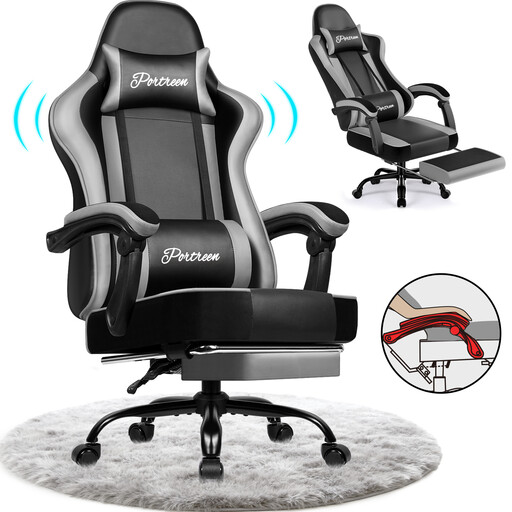
Why it stands out: Its grey colour and understated design allow it to blend seamlessly into a home office, while still retaining the full feature set of a gaming chair.
It sidesteps durability traps with its high-density foam, scratch-resistant and water-repellent PU leather, and its BIFMA and SGS certifications, which guarantee safety and robustness.
Its 150 kg weight capacity is a testament to its solid construction. The telescopic footrest, featuring a metal frame, provides stable support for moments of relaxation—a detail often overlooked on competing models.
We have curated a full range of chairs that meet our strict selection criteria and European safety standards.
Its lifespan depends primarily on the quality of its materials. A model featuring a steel frame, high-density moulded foam, and premium upholstery can easily last more than 5 years with proper care. In contrast, entry-level models (with plywood frames and basic foam) often show signs of fatigue by the second year.
Most modern chairs are designed for straightforward assembly. A quality product will always include clear instructions and all the necessary tools. Typically, one person can complete the assembly in 15 to 30 minutes. The GTIMEX model, for instance, boasts an assembly time of just 10 to 15 minutes.
The line between the two is becoming increasingly blurred. A good ergonomic office chair focuses on postural support for long hours of work. A quality ergonomic gaming chair incorporates these same principles (lumbar support, 4D armrests, etc.) but adds features focused on relaxation and versatility, like a deep recline of up to 170° or a built-in footrest. This often makes it a more complete choice for a hybrid work-and-play setup.