
Livraison le jour même ou le lendemain

Qualité garantie

Débloquez vos offres de bienvenue: Livraison GRATUITE | Jusqu'à -80 % | 30 jours d'essai gratuits à JoyPlus
Téléchargez l'application
Long hours spent sitting—whether at the office, in the car, or at home—put a great deal of strain on our backs. The culprit? Poor posture, which creates tension in the back, lumbar region, and neck. The solution? A well-chosen ergonomic cushion. It's a simple and effective way to improve your comfort and restore proper body alignment.
But with the overwhelming number of models available, it can be difficult to know where to start. This guide is here to help you navigate the options, understand the key criteria, and introduce a selection of products to help you find the perfect companion for your back.
Before you dive in, it's essential to understand what sets different models apart. Let's review the key points to check to find the cushion perfectly suited to your body and your needs.
Office, car, sofa... there's a different cushion for every use. This is the first criterion to define before making your choice.
The choice of material is crucial: it directly determines the comfort and quality of support.
The shape obviously depends on the area you need to relieve. Seat cushions, often flat or U-shaped, are designed to free up the coccyx area. Lumbar cushions, with their curved design, follow the natural arch of the lower back. Finally, backrest wedges (or reading cushions), typically wedge-shaped, stabilise the torso in a semi-seated position.
To put theory into practice, we have selected three models that each meet a specific need.

What sets it apart
Designed primarily for drivers, this cushion stands out for its slim profile. Unlike thicker models that tend to push you forward in your seat, this one offers discreet yet effective lumbar support. Its so-called 'golden triangle' structure is designed to precisely fill the gap between the lower back and the seat, promoting a much more natural driving posture.
Key benefits
Who is it for?
Ideal for frequent drivers and anyone who spends hours behind the wheel. It's the perfect car lumbar support to relieve back pain during journeys without the bulk of an oversized model.
What sets it apart
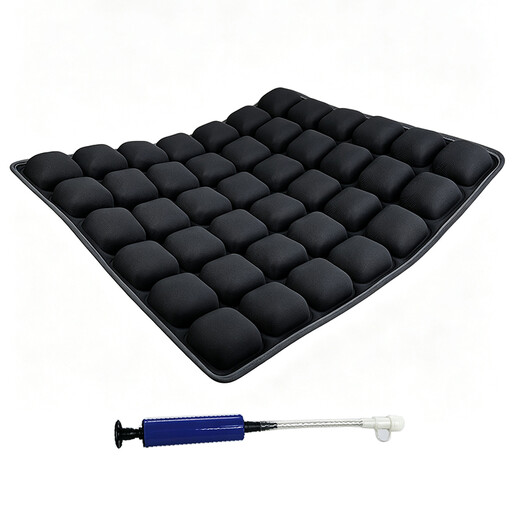
Its main advantage: it's inflatable! Supplied with a pump, it allows you to precisely adjust the firmness level for tailored comfort. Ultra-portable, it's the ideal travel companion for those who juggle the office, home, and travel.
Key benefits
Who is it for?
Perfect for digital nomads, hot-desking professionals, or anyone looking for a versatile and customisable cushion to take anywhere.
What sets it apart
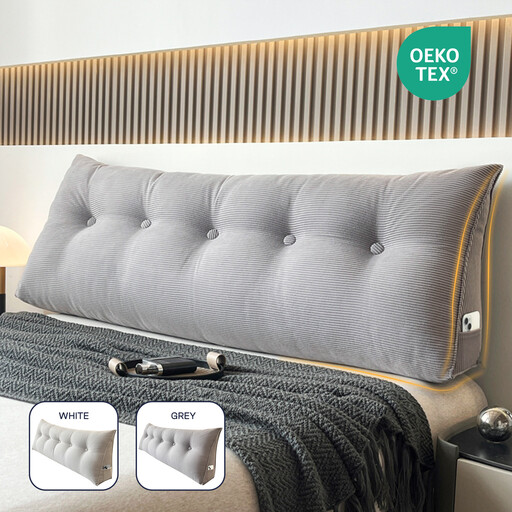
With its generous dimensions (150 cm wide), this backrest wedge transforms any bed or sofa into a true cocoon of comfort. Its wedge shape offers excellent back support in a seated position, making it ideal for reading, using a laptop, or binge-watching your favourite series.
Key benefits
Who is it for?
For all fans of cocooning who want to enhance their comfort at home. It's the perfect back cushion for relaxing in bed or on the sofa with firm and stable support.
Our selection is just a glimpse of the solutions available. Since choosing an ergonomic cushion is a very personal decision, we invite you to explore our full collection to discover a wider range of models, shapes, and materials.
? Discover our collection of Seat Support Cushions
The seat cushion is placed on the chair to support the buttocks and thighs, and often to relieve pressure on the coccyx. The lumbar support cushion, on the other hand, is positioned vertically against the backrest to maintain the natural curve of the lower back and encourage better posture. The two are perfectly complementary for optimal support.
Most memory foam cushions come with a removable, machine-washable cover. Simply follow the washing instructions on the label. Please note: the foam block itself should never be washed or submerged, as this can damage its structure. Simply dusting it and airing it out regularly is enough to maintain it.
Yes, an ergonomic cushion is designed to improve posture and reduce the pressure points that contribute to discomfort. By promoting better spinal alignment, it can help decrease muscle tension from prolonged sitting. However, it is not a substitute for medical advice. In cases of chronic or severe back pain, it is essential to consult a healthcare professional.