
Livraison le jour même ou le lendemain

Qualité garantie

Débloquez vos offres de bienvenue: Livraison GRATUITE | Jusqu'à -80 % | 30 jours d'essai gratuits à JoyPlus
Téléchargez l'application
By Joybuy, our product expert | Published July 22, 2026
Long hours working from home, intense gaming sessions, reading marathons... When you spend a lot of time sitting, comfort isn't a luxury; it's a necessity. Back tension, neck pain, general fatigue? These warning signs often point to your chair as the main culprit.
Investing in an ergonomic chair isn't an indulgence, but an essential decision for your daily well-being. But with so many options on the market, how do you choose the right one? This guide is here to help you make sense of it all. We'll break down the key criteria and present a selection of models that caught our eye, all without the unnecessary marketing jargon.
Before you take the plunge, keep a few key points in mind that will make all the difference. The ideal chair is, above all, one that is adapted to your body and your habits.
The key to ergonomics is adaptability. A good chair should adjust to your body, not the other way around. The lumbar support is a central element here: it must hug the natural curve of your lower back to prevent slouching and reduce strain. Be sure to check the adjustability of the seat height, armrests, and backrest tilt. A reclining chair allows you to vary your posture throughout the day, which is an excellent way to relieve pressure on your spine.
Your needs will differ for an office chair used eight hours a day, a gaming chair built for immersion, or a recliner dedicated to relaxation.
A chair's lifespan depends on the quality of its frame and upholstery. A metal or solid wood (like birch) base is a guarantee of sturdiness. For the covering, PU leather is easy to clean, while fabric is more breathable. Make sure the padding is made of high-density foam to prevent it from sagging over time. Finally, always check the chair's maximum weight capacity.
After our analysis, we've selected three models that stand out from the crowd and cater to very different needs.
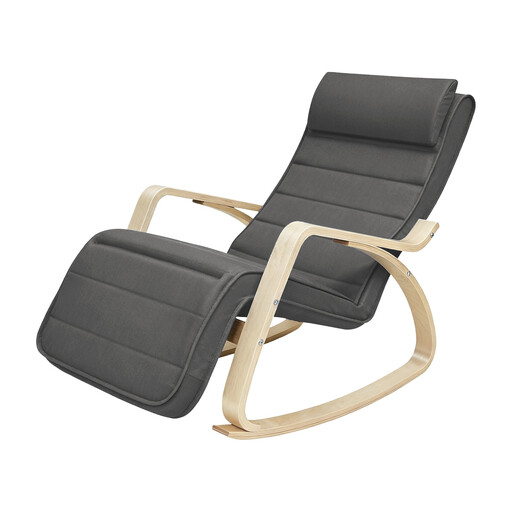
Why we love it This model combines the charm of a traditional rocking chair with well-designed ergonomic features. Its clean Scandinavian style, which pairs birch wood with dark grey fabric, makes it a piece that's as decorative as it is functional—a far cry from the stark aesthetic of a typical office chair.
Key features
Who is it for? Ideal for anyone looking for a relaxing chair for the living room or bedroom. It's perfect for reading, listening to music, or simply unwinding, all while enjoying adjustable support.
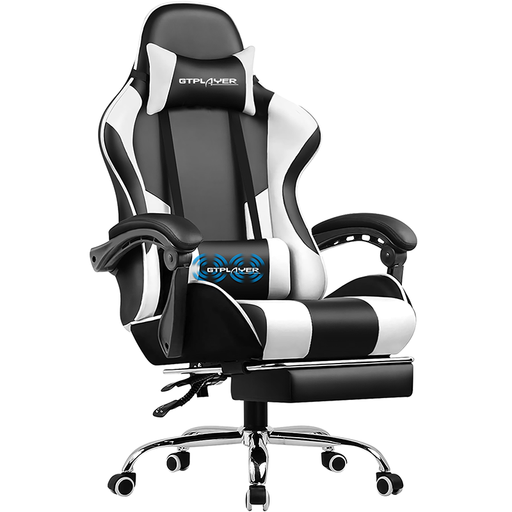
Why we love it This gaming chair offers more than just a sharp look; it integrates some truly surprising comfort features. Its vibrating massage lumbar cushion is a real bonus for releasing back tension during long sessions.
Key features
Who is it for? For gamers and remote workers who spend long hours in front of their screens. It's the all-in-one solution for those who want to combine a dynamic work posture with advanced relaxation options.
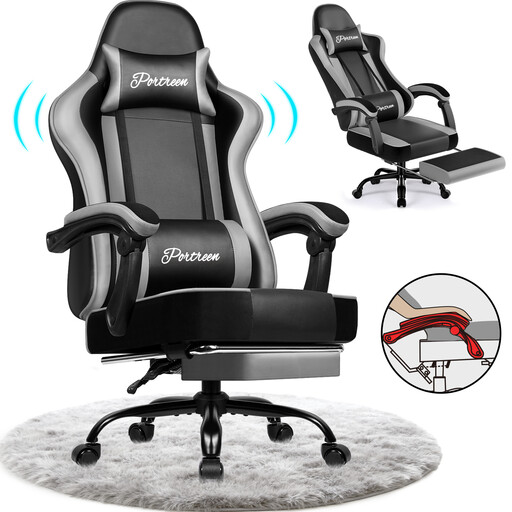
Why we love it This chair stands out for its incredible recline angle, which reaches 170 degrees. This allows you to adopt a near-flat position, a rare and particularly valuable feature for a truly restorative break.
Key features
Who is it for? For heavy users who demand maximum flexibility. Whether for gaming, working, or watching a movie, its ability to transform into a true relaxation cocoon makes it an ultra-versatile option.
Our selection highlights versatile models, but your tastes and needs may be more specific. If you're looking for a particular style or material, feel free to explore our full collection.
? Discover our range of PU leather recliners with footrests
While both aim for comfort, their design philosophy isn't quite the same. An ergonomic office chair typically features an understated design and fine-tuned adjustments to maintain a healthy work posture. A gaming chair, on the other hand, adopts a more assertive aesthetic (like a "bucket seat" style) and often includes features designed for immersion: a deep-reclining backrest, a footrest, removable support cushions... Everything is built for long gaming sessions.
Yes, and it's one of the most important features. Good lumbar support, whether it's integrated and adjustable or a separate cushion, helps maintain the natural curve of your lower back (the lumbar lordosis). This prevents you from slouching, reduces pressure on your intervertebral discs, and significantly limits the risk of pain after sitting for several hours.
Expect a short adjustment period, from a few days to a week. If you were used to a non-supportive chair, your body has likely adapted to poor posture. An ergonomic chair will essentially "force" you to adopt a better posture. It might feel strange at first, but your back will thank you very soon.