
Livraison le jour même ou le lendemain

Qualité garantie

Débloquez vos offres de bienvenue: Livraison GRATUITE | Jusqu'à -80 % | 30 jours d'essai gratuits à JoyPlus
Téléchargez l'application
Stiff neck on waking, tight shoulders or a feeling of pressure after a few hours in bed: these discomforts can be caused by a poorly suited pillow. However, choosing an ergonomic memory foam cervical pillow isn't about picking the thickest model or the one with the most marketing promises.
The shape of the cushion, its height, firmness and ability to dissipate heat all directly affect your comfort. Here are the criteria to consider to avoid disappointing purchases and find a pillow suited to your sleeping position.
A pillow that is too tall can push your head forward, especially if you sleep on your back. Conversely, a model that is too flat may not support your neck enough when you sleep on your side. The stated height should therefore be compared to your shoulder width, your body shape and the firmness of your mattress.
A height of 8 cm, as seen on several models featured here, is a good reference point, but it alone does not guarantee comfort for every sleeper.
Viscoelastic foam generally offers gradual contouring and moulds to the shape of your head. However, not all foams are equal: their density and ability to regain their shape can vary significantly. A foam that is too soft can make you feel like you are sinking, while a firmer base provides more stable support.
So look at the overall construction of the product, not just the presence of memory foam.
Foam tends to retain more heat than traditional fibres. A breathable cover or ventilation channels can make nights more comfortable. Cleaning instructions also deserve your attention: the foam core is generally not machine washable.
A removable cover, spot cleaning and an airing period after unpacking are practical details not to be overlooked.
A pillow with a central recess helps keep your head centred on the cushion, while the side contours provide extra neck support. This design can suit people who alternate between back and side sleeping, but it may require a few nights to get used to.
For a pillow for side and back sleeping, pay particular attention to the width of the support zones and the height difference between the centre and the edges. If you sleep on your stomach, choose a shape that does not force your neck into an excessive rotation.
Slow-release foam sinks in gradually. It can appeal to those looking for a hugging feel, provided it does not create a sense of instability. Some multi-layer models combine a soft surface with dedicated support and stabilisation layers.
This type of information is particularly useful when choosing a neck and shoulder support pillow for daily use.
To choose a breathable pillow, look for a cover described as ventilated, moisture-wicking or featuring air circulation channels. People sensitive to allergies should also check the composition and any certifications mentioned by the manufacturer. The product page for the Smartsleep model, for example, states the use of Oeko-Tex certified materials.
In the case of persistent pain, tingling or significant discomfort, no pillow can replace the advice of a healthcare professional. A cushion can improve comfort in bed, but it is not a treatment.
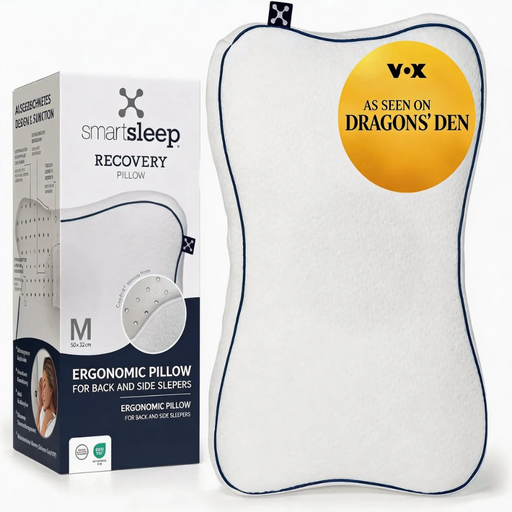
Why this choice suits this profile: This model is suitable for sleepers who mainly sleep on their back or side, as well as those who are attentive to ventilation and materials described as certified.
The product page specifies the targeted sleeping positions, integrated air channels and allergy-related instructions, rather than just making a general promise of comfort.
Head recess, viscoelastic foam, ventilation channels and a 30-night home trial period stated on the product page.
Upon receipt, allow the pillow to regain its shape in a well-ventilated room for 24 to 48 hours, as per the instructions for the relevant models. A slight manufacturing odour may be noticeable upon unpacking.
To preserve the foam:
The lifespan depends on the foam density, the weight exerted, the frequency of use and the care given. Regularly check the cushion for sagging and the alignment of your head, rather than relying on a theoretical lifespan.
We have compiled a comprehensive, real-time updated list of products that fully meet these strict selection criteria and European safety regulations.
Start by using it for a few nights while keeping your usual sleeping position. On your back, your head should remain in line with your torso. On your side, the cushion should fill the space between your shoulder and head, without a noticeable tilt. If unusual discomfort persists, check the pillow height or stop using it.
A cervical shape may require several nights of adjustment, especially if your old pillow was very soft or unstructured. Gradually alternating with your usual cushion can ease the transition. Here, the term "orthopaedic" describes a supportive shape: it does not mean the product is a medical device.
Foam can retain more heat than traditional fibres. A ventilated cover and air channels can improve circulation around the face and neck. However, check the exact composition, the cover provided and the care instructions before purchasing.