
Livraison le jour même ou le lendemain

Qualité garantie

Débloquez vos offres de bienvenue: Livraison GRATUITE | Jusqu'à -80 % | 30 jours d'essai gratuits à JoyPlus
Téléchargez l'application
An ergonomic cervical pillow can improve comfort at night, in the office, in the car or while travelling. However, a sophisticated shape does not necessarily guarantee effective support. The height, firmness and sleeping position should primarily be suited to your body shape and intended use.
Whether you sleep on your side or back, spend your days behind the wheel or at a desk, or travel regularly, here are the criteria to consider before buying, along with a selection of recommended models on Joybuy.
This term generally refers to a shape designed to follow the curve of the neck. However, on its own, it says nothing about the pillow’s height, foam density or support stability. An ergonomic pillow designed for sleeping may suit someone who sleeps on their back, yet prove too low for someone who mainly sleeps on their side.
Always check the model’s dimensions and internal structure rather than relying solely on marketing claims.
A pillow that is too high can hold your head in a forward-bent position, while one that is too low may not provide enough neck support. A stated height of 8 cm, for example, should be considered alongside the pillow’s overall shape, the depth of the central area and your sleeping position.
If you sleep on your side and back, choose a model that supports your head without pushing your neck too far forwards.
Memory foam tends to retain more heat than traditional filling. A breathable cover or ventilation channels can make the pillow more comfortable to use, particularly on summer nights.
Also check the care instructions. On many models, the cover can be washed, but the foam core should never be put in the washing machine.
A neck support pillow should provide a sufficiently stable area to prevent your head from sinking in completely. A central recess can help position your head correctly, while contoured edges provide better support for the nape of your neck and shoulders.
A pillow described as suitable for neck pain is not a medical device. If you experience persistent pain, tingling or significant discomfort, seek advice from a healthcare professional.
Memory foam, also known as viscoelastic foam, generally responds to heat and pressure. Slow-rebound models gradually mould to the contours of your head and neck. Some people enjoy this enveloping sensation, while others may not like it if they change position frequently during sleep.
A multi-layer design can combine a softer surface with a more stable base. Check the composition provided by the manufacturer, particularly whether it includes support foam or a load-bearing foam layer.
A removable, washable cover makes everyday care easier. Breathable fabrics or fabrics with ventilation channels can also help air circulate around your head.
After receiving a compressed memory foam pillow, allow it to regain its shape in a well-ventilated room for 24 to 48 hours, following the manufacturer’s instructions. Keep it away from flames and intense heat sources. Stop using the product if the foam deteriorates or crumbles.
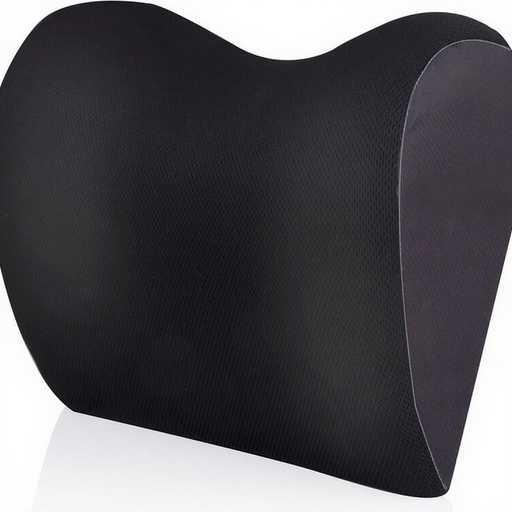
Why this choice suits this profile : This car neck cushion is suitable for drivers and passengers who regularly spend time on the road.
The 23 × 10 × 20 cm dimensions, adjustable strap and stated compatibility with different seats allow you to check the fit before buying.
Memory foam core, removable mesh cover and tool-free installation on the headrest posts.
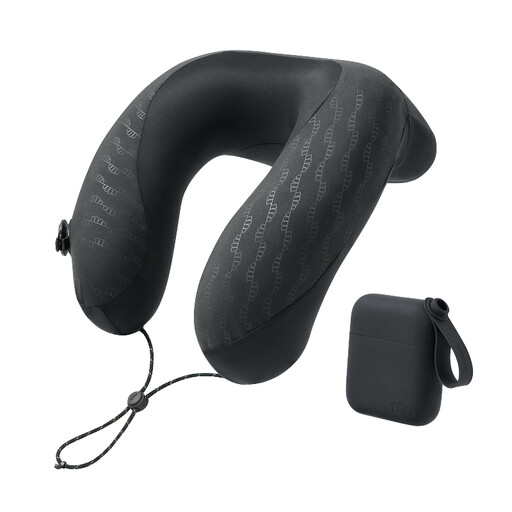
Why this choice suits this profile : This inflatable model is designed for journeys by plane, train or car, when it is important to keep luggage to a minimum.
Adjustable inflation pressure means you do not have to put up with a fixed level of firmness. Once folded, the cushion can be stored easily between trips.
Pressure inflation, fabric made partly from polyester and nylon, and approximate inflated dimensions of 29 × 30 cm.
We have put together a comprehensive, real-time updated list of products that meet these demanding selection criteria and European safety standards.
When trying a new ergonomic cervical pillow, take it gradually:
For a travel cervical pillow or car neck cushion, take a few minutes to adjust its position correctly before setting off. The cushion must not restrict the movements needed for driving or replace the seat’s safety adjustments.
The right height depends on your sleeping position, shoulder width and mattress firmness. Someone who sleeps on their side generally needs more volume between their shoulder and head than someone who sleeps on their back. Compare the stated height with the pillow’s full profile rather than relying on a single measurement.
There is no universal lifespan. Pay particular attention to sagging, loss of rebound, deformation and the overall condition of the foam. The cover can be cared for separately, but the core should always be handled in accordance with the manufacturer’s instructions. Replacing the pillow becomes advisable when the support is no longer even.
Some models are advertised as suitable for several sleeping positions. However, front sleeping may require a lower height to limit neck rotation. Check the dimensions, try to maintain as neutral a position as possible and stop using the pillow if any discomfort develops.