
Livraison le jour même ou le lendemain

Qualité garantie

Débloquez vos offres de bienvenue: Livraison GRATUITE | Jusqu'à -80 % | 30 jours d'essai gratuits à JoyPlus
Téléchargez l'application
Keeping your baby close while having your hands free?is the dream of many new parents. But with the overwhelming number of models available, choosing the right ergonomic baby carrier can quickly become a headache. The challenge is significant?to ensure a healthy posture for your child's development while also protecting your back.
This guide is here to help. As the Head of Product Recommendations at Joybuy, my mission is to break down the essential information and give you practical advice. The goal?is to help you find the perfect baby carrier for your daily life, free from marketing jargon.
Before diving into our selection, let's review the essential criteria for making the right choice.
A baby carrier is considered physiological (or ergonomic) if it respects the baby's natural anatomy. The key feature is the famous "M" position, also known as the "frog-leg position"?the child's knees are higher than their bottom, and their back remains slightly rounded in a "C" shape. This posture is crucial for the proper development of their hips and spine. Therefore, make sure the carrier's seat is wide enough to support your child's thighs from one knee to the other.
Carrying a baby, even a small one, can quickly strain your back and shoulders. A good baby carrier must distribute their weight evenly. Opt for models with wide, well-padded shoulder straps and a sturdy waist belt. Integrated lumbar support, often a padded reinforcement in the belt, is a real bonus for reducing fatigue and allowing you to carry for longer periods without pain.
The carrier's fabric is just as crucial for your child's comfort. Cotton is always a safe bet for its softness and hypoallergenic properties. For on-the-go parents or during warmer weather, a breathable baby carrier made of mesh fabric is an excellent alternative?it promotes air circulation and prevents overheating for both you and your baby. Finally, think practically?a machine-washable model will be a lifesaver more than once!
Here are some models that stand out for their smart design, combining comfort, safety, and practicality.
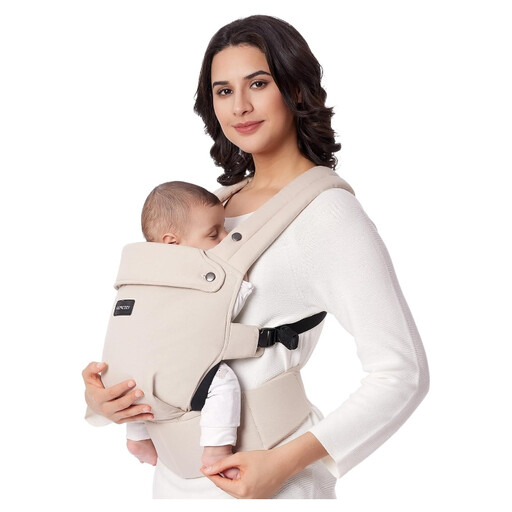
Why it stands out?: This model focuses on the simplicity and comfort of 100%?cotton. Designed for daily use, it combines exceptional softness for your baby's skin with an effective support system for the wearer. It's an excellent choice for beginners.
Advantages?:
Who is it for?? Parents looking for a classic, comfortable, and easy-to-use first front carrier for everyday outings. It also makes an ideal baby shower gift.
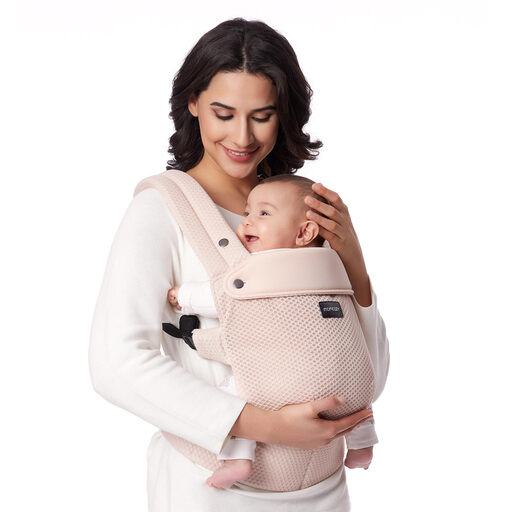
Why it stands out?: Specially designed for warm weather and active parents, this breathable baby carrier features a large ventilated mesh panel (Air Mesh) to maximise airflow. It's the ideal solution for comfortably carrying your baby in the summer or during active outings.
Advantages?:
Who is it for?? Parents living in sunny regions, those who get warm easily, or families who enjoy hiking and outdoor activities.
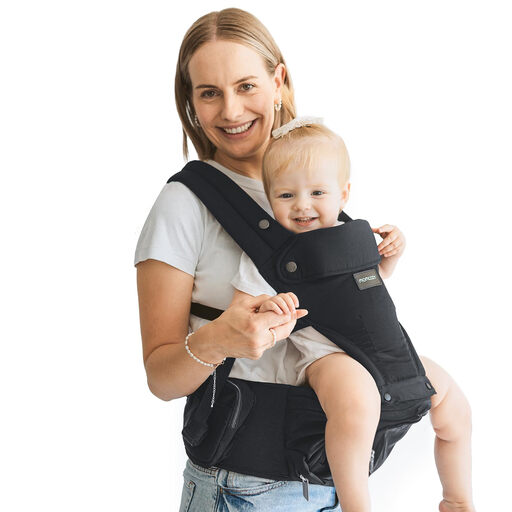
Why it stands out?: This ultra-versatile model includes a detachable hip seat. It can be used as a complete baby carrier or as a simple support seat for carrying a toddler over short distances without straining your arm or back.
Advantages?:
Who is it for?? Parents seeking a long-lasting, adaptable solution that grows with their child. Ideal for carrying older toddlers or for intensive and varied use.
Our selection highlights models that meet specific needs. To discover a wider range or compare other carrying systems, feel free to browse our complete category.
Discover all our toddler baby carriers
Most structured carriers can be used as soon as the baby reaches a certain weight, often 3.2?kg or 3.5?kg, and their neck is strong enough to hold their head up well (usually around 3 months). It is essential to always follow the manufacturer's weight and age recommendations and ensure the carrier is perfectly adjusted to your newborn's size.
In common usage, these two terms have become synonymous. They both refer to a carrying system that respects the child's anatomy ("M" position, rounded back) and the wearer's (balanced weight distribution). The goal is the same?comfortable and safe carrying for everyone's well-being.
Here are a few simple checkpoints?: