
Livraison le jour même ou le lendemain

Qualité garantie

Débloquez vos offres de bienvenue: Livraison GRATUITE | Jusqu'à -80 % | 30 jours d'essai gratuits à JoyPlus
Téléchargez l'application
Keeping your baby close while having your hands free is a luxury every parent appreciates. To combine closeness, comfort, and convenience, the ergonomic baby carrier has become the go-to solution. But be warned: the market is flooded with models making various promises, and it's easy to fall into common traps that turn a promising purchase into a regret.
Navigating the marketing claims can quickly become overwhelming. Some parents invest in a model that proves uncomfortable after just a few months, others end up with a fabric that turns every outing into a sauna for both baby and parent, and some find themselves with a support system that wrecks their back. This guide breaks down the essential criteria for making an informed choice that suits your daily life and promotes your child's well-being.
Before falling for a particular design or colour, it's crucial to verify a few technical points that make all the difference in terms of safety and comfort. A good ergonomic baby carrier must respect the natural posture of both the child and the parent.
The term "ergonomic" refers to respecting the baby's natural posture. The number one checkpoint? The famous "M" position, also known as the "frog-leg position."
The choice of fabric has a direct impact on comfort, especially as temperatures rise or fall.
The parent's well-being is just as fundamental. Extended babywearing can quickly turn into an ordeal if the baby's weight isn't distributed intelligently.
To put theory into practice, here are a few models that perfectly illustrate these criteria, each tailored to a specific user profile. They also make an excellent gift for new parents.
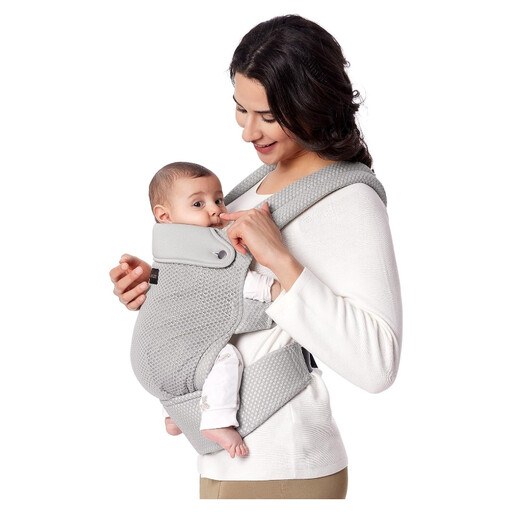
Why it's a match: Ideal for parents who love outdoor adventures or live in regions with hot summers. Its design is entirely focused on ventilation to prevent discomfort from the heat.
It tackles the overheating problem head-on with its Air Mesh fabric panel, a common pitfall of carriers made from thick, heavy material.
Maximum ventilation to keep baby and parent cool. The integrated lumbar support and X-cross straps ensure excellent weight distribution.
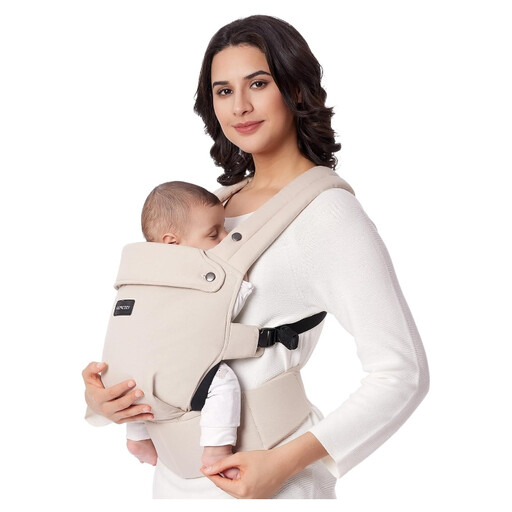
Why it's a match: Designed for parents seeking the softness and breathability of a natural material for their baby's delicate skin, without compromising on support.
It avoids potentially irritating synthetic materials. Its robust support system prevents the dreaded back pain that can develop after a few months of use.
Made from soft and breathable 100% cotton. The 3-point support system with EVA lumbar reinforcement ensures lasting comfort for the wearer.
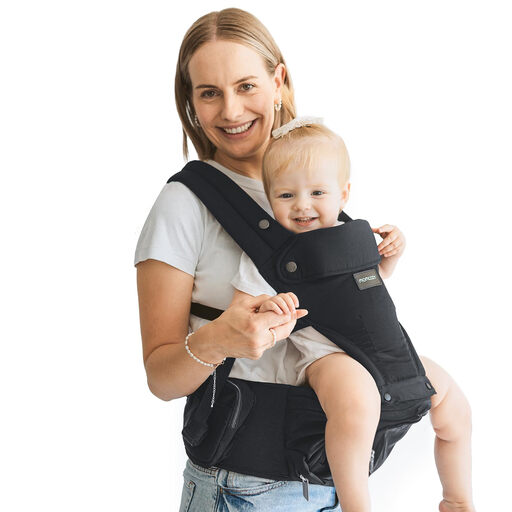
Why it's a match: Perfect for parents looking for a solution that grows with their child. Its detachable hip seat offers incredible flexibility, from classic front-carrying to an invaluable aid for carrying a toddler on your hip without strain.
It avoids the single-use carrier trap by offering multiple modes that adapt as your child grows, ensuring you get long-term value from your purchase.
Detachable hip seat offers 6 carrying positions. It guarantees the "M" position while relieving the parent's back, abdomen, and shoulders.
Explore our full collection of products that meet our strict selection criteria and current safety standards.
Most models are designed for use from birth or from a certain weight, typically around 7 to 8 lbs (approx. 3.2 to 3.5 kg), making them a newborn-ready baby carrier. However, it is imperative to always check the manufacturer's specific recommendations. Some models require a special infant insert for the first few weeks to ensure optimal head and body support.
It's simple to check: your baby's knees should be at the same height as, or slightly higher than, their bottom. The carrier's fabric should support their thighs fully, from one knee pit to the other. This ensures their pelvis is properly tilted and their back is naturally rounded.
Absolutely. The difference is night and day, especially as your baby gets bigger and heavier. An effective lumbar support, combined with a wide belt, transfers the weight from your shoulders and spine to your hips, which are much better suited to bear the load. The result: far less fatigue and back pain, allowing you to enjoy your outings for longer and with more peace of mind.