
Livraison le jour même ou le lendemain

Qualité garantie

Débloquez vos offres de bienvenue: Livraison GRATUITE | Jusqu'à -80 % | 30 jours d'essai gratuits à JoyPlus
Téléchargez l'application
For new parents, finding the ideal ergonomic baby carrier—one that combines comfort, safety, and simplicity—can be a daunting task. The market is flooded with options and marketing promises, but not all models are created equal. To help you sort through the noise, our editors have decoded the common pitfalls to avoid and the criteria that truly matter before you buy.
Marketing is one thing; the reality of daily use is another. Don't be swayed by flashy advertising: here are three red flags to watch out for to ensure you don't regret your purchase.
Beyond the pitfalls, three technical criteria are essential to guarantee your comfort and your child's.
A physiological baby carrier is designed to respect a newborn's natural anatomy. It must allow for a so-called "M" or "frog" position:
This posture is the only one that ensures the healthy development of the hips and spine. Check that the carrier's seat is wide enough to support your child's thighs from one knee to the other.
Carrying your child should remain a pleasure. A comfortable baby carrier is one that distributes weight evenly to prevent back and shoulder pain. Pay close attention to two elements:
The choice of fabric has a direct impact on comfort.
Finally, a detail that's anything but minor: check that the baby carrier is machine washable. A lifesaver for managing life's little accidents!
Rather than an endless list, we've matched leading models with real-world user profiles. The goal: to help you find the one that will truly fit your daily life.
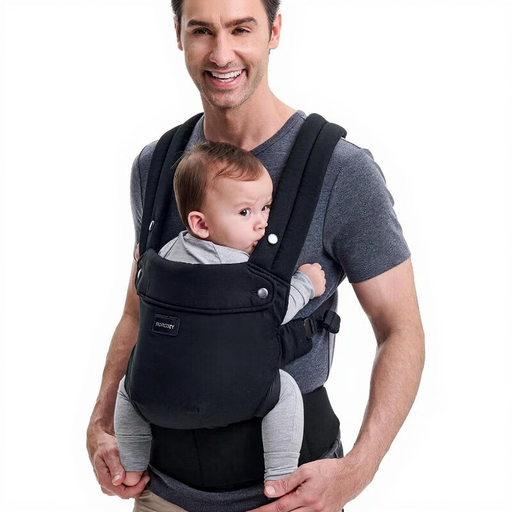
Why it's a perfect fit: Perfect for parents seeking a reliable and cosy solution for daily outings, running errands, or cuddle time at home. Its ease of use and immediate comfort make it an excellent first purchase.
Its design guarantees the crucial "M" physiological position and the rounded "C-shape" back. Its soft, breathable 100% cotton fabric immediately eliminates the risk of sweaty synthetic materials.
The EVA lumbar support integrated into the waistbelt is a game-changer: it provides real relief for the wearer's back, even on long walks.
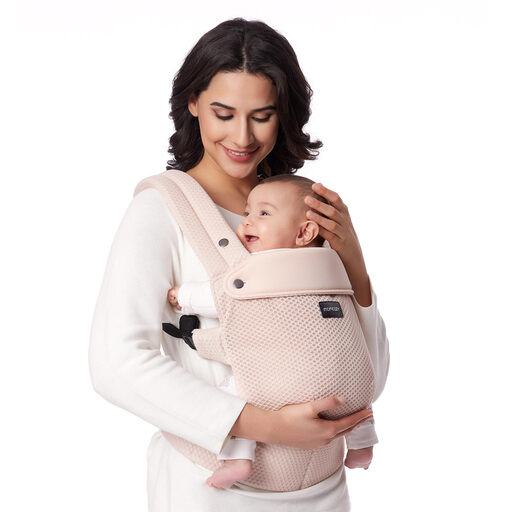
Why it's a perfect fit: The go-to choice for summer strolls, sunny holidays, and parents who tend to run warm. Its lightweight design also makes it an excellent travel companion, easy to slip into a bag.
It directly tackles the overheating trap. Its secret? A large, airy mesh panel (Air Mesh) that allows air to circulate, without ever sacrificing ergonomics.
The cooling technical fabric around the baby's neck and its ultra-ventilated design ensure optimal comfort for both child and wearer, even when the temperature rises.
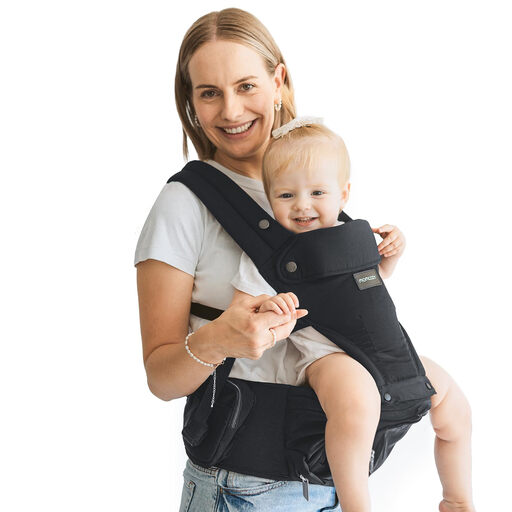
Why it's a perfect fit: Designed for parents looking for a single product to accompany their child's growth. The removable hip seat is a real bonus for carrying older toddlers without strain.
It sidesteps the "one-size-fits-all" trap thanks to its modularity. It's a 2-in-1 solution: a classic carrier for infants, then a hip seat alone for toddlers who are walking, ensuring perfect ergonomics at every stage.
Its impressive modularity (six carrying positions!) and detachable hip seat give it unbeatable versatility and longevity.
Discover our complete selection of products that meet all our quality criteria and the most demanding safety standards.
Most soft-structured carriers can be used once the baby reaches 3.2 to 3.5 kg (7 to 8 lbs) and has good head control, usually around 3 months. For a newborn baby carrier, some models include an infant insert or are specifically designed for use from birth. The baby wrap remains the top alternative for the very first weeks. In any case, always follow the manufacturer's recommendations.
The golden rule: the baby's airways must always be clear. Their chin should never rest on their chest. Their face must be visible at all times. Their legs should form an "M" shape (knees higher than their bottom), and their back should maintain its natural curve. Finally, they should be "close enough to kiss": you should be able to kiss the top of their head without leaning over.
It all depends on your priorities and comfort level.