
Livraison le jour même ou le lendemain

Qualité garantie

Débloquez vos offres de bienvenue: Livraison GRATUITE | Jusqu'à -80 % | 30 jours d'essai gratuits à JoyPlus
Téléchargez l'application
Learning to write is a key milestone, but it's also an uphill battle for children... and for their parents' patience. A page full of cross-outs can quickly become a source of frustration, turning a notebook into a battlefield. That's where the erasable pen comes in: a game-changer that lets you correct mistakes without a trace and keep notebooks pristine.
But be warned: not all models are created equal. Between marketing promises and real-world performance, it's easy to end up with a tool that complicates a student's life instead of simplifying it. To make sure you don't make the wrong choice, here are the pitfalls to avoid and the criteria that truly matter.
To avoid these pitfalls, focus on a few technical parameters that make all the difference.
A good ergonomic pen for children should naturally guide finger placement. Look at the grip section:
Some models are specifically designed for right- or left-handers, a significant advantage for developing good posture from the start.
There are two main types of erasable pens:
For daily school use, the erasable gel pen is often the most suitable choice, as the erasing tool is built right into the pen.
A good pen is a pen that lasts. The first thing to check before buying: is it refillable? A refillable model is not only more economical in the long run but also more eco-friendly. Make sure the corresponding refills are easy to find in stores and reasonably priced.
To help you choose, here is our selection of models that tick all the boxes for quality, ergonomics, and practicality.
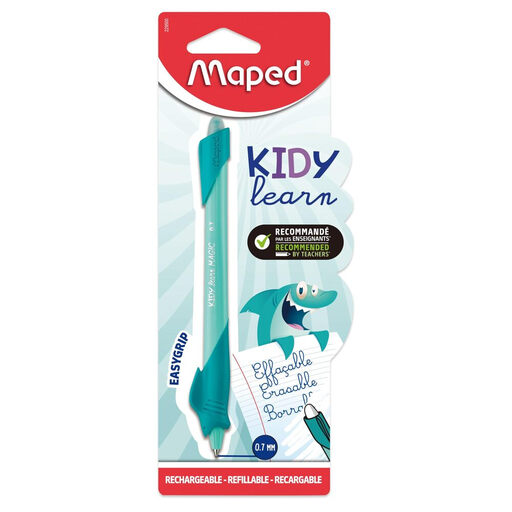
Why we chose it: Perfect for the first steps in writing, from preschool to first grade. Its fun shark shape is more than just a gimmick: it's designed to guide finger placement and prevent hand strain.
It sidesteps the trap of sacrificed ergonomics. Its soft, sculpted grip section is designed for small hands, whether right- or left-handed.
Guided, playful ergonomics. Twist mechanism to extend the tip (no more lost caps!). Refillable with standard ink cartridges.
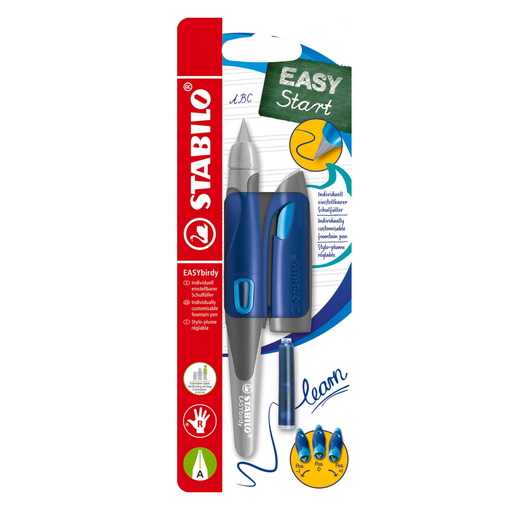
Why we chose it: The perfect solution for parents who want to gently introduce their child to a fountain pen. This model is a true benchmark in ergonomics and works with erasable blue ink cartridges.
It provides a tailor-made solution to the problem of a poor grip. Its nib is adjustable to three different angles to perfectly match each child's writing posture.
Adjustable iridium nib for a perfect glide. Non-slip grip section and a space for the child's name. Available in right- and left-handed versions.

Why we chose it: Perfect for primary and middle school students who need a reliable supply to last the whole year. This pack offers unbeatable value for money without sacrificing performance.
It avoids the false economy trap. By opting for a pack of 12, you ensure a durable supply for both school and home, avoiding last-minute emergency purchases.
0.5 mm needle tip for fine, precise writing. Thermosensitive gel ink that erases without smudging. An economical format perfect for heavy use.
We have selected a full range of products that meet our quality criteria and current safety standards.
Yes, this is a unique feature of the thermosensitive ink in gel pens. Since the ink becomes transparent with heat (above 60°C), it can become visible again if the paper is exposed to intense cold (below -10°C, for example, in a freezer). Rest assured, for normal school use, the risk is virtually zero. However, it's best to avoid using them to sign official documents or cheques.
A left-handed person's writing motion is different: they "push" the pen tip instead of "pulling" it. It is therefore crucial to choose a model whose nib or ballpoint doesn't scratch the paper. The easiest solution is to look for models labelled "for left-handers" (like the STABILO EASYbirdy) or ambidextrously designed pens (like the Maped Kidy Learn), which adapt to both hands.
No, and this is a key point to watch out for. Most gel pen refills are proprietary, meaning they are specific to a brand or even a model. As for fountain pens, while there is a "standard international" cartridge format, major brands (like Parker, Lamy...) use their own proprietary format. Pro tip: always check for compatibility and stick to refills from your pen's brand to avoid any unpleasant surprises.