Hosts who want to avoid leftovers
You’re making an Epiphany cake, bite-sized treats or a one-off snack, and would rather buy an amount that suits the occasion than have a large jar left to finish later.


For an Epiphany cake or a seasonal treat, start by choosing how much chocolate spread you need. A small jar can help you avoid buying a large one for a single occasion, but it doesn’t mean the spread comes in individual portions. Then compare the sugars, energy and fat per 100 g, and check the ingredients and allergens for the exact product. Claims such as “less sugar” or “no palm oil” don’t replace these checks.
You’re making an Epiphany cake, bite-sized treats or a one-off snack, and would rather buy an amount that suits the occasion than have a large jar left to finish later.
You’re choosing between a classic recipe and one labelled “less sugar”, and want to compare their nutritional information per 100 g.
You need to check the allergens in products served to guests, or are looking for a particular recipe, such as one made without palm oil.
For a one-off occasion, start with how much you’ll be serving, then compare the labels of recipes that suit your guests. A small jar and individually wrapped portions meet two different needs.
| What to consider | What to check | Who might find this useful? |
|---|---|---|
| Size and portions | Net weight, stated portion size and type of packaging. A 200 g jar isn’t necessarily divided into individual portions. | If I’m making just one cake, I’d rather buy a smaller amount, but I won’t mistake a jar for individual sachets. Around 34% of consumers prioritise this compact size. |
| Sugars and nutritional values | Sugars, energy and fat per 100 g on the exact products you’re comparing. | A “less sugar” claim isn’t enough for me to choose a recipe: I also want to know its other nutritional values. This is the top priority for around 33% of consumers. |
| Allergens and ingredients | The ingredients list and allergens for the jar you’re buying, particularly hazelnuts, milk and soya, depending on the recipe. | Before filling treats to share, I need to make sure the ingredients are suitable for everyone there. Around 20% of consumers put this check first. |
| Recipe preferences | Organic or no-palm-oil claims on the specific product, without treating them as a nutritional ranking. | I’m looking for a particular recipe and am happy to compare its nutritional values separately. This is the first consideration for around 13% of consumers. |
The jar’s weight tells you the total amount you’re buying, not how it’s divided up. Auchan’s listing for a 200 g jar of Nutella specifies that it doesn’t contain individual sachets.
If you want to measure out each bite or slice of cake, check the packaging and serve the amount you need.
This claim doesn’t tell you about the other nutritional values. Carrefour’s listing for Aline & Olivier spread also shows 600 kcal and 47.7 g of fat per 100 g.
Compare the sugars, energy and fat per 100 g on the packaging of the recipes you’re considering.
No palm oil describes a choice of ingredients, not the product’s overall nutritional values. Carrefour’s listing for Nocciolata shows 544 kcal per 100 g.
Check the ingredients, allergens and nutrition table separately.
According to the Ministry of the Economy, displaying a Nutri-Score is optional. The DGCCRF says that a nutrition declaration is compulsory for prepacked foods.
To compare two chocolate spreads, read their nutritional information per 100 g, whether or not a Nutri-Score is displayed.
Auchan’s listing describes a hazelnut and cocoa spread in a 200 g jar.
Carrefour lists an organic cocoa and hazelnut spread in a 400 g jar, made without palm oil or hydrogenated fats.
Carrefour lists a 200 g organic cocoa and hazelnut spread labelled “30% less sugar”.
Carrefour lists a cocoa and hazelnut spread under this brand in a 400 g jar.
These options range from a small 25 g pack to a 220 g jar and jars of 350–400 g. For Epiphany, choose according to how much you need to serve and the ingredients you’re looking for. Not every cocoa-based recipe is a chocolate and hazelnut spread.
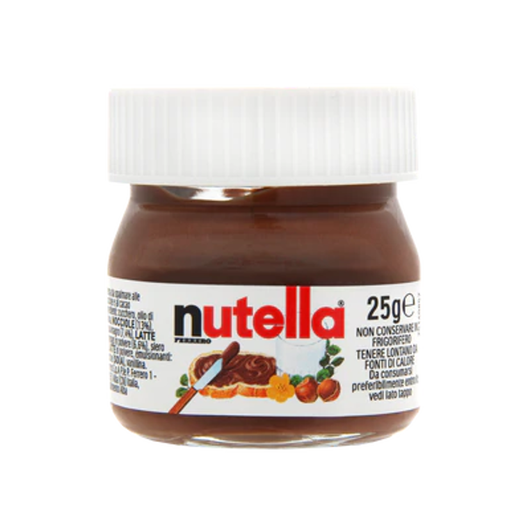 Image unavailable
The 25 g size is a good option if you only need a small amount to serve. Check the packaging if you’re looking for an individual sachet, and check the ingredients and nutritional values for this specific product.
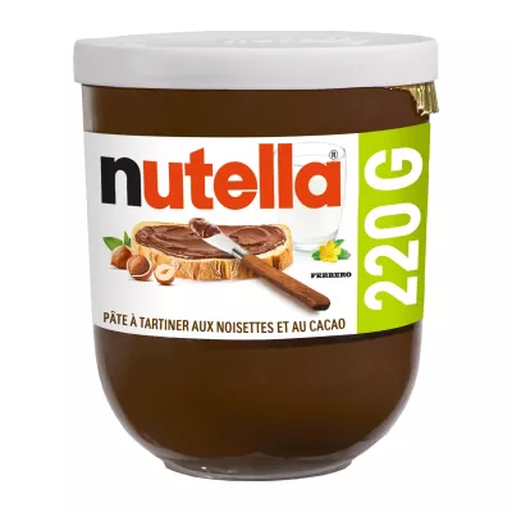 Image unavailable
This 220 g jar is a compact option for a one-off recipe, but it doesn’t provide individual portions. If any of your guests have dietary requirements, check the ingredients list and allergens on the exact product packaging.
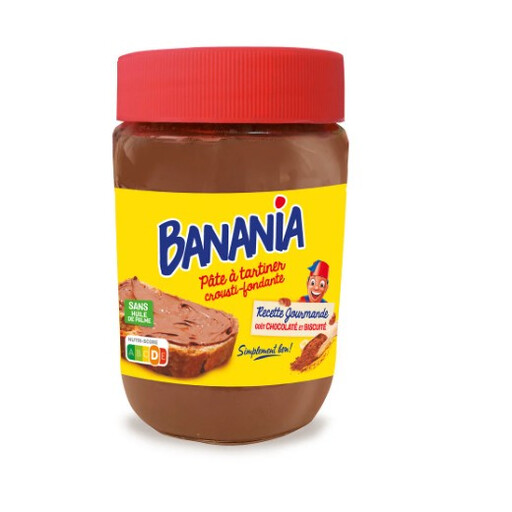 Image unavailable
This 400 g cocoa spread is an option for a recipe, and is described as being made without palm oil. Don’t assume it’s a chocolate and hazelnut spread: check the ingredients and allergens on the specific jar.
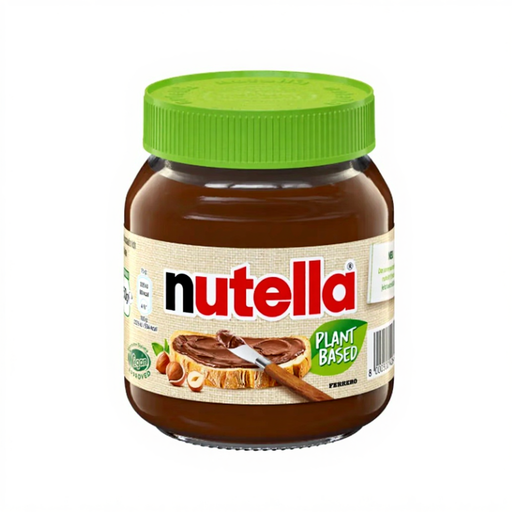 Image unavailable
The 350 g jar could suit you if you’re looking for a medium-sized amount of hazelnut and cocoa spread. Don’t assume it’s suitable for a particular diet or allergy based on the name alone: check the ingredients, allergens and nutritional information for the exact product.
No, displaying one is optional according to the Ministry of the Economy. The DGCCRF says a nutrition declaration is compulsory for prepacked foods. Compare the values per 100 g even if there’s no Nutri-Score on the jar.
Not necessarily: the jar’s weight and its packaging are two different things. Auchan’s listing for 200 g Nutella says it doesn’t contain individual sachets. Check the packaging and measure out the amount you need for your cake or bite-sized treats.
Read the ingredients list and allergen information on the jar you plan to use. The Auchan and Carrefour listings for the Nutella and Nocciolata recipes mentioned here include hazelnuts, milk and soya. Nocciolata’s “gluten-free” claim doesn’t mean it’s free from these ingredients.