Fans of intense cocoa
If you’re looking for a dark chocolate bar with a bold flavour, start with the stated cocoa percentage. Check the sugars, ingredients and allergens too: the percentage alone doesn’t tell you everything about the recipe.


For an Epiphany tasting centred on bold cocoa flavours, choose dark chocolate with a stated cocoa percentage, then compare the sugars, ingredients and allergens for the exact product. White chocolate is better suited as a milder option or as a contrast for guests with different tastes. Made with cocoa butter, milk and sugars, it is not a substitute for intense dark chocolate, according to the Ministry of the Economy.
If you’re looking for a dark chocolate bar with a bold flavour, start with the stated cocoa percentage. Check the sugars, ingredients and allergens too: the percentage alone doesn’t tell you everything about the recipe.
For an Epiphany tasting, you could serve white chocolate alongside dark. The Ministry of the Economy distinguishes between them by their composition: white chocolate offers a different option, not a milder version of dark chocolate.
Compare sugars per 100 g across similar products, then check the ingredients list and allergens for each product. If the packaging displays a Nutri-Score, treat it as an additional guide.
For Epiphany, first decide whether your priority is the intensity of dark chocolate, a variety of flavours at the table or a detailed look at the label. The Ministry of the Economy distinguishes white chocolate from dark chocolate by their composition.
| Priority | What to check | Best for |
|---|---|---|
| Intensity of cocoa flavour | Look for the description “ dark chocolate ” and the cocoa percentage on the bar you choose. | If I’m mainly looking for a bold cocoa flavour, I want to be able to choose the stated cocoa content; around 50 % of consumers rank this intensity as their top priority. |
| Contrasting flavours | Distinguish between white and dark chocolate products; if a recipe combines both, read the ingredients for the finished product. | If not all my guests enjoy intensely dark chocolate, I’d also like to offer them a milder option. This variety is the priority for around 25 % of consumers. |
| Sugars and allergens | Compare the “ of which sugars ” line per 100 g and check the ingredients, allergens and precautionary statements about traces. | When I need to check the recipe carefully before serving the chocolate, the label matters more than the flavour profile; around 25 % of consumers make this their top criterion. |
According to the Ministry of the Economy, white chocolate is made with cocoa butter, milk and sugars. It’s therefore not the right choice if you’re looking for intensely dark chocolate.
If that’s what you’re after, look specifically for the description “ dark chocolate ” and its cocoa content; keep white chocolate as a separate option.
Two bars with the same cocoa content can have different recipes. For example, Lindt France states that its Excellence Noir 70 % bar contains 30 g of sugars per 100 g and notes that traces may be present on its product page.
Check the nutrition information and allergen warnings for the exact variant before choosing it, particularly if you have an allergy to consider.
Santé publique France explains that displaying the Nutri-Score is voluntary. Its presence doesn’t replace checking the sugars, ingredients or allergens.
If it’s displayed, use it as additional information when comparing products in the same category.
The Lindt Excellence Noir 70 % bar is a clearly labelled starting point if you’re looking for dark chocolate with a stated cocoa content.
A Carrefour Traiteur product listing dated September 2022 describes a Nestlé dark chocolate product with at least 70 % cocoa, sold in a bag.
Carrefour Bio dark chocolate 70 % gives you another recipe to consider, with a stated cocoa content.
This selection includes dark chocolate bars with a stated cocoa content and two white chocolate options: one for baking and one for eating. Choose according to how you plan to use it for Epiphany, then check the label for the exact product.
 Image unavailable
Worth considering if you’d like to start with a dark chocolate bar displaying 85 % cocoa for your tasting. Check the sugars and allergen warnings on the packaging for this variant.
 Image unavailable
This mini size is a good choice if you’d rather offer individual bars than a large one to share. It displays a cocoa content of 70 %; check the precautionary statements about traces on the packaging.
 Image unavailable
This 100 g dark chocolate bar displays 70 % cocoa. Its recipe includes maltitol and carries a warning about excessive consumption, so read the full ingredients rather than looking only at the sugars line.
 Image unavailable
Consider this for making an Epiphany dessert with white chocolate, rather than as a substitute for intensely dark chocolate to eat. Check the ingredients, sugars and allergens on the packaging before cooking for your guests.
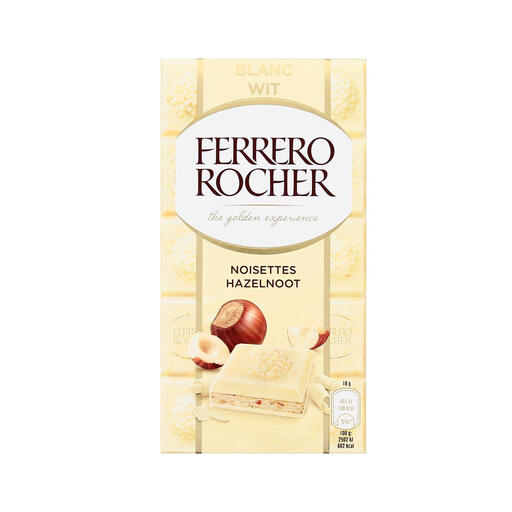 Image unavailable
This ready-to-eat white chocolate option can accompany a selection of dark chocolates. The recipe contains hazelnuts, milk and soya: check the exact product label before serving it, especially if anyone has an allergy.
No, not if you’re specifically looking for the flavour of dark chocolate with a high cocoa content. According to the Ministry of the Economy, white chocolate is made with cocoa butter, milk and sugars; offer it as a separate option instead.
No. Santé publique France says that displaying it is voluntary. Whether or not it appears, read the bar’s nutrition information and ingredients; if you use it to compare products, stick to the same category.
Read the ingredients list, where allergens must be highlighted according to the DGCCRF, as well as any precautionary statements about traces on the exact product’s packaging. Don’t assume an allergen is absent based on the colour of the chocolate or its cocoa content.
No: the levy described by the Ministry of the Economy applies to non-alcoholic drinks, not chocolate bars. To compare chocolate bars, check their sugar content on the label instead.