
Livraison le jour même ou le lendemain

Qualité garantie

Débloquez vos offres de bienvenue: Livraison GRATUITE | Jusqu'à -80 % | 30 jours d'essai gratuits à JoyPlus
Téléchargez l'application
The entryway is the first (and last) thing you see when you walk through the door. Yet, it too often descends into a chaotic zone piled high with shoes, coats, and bags. The result? Everyday life marred by clutter. Fortunately, a well-designed entryway furniture piece can change everything, transforming this simple passageway into a space that's as practical as it is welcoming.
This guide is here to help you find that perfect piece—one that fits your space and your lifestyle. Follow our advice and explore our selection to create an entryway that truly reflects you.
Before you commit to a model, there are a few key points to consider to ensure you make the right choice. A successful purchase is a thoughtful one!
This is the essential starting point: get out your tape measure! Measure the available width, depth, and height, but don't forget to account for door clearance (for both your front door and any closet doors). In a narrow hallway, a slim shoe rack or a piece with a shallow depth is the ideal solution. If you're lucky enough to have more room, a complete hall tree becomes a very appealing option.
How many pairs of shoes are currently living in your entryway? Do you need a place to hang coats, set down bags, or hide gloves and scarves?
Entryway furniture isn't just for storage; it's a decorative statement piece in its own right. It should, therefore, complement the rest of your interior. Materials and colours set the tone: the combination of black metal and raw wood is a hallmark of industrial style, while clean lines and light colours (white, natural wood) evoke a modern or Scandinavian vibe.
To help you turn ideas into action, here are three storage solutions, each designed to meet a specific need.
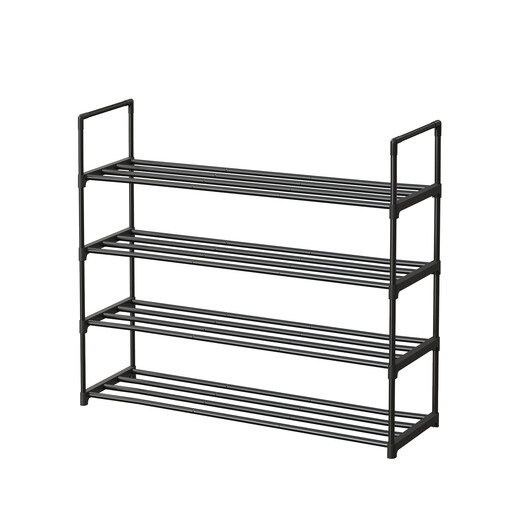
Why it stands out? This shoe rack is all about simplicity and efficiency. With a metal frame that is both lightweight and sturdy and assembly that requires no tools, it's the ultimate practical solution. Bonus: it's stackable, allowing you to expand your storage as your needs evolve.
Advantages:
Who is it for? Anyone looking for a budget-friendly, ultra-fast to assemble, and modular solution. It's perfect for small entryways, student studios, or as supplementary storage in a walk-in closet.

Why it stands out? This cabinet successfully combines a very large storage capacity with a sleek, modern design. Thanks to its doors, shoes disappear, leaving you with a consistently neat and tidy entryway. The details that make a difference? The gold handles and diamond pattern, which add a real touch of elegance.
Advantages:
Who is it for? Ideal for those who refuse to compromise on aesthetics and are looking for a closed shoe cabinet for a perpetually pristine entryway. It's so versatile it would also fit perfectly in a hallway, bedroom, or even a living room.
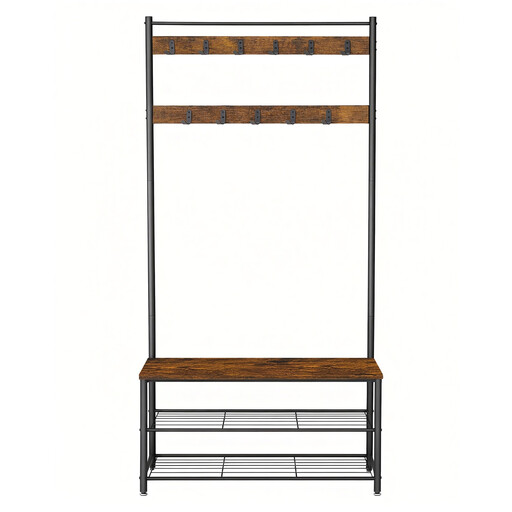
Why it stands out? This hall tree is the very definition of optimization. A true 3-in-1 solution, it combines coat hooks, a convenient bench for sitting, and shelves for shoes. Its industrial style, which pairs rustic-finish wood with black metal, will add character to your space.
Advantages:
Who is it for? The perfect option for families or anyone who wants to consolidate all entryway functions into a single piece of furniture. It's the ultimate version of the shoe storage bench, ideal for entryways with a bit of space to spare.
The possibilities for furnishing an entryway are nearly endless. If our selection doesn't check all your boxes for size, style, or capacity, don't worry—many other solutions are available.
Feel free to explore our complete collection to find the piece that will look like it was custom-made for your home.
Measure the available floor space (width, depth) and height. Leave comfortable walking space and ensure nothing obstructs the opening of doors (both the furniture's and the room's). Generally, a unit less than 35 cm deep is a good choice for narrow spaces.
Think vertically! Solutions like tall, slim shelving units are your best friends. A shallow-depth cabinet or a compact storage bench are also excellent options for optimising every square centimetre without visually cluttering the space.
Open shelves allow shoes to breathe and offer immediate access, but everything remains visible. A closed cabinet, on the other hand, protects from dust and ensures a clean, orderly look, but you'll need to air it out from time to time. It all depends on your priority: everyday convenience or a minimalist aesthetic.