Which appliance should you check first?
Start by comparing each appliance’s energy use with how often you use it, then check whether a new model of a similar size would meet the same need. Energy-label figures help you compare models within a category; on their own, they can’t predict your household’s energy consumption.
| Priority |
What to check |
What I need |
| Usage and bills |
Make a note of appliances that run continuously or very frequently. Compare their energy use over the same period and for an equivalent service, without turning an average figure into a promised saving. |
I’m concerned about my bill and want to know which appliance to check before replacing it. In the 2025 Energy-Info Barometer by France’s National Energy Ombudsman, 85% of the 2,000 households surveyed in mainland France said their bills took up a significant part of their budget. Among respondents who adapt their behaviour to reduce energy consumption, 87% do so to lower their bills. |
| Refrigeration and freezing |
Compare the kWh per year, usable capacity and features of appliances of the same type. ADEME notes that excess capacity or certain features can increase energy consumption. |
My fridge or freezer runs around the clock. I want to work out whether a model with a suitable capacity would make replacing it worthwhile. |
| Washing and drying clothes |
For a washing machine, check the kWh per 100 cycles, water use per cycle, capacity, reference programme duration and noise level, using the parameters given by the European Commission. For a tumble dryer, check the applicable energy label and the cycle time of the model you’re considering. |
I use my machines often and want a capacity that suits my usual loads, as well as drying that fits my routine. |
| Dishwashing |
Compare models with a similar capacity: energy use per 100 cycles, water use per cycle, Eco programme duration and noise level. Check that the reference programme matches your habits. |
I use my dishwasher regularly and want to compare appliances that can genuinely fit the dishes my household needs to wash. |
| Cooking |
Note how often you cook, the technology used by your current hob and the oven’s capacity. ADEME’s annual figures are based on appliances and reference usage periods, so compare them with your own situation carefully. |
If I often cook using electricity, I want to know whether my current appliance is worth looking at before I consider one I use less often. |
| Size and installation |
Check the volume, capacity, dimensions and connections required. ADEME advises against choosing an oversized fridge or a large drum without a matching need. |
I want enough room for my food or laundry loads without choosing a capacity I’ll rarely use. |
| How long you’ll use it |
In France, check the durability index for applicable washing machines and the repairability index for applicable dishwashers. Both are rated out of 10, according to the ministries responsible for the ecological transition. Check the details for the exact model. |
An appliance I use for a long time should remain suitable and be maintainable. Electricity consumption isn’t my only consideration. |
Brand information
There are no brand profiles to display.
Appliances to compare on Joybuy
This selection includes fridges and freezers, a compact dishwasher and a tumble dryer. To decide which appliance to check first, start with the appliances you already own and how you use them. Then compare each model with an appliance that does the same job and has a similar capacity.
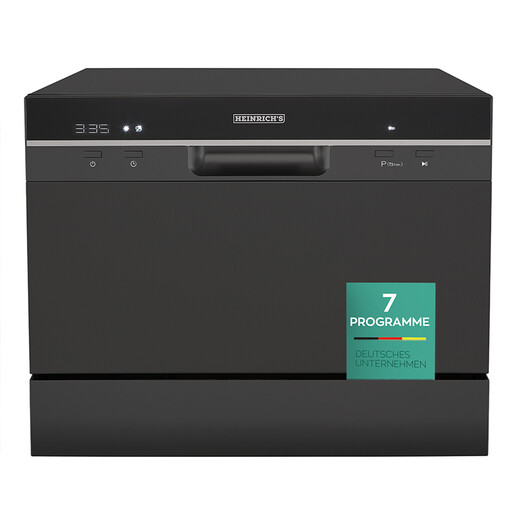 Image unavailable
Heinrich's HTG 8840 Schwarz, tabletop dishwasher, 6 place settings
Its tabletop design may suit you if six place settings and the space you have available meet your needs. The product title lists seven programmes, 47 dB and a D energy rating. Check the energy-use figures, cycle durations and connections on the product page for the exact model.
View on Joybuy
 Image unavailable
Sonlu CC-520WE, 444 L fridge-freezer
Before replacing a fridge or freezer, consider whether you really need 444 L of capacity. The product title mentions frost-free technology, 40 dB and an E energy rating. Check the energy label for the exact model’s annual energy consumption, and make sure its dimensions fit your installation space.
View on Joybuy
 Image unavailable
LG GBBSJ1CCSW, 333 L fridge-freezer
Compare its 333 L capacity with the usable capacity of your current appliance to make sure it offers a similar level of service. The product title lists a C energy rating. Check the annual energy consumption on the label for the exact model before deciding whether replacing your current appliance is worthwhile.
View on Joybuy
 Image unavailable
Hotpoint CHD84MWBSEE, 8 kg heat pump tumble dryer
If you often tumble-dry your clothes, check that an 8 kg capacity suits your usual loads. The product title lists a heat pump and a C energy rating. Check the energy label for the exact model to compare energy use per cycle and programme duration.
View on Joybuy
 Image unavailable
Heinrich's, 161 L frost-free freezer
If you’re replacing a freezer, compare its 161 L capacity with the amount of space you currently use. The product title lists a C energy rating, drawers and a reversible door hinge. Check the annual energy consumption and dimensions for the exact model.
View on Joybuy
Frequently asked questions
Can you directly compare an old appliance with a new model?
Yes, as long as you compare the same type of appliance, a similar capacity and an energy-use unit that’s relevant to how you use it. For appliances that run cycles, take the reference programme and the number of cycles you run into account. ADEME’s published averages can’t predict energy use in an individual household.
Is the A to G rating enough to help you choose?
No. Check the kWh figures and capacity too, as well as water use per cycle, programme duration and noise level, depending on the appliance. The European Commission says the QR code on the energy label gives you access to model information in EPREL.
Are all tumble dryers made available since July 2025 heat pump models?
Not necessarily. According to the European Commission, the requirements for new tumble dryers placed on the EU market since 1 July 2025 only allow heat pump models. These requirements don’t apply in the same way to appliances placed on the market before that date and still held in a retailer’s stock. Check the technology and energy label for the specific model.
Which index should you check to assess the lifespan of a washing machine or dishwasher?
In France, the durability index out of 10 has applied to washing machines since 8 April 2025, while the repairability index out of 10 applies to dishwashers, among other appliances, according to the ministries responsible for the ecological transition. These indices provide information that’s separate from the energy label.
Should you replace an appliance that still works?
Not automatically. Compare its condition, capacity and how you use it with the standardised energy consumption of a new model that would do the same job. ADEME points out that excess capacity or unnecessary features can increase energy use. It’s also worth considering whether you could adjust how you use your current appliance.


