How should you set your priorities?
First, compare each appliance with the job it does in your home. Annual kWh for refrigeration, washing cycles and cooking modes are not directly comparable.
| Priority | What to check | Your needs |
|---|
| Fridge and freezer |
Compare kWh/year for appliances of the same type and a similar capacity. Check the usable volume and the exact model’s entry in EPREL, the European Commission’s database. |
My appliance runs all year round: does its capacity still suit what I store? The ADEME’s 2026 published averages are 180 kWh/year for a fridge, 315 kWh/year for a fridge-freezer and 300 kWh/year for a freezer; they do not describe my appliance. |
| Dishwasher |
According to the ADEME, the energy label shows kWh per 100 reference cycles, water consumption per cycle, capacity, Eco programme duration and noise level. Compare these figures with how many cycles you run. |
If I use the dishwasher often, is its capacity right for my usual loads? A figure based on the Eco programme may not reflect how other programmes perform. |
| Electric hob |
The European Commission says energy labels are not compulsory for hobs. Check the technology, cooking zone sizes and whether your cookware is compatible. |
I cook regularly: would a new hob suit my pans and the way I cook? Choosing induction alone does not guarantee lower energy consumption. |
| Electric oven |
Compare usable volume and kWh per cycle for the cooking mode you use. GuideTopten.fr distinguishes conventional and fan-assisted cooking on the energy label. |
Do I use my oven often enough for its consumption per cycle to affect my decision? I’m looking for a capacity that suits the quantities I usually cook. |
| Repair |
Ask for a diagnosis, identify the parts needed and consider the appliance’s overall condition. For relevant categories, also check the repairability index listed by the ADEME. |
The appliance still does its job: could a repair extend its useful life in good working order, or do its limitations mean it’s time for a replacement? |
Which brands should you compare?
These brands feature in GuideTopten.fr’s French selections. Compare the specific model, its capacity and its energy consumption rather than choosing on brand name alone.
Liebherr
GuideTopten.fr features Liebherr models in its fridge and freezer selections.
- Compare refrigeration models that offer the capacity you need.
- The models featured do not represent the entire range. Check the kWh/year and dimensions of the model you choose.
Bosch
Bosch fridges and freezers feature in GuideTopten.fr’s selections.
- These models may be worth comparing with other refrigeration appliances of a similar capacity.
- Their inclusion does not tell you about the specifications of every Bosch model.
Miele
GuideTopten.fr includes Miele models in its fridge and freezer selections.
- Check the specifications of models that suit your installation.
- Compare the capacity and kWh/year of the exact model rather than generalising about the brand.
Whirlpool
GuideTopten.fr features Whirlpool models among its fridges and dishwashers.
- Its listing for the W7I HF60 TU dishwasher shows 55 kWh per 100 cycles and 9.5 L of water per cycle.
- These figures apply to the W7I HF60 TU only; they should not be attributed to any other Whirlpool dishwasher.
Hisense
Hisense fridges feature in GuideTopten.fr’s selection.
- The RB440N4ACA listing shows 109 kWh/year; consider this alongside its capacity and dimensions.
- This energy consumption figure is specific to the RB440N4ACA and does not describe other Hisense models.
Appliances to consider on Joybuy
These options include fridge-freezers and a compact dishwasher. Before deciding whether to replace one of these appliances, first compare its capacity and how you use it with your current appliance.
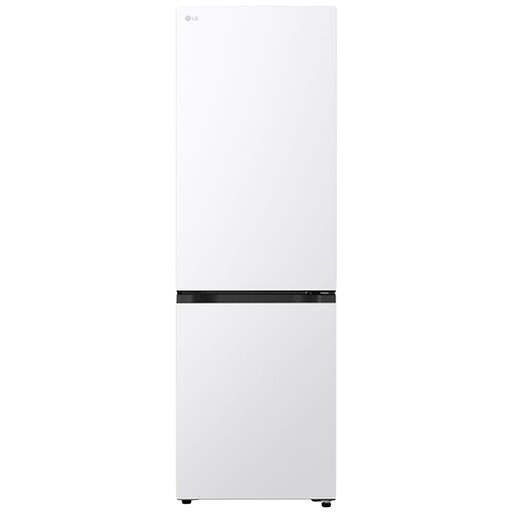 Image unavailable
LG GBBSJ1CCSW NatureFRESH DoorCooling+ LinearCooling, 333 L, C rated
This fridge-freezer may be worth considering if you’re replacing an appliance that runs continuously and need a capacity of 333 L.
Check the annual energy consumption on the label or in EPREL for this exact model, and make sure you have enough space to install it.
View on Joybuy
 Image unavailable
Samsung RB33B612EBN, 344 L, E rated
Compare this 344 L fridge-freezer with the capacity your household actually needs.
Check the kWh/year for this exact model on its label or in EPREL, then make sure you have the required space and clearances.
View on Joybuy
 Image unavailable
Candy CFQQ5T817EPS, four-door, 467 L, E rated
Before replacing a smaller fridge-freezer, consider whether its 467 L capacity is right for the amount of food you store.
The model name indicates Total No Frost functionality. Check the kWh/year for this variant on its label or in EPREL, as well as its overall dimensions.
View on Joybuy
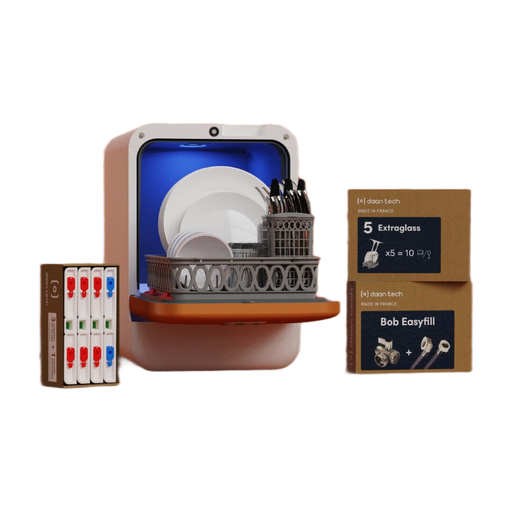 Image unavailable
Bob The Eco-Compact, All-Options pack, white and copper
This compact dishwasher may be worth considering if you have limited space or usually wash smaller loads.
Before comparing its energy consumption with another dishwasher, check its capacity and the Eco programme figures on the label for the exact model.
View on Joybuy
 Image unavailable
Sonlu CC-520WE, 444 L, E rated
Consider this 444 L model if you need plenty of storage space, but don’t assume that a larger capacity will reduce your energy consumption.
The name indicates a frost-free function. Check the kWh/year for this exact model on its label or in EPREL, along with the space needed to install it.
View on Joybuy
Frequently asked questions
Which kitchen appliance should I look at first?
Start with your fridge and freezer, as they run continuously, but don’t assume they necessarily need replacing. The ADEME gives annual averages of 180 kWh for a fridge, 315 kWh for a fridge-freezer and 300 kWh for a freezer. Your decision will depend on your appliance, its capacity and condition, and how you use it.
Is the energy rating enough to compare two appliances?
No. First compare appliances of the same type and a similar capacity, then look at kWh/year for refrigeration, kWh per 100 Eco cycles for dishwashers, or kWh per cycle for ovens. The European Commission’s EPREL database lets you check information for the exact model covered by the energy label.
Do electric hobs have an energy label?
No. The European Commission says there is no requirement for hobs to carry an energy label. Check the type of hob, whether your cookware is compatible and whether the cooking zones suit the pans you use.
Should I repair my dishwasher before replacing it?
If the dishwasher still suits your household, get it assessed for repair. A diagnosis and details of the parts needed will help you decide. The European Commission requires certain parts to be available for affected models for 10 years after they are withdrawn from the market, but this does not guarantee that a specific fault can be repaired.
Where can I find a repairer in France?
The ADEME’s ‘What should I do with my items and waste?’ tool can help you find professional repairers, Répar’Acteur tradespeople and repair workshops. Some professionals are listed as offering the Repair Bonus; check with them directly to see whether your appliance is eligible.


