Which criteria should you look at first?
Start by distinguishing between appliances that run continuously and those whose energy use depends on their cycles. If an appliance can be repaired, a breakdown could change the order in which you were planning to replace things.
| What matters |
What to check |
Consumers concerned |
| Continuous refrigeration |
Compare kWh/year for appliances with the same function and a similar capacity; check which features you actually need. |
If my old fridge or freezer stays plugged in all the time, I want to know whether it deserves to be my first comparison, rather than relying on its age alone. Around 33% of consumers would prioritise this question. |
| Repair before buying |
Check the warranty, get the fault diagnosed and ask for a quote; check the Repair Bonus conditions if you’re considering it. |
When a broken appliance still meets my needs, I’d rather look into repairing it before planning a replacement. Around 27% of consumers would prioritise this. |
| Laundry cycles |
Compare kWh per 100 cycles, capacity suited to your usual loads and spin performance. |
If I do laundry frequently, I’m mainly looking for a capacity that suits my washing and comparable figures for my cycles. Around 20% of consumers would put laundry first. |
| Dishwashing cycles |
Compare kWh per 100 cycles and litres per cycle for models with a similar capacity; also check the duration of the Eco programme. |
If I use my dishwasher often, I want to assess its energy and water use in relation to how I use it, rather than choosing based on the energy rating alone. For around 20% of consumers, this would be their main priority. |
Brands to know
There are no brands to feature in this section.
Appliances to compare on Joybuy
These appliances offer two replacement options to consider: a fridge-freezer or a washing machine. Start by choosing the category that suits your household, then compare models with a suitable function and capacity. If an appliance has broken down, it may also be worth looking into a repair before buying a replacement.
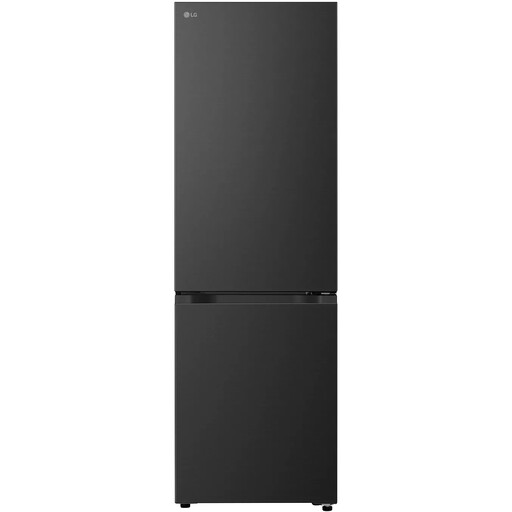 Image unavailable
LG GBBS312AEV, 333 L fridge-freezer
Worth considering if you’re replacing a fridge-freezer and a capacity of 333 L suits your needs.
Energy rating A, No Frost technology, black finish. Compare its annual energy consumption with that of an appliance with a similar function and capacity, and check the dimensions before buying.
View on Joybuy
 Image unavailable
Haier T Series 7 THASN276TM6-S, 7 kg washing machine
Worth a look if you want a top-loading washing machine and 7 kg suits your usual loads.
Spin speed listed as 1 200 tr/min, energy rating A, steam functions and Wi-Fi. Compare the figures on the label with those for your current appliance, and check the installation space and durability index.
View on Joybuy
 Image unavailable
Candy TCA464TM4-S ProWash 500, 6 kg washing machine
Worth considering if a top-loading machine suits you and 6 kg is enough for your laundry.
Spin speed listed as 1 400 tr/min, energy rating B, Wi-Fi and 17 programmes. Check the dimensions and compare the energy consumption figures on the label using the same cycle basis; also check the durability index.
View on Joybuy
 Image unavailable
Candy CFQQ5T817EPS, 467 L four-door fridge-freezer
This style is worth comparing if you really need a 467 L fridge-freezer.
Energy rating E, Total No Frost technology, silver finish. Before assessing annual energy consumption, compare the capacity and four-door design with your current appliance and the space available.
View on Joybuy
 Image unavailable
Sonlu CC-520WE, 444 L fridge-freezer
Worth a look if you’re after a 444 L fridge-freezer and that capacity suits your household’s needs.
Energy rating E, frost-free design and light silver finish. Compare the kWh/year with those of appliances with a similar function and capacity, then check the dimensions and installation requirements.
View on Joybuy
Frequently asked questions
How do you compare an old fridge with a new model?
Compare their energy consumption in kWh/year only if the appliances have a similar function, capacity and features. The ADEME’s guidelines can help you decide which appliance to look at, but they aren’t enough to predict how much your energy use will fall at home.
What should you look for on a dishwasher energy label?
Check the kWh per 100 cycles, litres of water per cycle, capacity, noise level and the duration of the Eco programme. The ADEME notes that the reference programme is often the Eco programme, so take into account the programmes you actually use.
Should you replace a broken washing machine or dishwasher?
Not necessarily: check the warranty first, then get a diagnosis and a quote. For an eligible repair carried out by a QualiRépar-certified professional, the Repair Bonus may be deducted from the bill if the appliance is no longer covered by a warranty and the fault meets the scheme’s conditions, according to ecosystem.
What should you check before putting a breakdown down to wear and tear?
Check the appliance’s maintenance history and visible condition before deciding it needs replacing. The ADEME specifically mentions descaling laundry appliances and cleaning filters and seals; if there’s a fault, these checks don’t replace a professional diagnosis.
What should you do with your old fridge if you replace it?
Take it to a suitable disposal route for appliances containing refrigerants. The ADEME says that collection when your new appliance is delivered, or using a suitable collection point, are options worth considering.


