
Livraison le jour même ou le lendemain

Qualité garantie

Débloquez vos offres de bienvenue: Livraison GRATUITE | Jusqu'à -80 % | 30 jours d'essai gratuits à JoyPlus
Téléchargez l'application
With soaring energy prices, striking the right balance between comfort and controlling your bills has become a top priority. A well-chosen energy-efficient space heater is a powerful ally for warming up a specific room (like an office or bedroom) without having to run your entire central heating system. The problem? The market is flooded with marketing promises that too often turn a smart purchase into a bitter regret.
As a Product Expert at Joybuy, my role is to help you decode spec sheets and avoid the most common pitfalls. Follow this guide to find the device that checks all the boxes: efficiency, safety, and savings.
Before we dive into the technical details, let's review the three classic mistakes that can cost you dearly.
To make the right choice, focus on the few features that truly matter for judging the effectiveness of an electric space heater.
The type of technology directly impacts heating speed and the feeling of comfort.
For spot heating and quick warmth, the ceramic fan heater stands out as the best all-around choice.
The power, measured in Watts (W), should be appropriate for the size of the room. As a rule of thumb, you generally need 100W per square meter for a well-insulated room.
However, power alone isn't enough. A space heater with a thermostat is therefore essential. It allows you to set a target temperature. Once that temperature is reached, the device shuts off or reduces its power, preventing unnecessary energy consumption. This is the key to truly "energy-efficient" operation.
The safety of a portable electric heater is non-negotiable. Always check for the presence of the following two protections:
The presence of the CE mark guarantees that the product complies with European safety standards.
To put theory into practice, here are some models that meet specific needs while avoiding the pitfalls we've discussed.
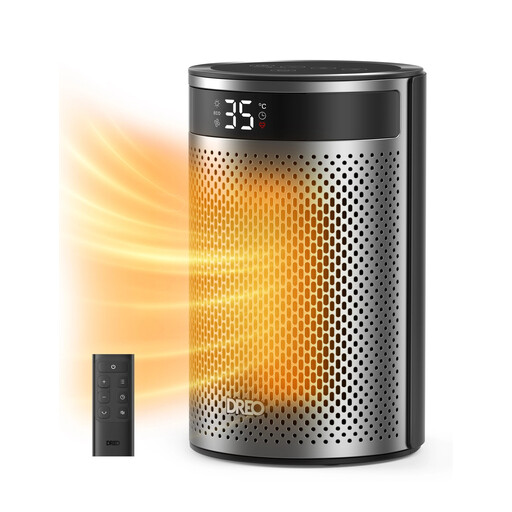
Why it's perfect here: Its small footprint and very quiet operation (as low as 34 dB) make it an ideal work companion. It quickly heats your personal space without being disruptive.
It tackles the "misleadingly quiet" pitfall. Its brushless motor technology is designed to minimize noise, a verifiable feature that is essential for concentration.
A precise thermostat adjustable from 5 to 35°C and an Eco mode for smart energy management.
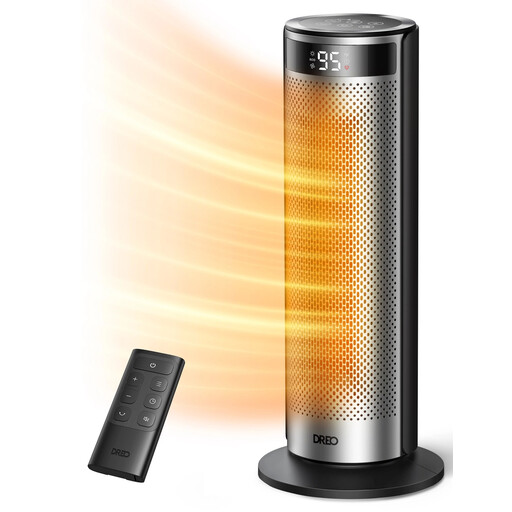
Why it's perfect here: With 2000W of power and 70° oscillation, it evenly heats larger rooms (up to 25 m? according to the manufacturer). Ideal for a living room or a large bedroom.
It directly addresses the safety pitfall. Its "Shield360?" system integrates 8 safety features, including tip-over and overheat protection, and the use of flame-retardant materials.
The perfect combination: fast, powerful heating and maximum safety for peace of mind when used around family.
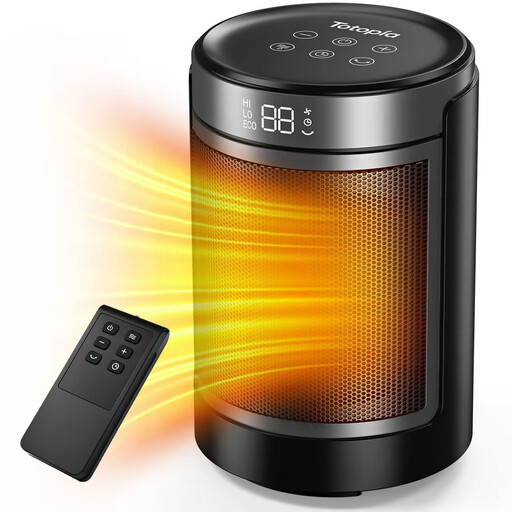
Why it's perfect here: This is the Swiss Army knife of our selection. With 4 modes, including an Eco mode, it adapts to any need by optimizing energy consumption. The remote control and timer are real bonuses for everyday convenience.
It counters the "excessive consumption" pitfall. Its Eco mode adjusts the power based on the ambient temperature to heat smartly, without wasting a single watt.
Its versatility, thanks to multiple modes and smart energy management.
Explore our full selection of products that meet our strict criteria for performance and safety.
The required wattage mainly depends on the room's size and the quality of its insulation. Here are some general guidelines:
Keep in mind that a device with a thermostat will only use its full power until it reaches the target temperature.
Its cost-effectiveness comes not from its raw power consumption, but from its smart operation. Ceramic technology provides very rapid and targeted heat. When combined with a thermostat and a timer, it allows you to heat a specific area for a limited duration, which is far more economical than turning on the central heating for just one room.
As a precaution, it is not recommended to leave a space heater running unattended, including overnight. However, modern models equipped with comprehensive safety features (tip-over and overheat protection), a precise thermostat, and a programmable timer offer a high level of safety. The ideal approach is to set the timer to turn the unit off after an hour or two—just enough time to fall asleep in a perfectly warm room.