
Livraison le jour même ou le lendemain

Qualité garantie

Débloquez vos offres de bienvenue: Livraison GRATUITE | Jusqu'à -80 % | 30 jours d'essai gratuits à JoyPlus
Téléchargez l'application
When your central heating can't keep up, or you just want to warm a single room without skyrocketing your electricity bill, an energy-efficient space heater is the go-to solution. The problem? The market is flooded with marketing promises that often lead to disappointment. A device that's cheap to buy can quickly become an energy hog and prove unreliable in the long run.
To ensure you don't regret your purchase, here’s how to avoid the most common pitfalls and choose a model that ticks all the boxes: comfort, safety, and savings.
electric space heater can be highly effective, but if it's constantly blowing like a small jet engine, it quickly becomes unbearable in a bedroom heater or office heater. The noise level, measured in decibels (dB), is a detail often overlooked by manufacturers, yet it's crucial for your daily comfort.You don't need to be an engineer to make the right choice. Just focus on a few technical points that truly make a difference in performance, safety, and, of course, your bill.
The ceramic fan heater, also known as PTC (for Positive Temperature Coefficient), stands out as the benchmark technology for space heaters. Its secret? The ceramic element heats up almost instantly and, most importantly, is self-regulating. In practice, its electrical resistance increases with the temperature, which naturally limits any risk of overheating and stabilises energy consumption. The result: a solution that is both safe and incredibly effective for a quick, localised boost of heat.
Contrary to popular belief, a 1500W heater with a thermostat won't necessarily cost you more to run than a 1000W model. The power (in watts) determines the heating speed. The thermostat, however, is the true conductor: it maintains the desired temperature by shutting the unit off once the target is reached and only turns it back on when necessary. It's this smart regulation that generates real savings by preventing the device from running needlessly at full power.
A good portable electric heater should be as easy to move as it is stable once in place. Check for safety certifications (the CE mark is the minimum) and the following features:
These elements ensure peace of mind during daily use.
Instead of an endless list, we've selected a few models that stand out from the crowd. Each one meets a specific need while adhering to our criteria for performance and safety.
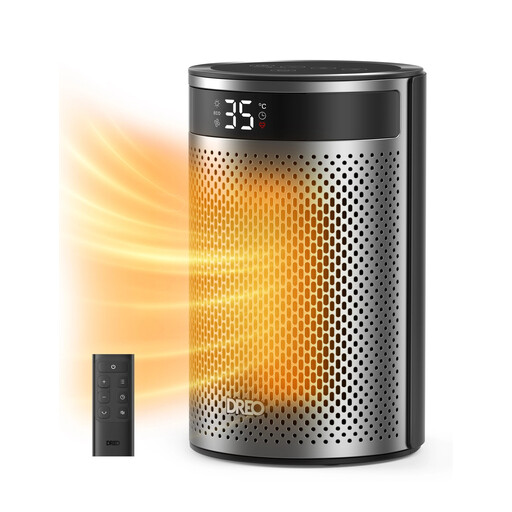
Why we recommend it: Perfect for an office or bedroom, this quiet little heater was designed to never disturb your concentration or sleep. Its compact size and low noise level make it a discreet and effective companion.
It directly tackles the noise pitfall. According to the manufacturer, its HyperSilent technology limits the noise level to just 34 dB, which is barely more than a whisper. A true feat for a fan heater.
Its precise thermostat, adjustable from 5 to 35 °C, and its arsenal of 8 safety protections (Shield360?), including the essential tip-over and overheat safeguards.
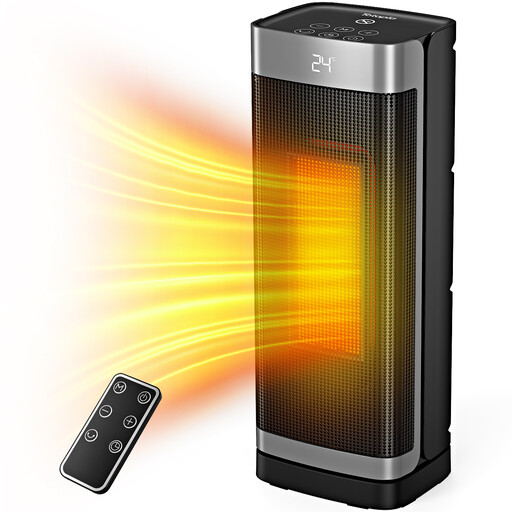
Why we recommend it: With its 2000W of power and oscillation function, it's designed to quickly heat a small living area or a large bedroom. Its remote control and timer make it especially convenient for daily use.
It goes all-in on safety. Equipped with dual protection (tip-over and overheat) and a chassis made of flame-retardant materials, it ensures complete peace of mind.
Its 2000W power for express heat-up, its wide-angle oscillation for better heat distribution, and its programmable timer for up to 12 hours.
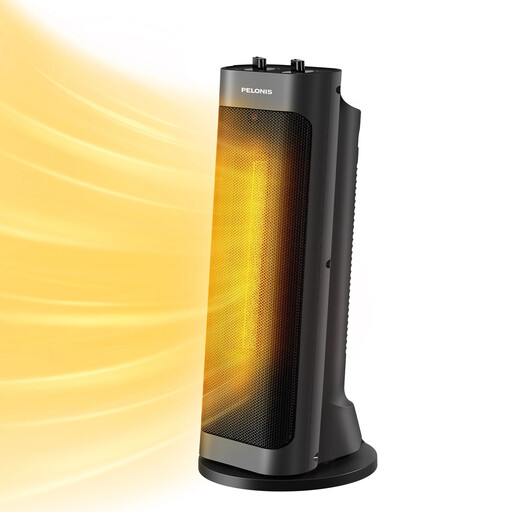
Why we recommend it: This is the ultimate portable model. For those who need a quick blast of heat, here and now. Its carrying handle and near-instant heating make it perfect for moving from the bathroom in the morning to the living room in the evening.
It makes no compromises between power and portability. Unlike often underpowered mini-heaters, its 2000W and PTC technology ensure an effective temperature rise in just a few seconds, according to the brand.
Its ultra-fast heating (the manufacturer claims 20 °C in 3 seconds), its 70° oscillation, and its triple safety protection (flame-retardant material, tip-over, and overheat).
Explore our full selection of products that meet our selection criteria and current safety standards.
The cost depends on your price per kilowatt-hour (kWh). A 1500W device consumes 1.5?kWh if it runs at full power for one hour. With an average kWh price in France around €0.25 (2026 estimate), one hour of use will cost you approximately €0.38 (1.5?kWh x €0.25). Fortunately, the thermostat significantly reduces this expense, as the unit only operates intermittently to maintain the temperature.
Its main economic advantage is its efficiency. Since it heats up very quickly, it runs for less time to reach the desired temperature. Its self-regulating capability (PTC technology) stabilises consumption and enhances safety. Combined with a thermostat, it's one of the smartest pairings for controlled energy use.
It is strongly advised against, unless the device is specifically designed for overnight use. If you must, it is imperative to choose a model that includes multiple safety features: tip-over protection, overheat protection, and ideally, a timer to schedule its shutdown. Finally, the golden rule: always place it on a stable surface, far from any flammable objects (curtains, duvets, rugs...).