With energy prices soaring, balancing thermal comfort with budget control has become a real challenge. A well-chosen energy-efficient space heater is a powerful solution for heating a specific room in record time, all while keeping your expenses in check. However, the market is saturated with marketing promises that often lead to disappointing purchases. As product experts at Joybuy, our mission is to help you navigate these pitfalls and find the device that will truly meet your expectations.
The 3 Pitfalls to Avoid Before Buying a Space Heater
Before you commit, beware of these common mistakes that can prove costly in the long run:
- The Myth of "Absolute" Low Energy Consumption: Many devices are labelled "economical" or "low-energy" without any context. A 2000W heater will always consume 2 kWh if it runs at full power for one hour. True savings don't come from raw power, but from the device's ability to use it intelligently: a portable heater with a precise thermostat, an ECO mode, or a timer are the real assets for controlled consumption.
- The Noise Trap: A powerful small electric heater might seem ideal for a bedroom. But if its fan generates a constant, annoying background noise, it quickly becomes unusable at night or in an office. The noise level, expressed in decibels (dB), is a critical criterion that is too often overlooked. A silent space heater is simply essential for living spaces and bedrooms.
- Mismatching Technology to Your Needs: Buying a radiant heater with the hope of heating a large living room is a classic mistake. Each technology has its own sweet spot. A ceramic fan heater is unbeatable for an express temperature boost, while an oil-filled radiator provides gentle, long-lasting heat. Choosing the wrong technology guarantees disappointing performance and wasted energy.
The Technical Specs That Truly Make a Difference
To make an informed choice, here are the two parameters that determine the efficiency and comfort of your future economical space heater.
1. Heating Technology: Ceramic, Oil-Filled, or Radiant?
The technology type of your portable electric heater directly impacts the feeling of warmth, the heating speed, and the noise level.
- Ceramic Fan Heater (PTC): A ceramic element heats up, and a fan distributes the warm air.
- Advantages: Ultra-fast heating (a few seconds), devices are often compact and lightweight.
- Disadvantages: Can be noisy due to the fan, slightly dries out the air. Ideal for a bathroom (if certified for it), an office, or for a quick blast of heat.
- Oil-Filled Radiator: Electric resistors heat a thermal fluid (oil) contained within the radiator's body.
- Advantages: Completely silent, provides gentle and even heat through inertia (continues to heat slightly even when turned off), does not dry out the air.
- Disadvantages: Slower to heat up. Perfect as a space heater for a bedroom or living room.
- Radiant Panel: Heats people and objects directly in its path, much like the sun would.
- Advantages: Immediate and pleasant feeling of warmth, silent.
- Disadvantages: Less effective at heating the overall air volume of a room; the heat vanishes as soon as it's turned off. Best reserved for a workstation or a targeted area in a living room.
2. Power and Optimisation Features
The power, expressed in Watts (W), must be suited to the room's size. A simple rule of thumb is to allow about 100W per square metre (or about 10W per square foot) for a room with standard insulation and a ceiling height of 2.5m (8 ft).
But raw power isn't everything. The following features are crucial for a low-energy space heater worthy of the name:
- Adjustable Thermostat: This allows you to set a target temperature. The device shuts off once this temperature is reached and restarts if it drops, preventing it from running continuously for no reason.
- ECO Mode: This function automatically adjusts the heating power to maintain a comfortable temperature while consuming as little energy as possible.
- Timer: This allows you to schedule the device to turn on or off. Ideal for pre-heating a bedroom before you go to sleep or a bathroom before you get up.
Our Space Heater Picks
To help you see more clearly, here are models suited for different needs, based on our analysis of the pitfalls to avoid.
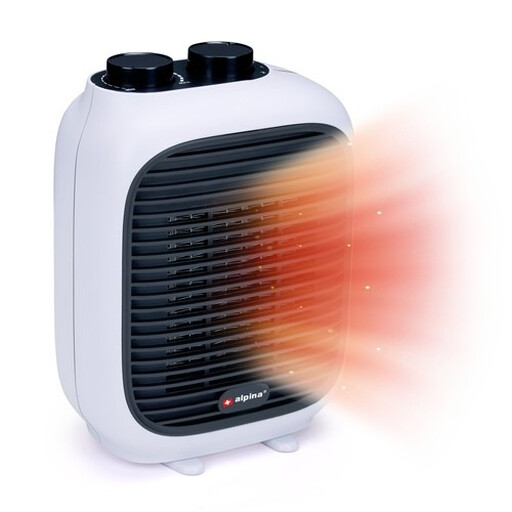
BEST FOR: BUDGET-CONSCIOUS USERS
Why we chose it: Ideal for a student or a home office. It offers fast, targeted heat in a compact and portable format, with no-frills features that would drive up the price.
How it avoids the pitfall
It doesn't pretend to be something it's not. Its ceramic technology is designed for rapid heating in a limited area (up to 15 m? / 160 sq. ft.), which prevents wasting energy by unnecessarily overheating a space.
Key advantage
Its simplicity and compact size. It includes essential safety features (overheat and tip-over protection) and an adjustable thermostat for efficient, hassle-free use.
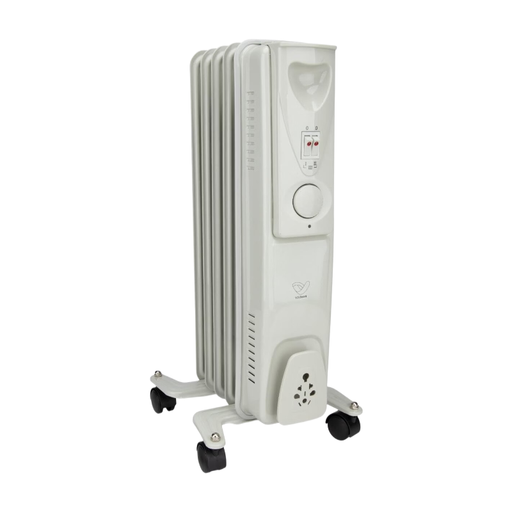
BEST FOR: SILENCE SEEKERS
Why we chose it: Perfect for a bedroom or living room where silence is golden. The oil-filled technology ensures a gentle and constant heat distribution without any fan noise.
How it avoids the pitfall
It tackles the noise problem head-on. Unlike fan-forced models, its operation is completely silent, guaranteeing thermal comfort without any auditory disturbance.
Key advantage
Its thermal inertia. It continues to radiate heat long after being turned off, which helps to smooth out energy consumption and maintain a stable temperature for longer.
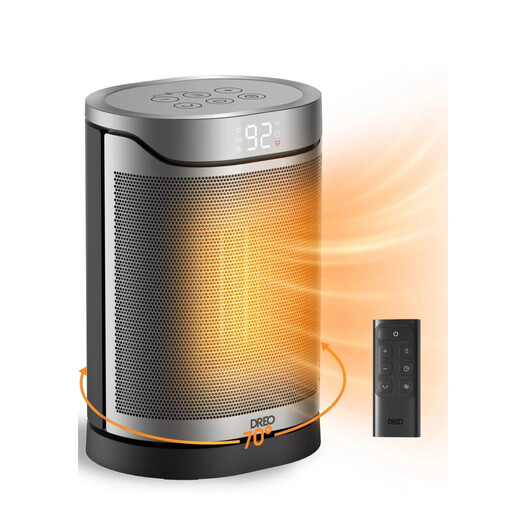
BEST FOR: ENERGY EFFICIENCY ENTHUSIASTS
Why we chose it: For those who want to combine performance with cost control. It combines fast ceramic heating with smart features for optimal efficiency in a room up to 20 m? (215 sq. ft.).
How it avoids the pitfall
Here, the "low-energy" promise is not just a marketing gimmick. Its precise thermostat (from 5 to 35 °C / 41 to 95 °F) and various modes allow for fine-tuned energy consumption, avoiding the waste of an "all-or-nothing" device.
Key advantage
Its nearly silent operation (as low as 25 dB, the sound of a whisper) combined with rapid heating and 70° oscillation for even heat distribution.
Looking for other options?
We have curated a complete selection of products that meet our strict specifications and UK safety standards.
Frequently Asked Questions About Space Heaters
What wattage should I choose for a space heater?
The required power depends on several factors: the size of the room, the quality of its insulation, the ceiling height, and the outside temperature. To give you a rule of thumb:
- Less than 10 m? / 100 sq. ft. (office, small bedroom): 750W to 1000W is sufficient.
- 10 to 15 m? / 100 to 160 sq. ft. (standard bedroom): 1000W to 1500W is appropriate.
- 15 to 25 m? / 160 to 270 sq. ft. (living room, large room): 1500W to 2500W may be necessary.
Choosing a model with multiple power levels and a thermostat remains the best strategy to adjust consumption to your actual needs.
Can a space heater truly be economical?
Yes, provided you use it intelligently. An economical space heater is not meant to replace a central heating system, but to supplement it. Its economic benefit is based on:
- Targeted use: Heating only the room you are occupying (office, living room) for a limited time.
- Optimisation features: Systematically using the thermostat, ECO mode, and timer can reduce consumption by up to 40%, depending on the model and usage conditions.
Ceramic fan heater or oil-filled radiator: which one should I choose?
It's all a matter of priority.
- The ceramic fan heater is the champion of speed. It's perfect for warming up a bathroom in 5 minutes before a shower.
- The oil-filled radiator is the champion of silent, long-lasting comfort. It's ideal for maintaining a pleasant temperature in a bedroom all night long, without any noise.