What to look for
First choose the configuration that suits your storage habits, then compare the label information for appliances with a similar capacity and layout.
| Priority |
What to check |
Your needs and concerns |
| Ongoing consumption |
Compare kWh/year between models with a similar type and capacity. Read the A to G energy class alongside the capacity by compartment, rather than treating it as an exact individual bill. |
I want to compare stated consumption without choosing an unnecessarily large appliance. In the 2025 Baromètre énergie-info from France’s national energy ombudsman, 85% of the 2,000 households surveyed in metropolitan France in September 2025 said their bills represented a significant proportion of their budget. |
| Fresh and frozen storage |
Check the separate capacities of the fridge and freezer. Decide whether you store frozen food regularly enough to need an integrated compartment. |
I mainly buy fresh food, or I need freezer space that I can use every week. Total capacity alone does not answer this question. |
| Features and capacity |
Relate the total capacity to what you actually store. Where capacities are similar, compare the exact model with and without the features you are looking for. |
I am only interested in a water or ice dispenser if I will use it frequently. ADEME points out that the size and extra features can increase the cost of running an appliance that operates continuously. |
| Food storage |
Check the temperature at the coldest point with a thermometer and consult the recommended setting for the model. Arrange food according to the zones specified by the manufacturer. |
I want to reduce consumption without compromising the storage of perishable food. Anses recommends a temperature between 0 °C and 4 °C at the coldest point. |
Options available on Joybuy
These Joybuy options include one-door fridges and fridge-freezers for different fresh and frozen storage needs. Compare their capacities, stated annual consumption and installation requirements with the way you actually use your appliance.
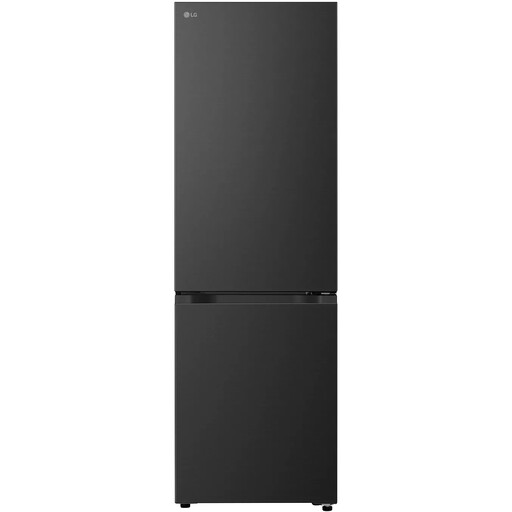 Image unavailable
LG GBBS312AEV 333 L No Frost fridge-freezer, A-rated
For a household that uses both the fridge and freezer compartments every week.
Stated capacity of 220 L for the fridge and 113 L for the freezer, with stated annual consumption of 108 kWh/year and an A energy class.
No Frost, automatic defrosting, door alarm, reversible door and electronic controls are listed.
The consumption figure is a standardised comparison value, not a guaranteed bill. Also check whether Wi-Fi connectivity and the 16 to 43 °C climate range suit your installation.
View on Joybuy
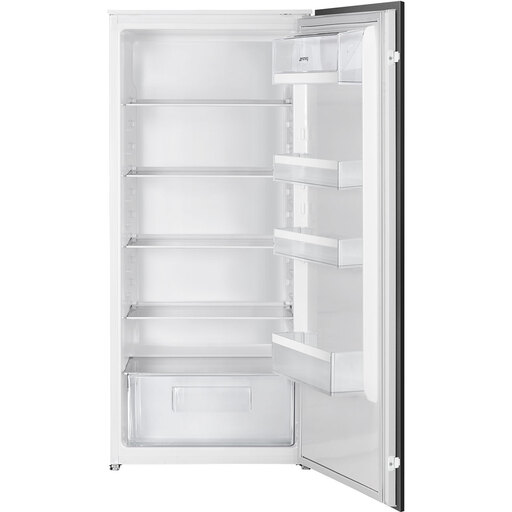 Image unavailable
SMEG S4L120E integrated one-door fridge, E-rated
An option for a household that mainly buys fresh food and does not need an integrated freezer compartment.
Stated annual consumption is 101 kWh/year, with automatic defrosting, LED lighting and a stated noise level of 34 dB.
Capacity is listed as 188 L in the title and 208 L in the description: check the label and exact reference before buying.
This integrated model requires you to confirm the niche dimensions, door fixing system and ventilation clearances. No freezer compartment is listed.
View on Joybuy
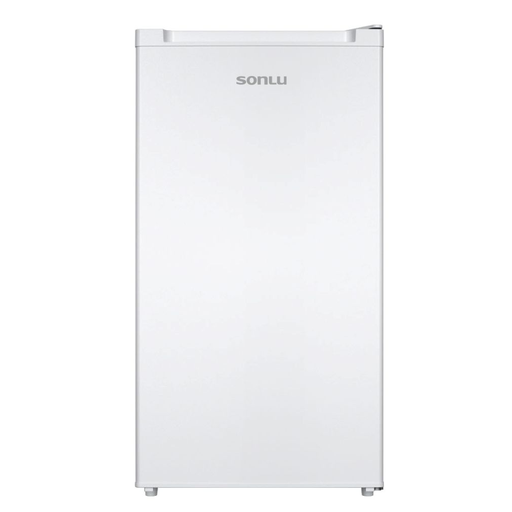 Image unavailable
Sonlu CS-100L 82 L one-door fridge, E-rated
A compact format for modest fresh-food storage without an integrated freezer.
Stated capacity of 82 L, stated annual consumption of 84 kWh/year and an E energy class.
Adjustable shelves, a salad crisper, door storage, LED lighting and mechanical controls are listed.
82 L may not be enough for substantial everyday storage. Also check that the temperature at the coldest point can be maintained between 0 °C and 4 °C for perishable food.
View on Joybuy
 Image unavailable
Candy CFQQ5T817EPS 467 L four-door No Frost fridge-freezer, E-rated
Worth considering if you genuinely need substantial fresh and frozen storage.
Stated capacities of 311 L for the fridge and 156 L for the freezer, with stated annual consumption of 290 kWh/year and an E energy class.
Total No Frost, automatic defrosting, door alarm, rapid cooling and rapid freezing are listed.
At 467 L, this model requires you to check that both compartments will be regularly filled. Check the stated width of 83.3 cm and the ventilation clearances required.
View on Joybuy
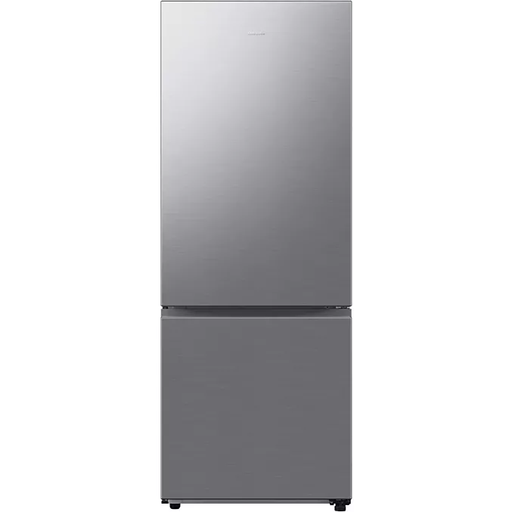 Image unavailable
Samsung RB53DG703DS9 538 L fridge-freezer
For a household with a substantial and regular need for fresh and frozen storage.
Stated capacities of 370 L for the fridge and 168 L for the freezer, with stated annual consumption of 249 kWh/year.
Multi-Flow Cooling, door alarm, rapid cooling, rapid freezing and a stated 9-hour autonomy are listed.
The energy class differs between the title, which states A, and the description, which states D: check the energy label for the exact model. Also confirm the stated dimensions of 75.9 × 203 × 71.1 cm and the freezer position.
View on Joybuy
Frequently asked questions
Which figures on the energy label should I compare first?
Start by comparing annual consumption in kWh, followed by storage capacity by compartment, the A to G energy class and noise level. Compare appliances with a similar type and capacity: an energy class alone does not tell you whether the capacity or freezer suits your household.
Does annual consumption in kWh exactly match my electricity bill?
No. It is a standardised figure intended to compare models, but it cannot predict a household’s actual costs on its own. ADEME presents its annual costs as guidelines and points out that both size and extra features can affect how much the fridge contributes to your bill.
What temperature should I maintain in the fridge?
Anses recommends a temperature between 0 °C and 4 °C at the coldest point. Check it regularly with a thermometer: an energy-efficient appliance should not result in perishable food being stored at an inadequately low temperature.
Must the energy label be visible when buying online in France?
Yes. The Ministry of the Economy states that the requirement to display the energy label for relevant products, including fridges, applies both in shops and online. Check that the model reference and label information match the appliance in your basket.
Do I need an extended warranty for a new fridge?
Not automatically. In France, the Ministry of the Economy states that the statutory guarantee of conformity can be claimed for two years on both new and second-hand goods; a commercial warranty is optional. Check what an extension genuinely adds beyond these rights, such as extra cover or protection against risks that are not otherwise covered.


