What to compare before you buy
Fridge-only model
Consider this if: you mainly store fresh food or already have a freezer that you genuinely need.
Bear in mind: there’s no space set aside for frozen food.
Fridge freezer
Consider this if: you need both compartments in a single appliance.
Check: even with a similar total capacity, the balance between fridge and freezer space can vary.
Separate fridge and freezer
Consider this if: you need more freezer space than the fridge freezers you’re looking at offer, or you plan to keep a freezer that suits your needs.
Bear in mind: the two appliances take up space, and you’ll need to add their kWh/year figures together.
For households in France, ADEME points out that fridges and freezers run constantly, and that buying a larger appliance or more features than you need can push up your bills. The priorities below can help you compare storage needs, declared energy use and whether to replace your appliance.
| Consideration |
What to check before you buy |
Who is more likely to prioritise it |
| Declared annual energy consumption |
The exact model, its kWh/year figure and comparable appliances of the same type and similar capacity. |
If I want to keep a recurring expense under control without choosing an appliance that’s too small, I make this a priority. Around 33% of consumers put annual energy consumption first. |
| Space for frozen food |
Freezer capacity, separate from fridge capacity; if you have two appliances, add their declared kWh/year figures together. |
If I freeze food regularly, I need enough space and want to know whether a fridge freezer will be suitable. Around 27% of consumers prioritise space for frozen food. |
| Fresh-food capacity and features |
The usable capacity in litres for fresh food and the features you’ll actually use. |
If I want to store fresh food without buying an oversized appliance, I look for a capacity that suits the way I use it. Around 20% of consumers prioritise having the right amount of fresh-food space and useful features. |
| How long you’ll use it and whether to replace it |
The condition of your current appliance, whether it could be repaired if it breaks down and the new model’s kWh/year figure. |
If my appliance is still working or could be repaired, I want to consider those options before replacing it. Around 20% of consumers put how long they’ll use an appliance first. |
Brands to consider as points of reference
The specifications mentioned relate to specific models. They don’t represent an assessment of an entire range or indicate product availability.
Bosch
Its fridge-only models and fridge freezers let you compare different configurations.
- Bosch Home Appliances France states that the KSV33VLEP has 324 l of fridge space, no built-in freezer and an energy consumption of 113 kWh/year.
- The KGE398IBP has 249 l of fridge space and 94 l of freezer space, so it won’t meet the same needs as the fridge-only model. Bosch’s claims about food preservation are the manufacturer’s own.
Hisense
Its fridge-only models and fridge freezers can be compared by configuration and freezer capacity.
- Hisense states that its fridge-only RL5K370GSFC has a capacity of 372 l and uses 91 kWh/year. The RB5K330GSFC fridge freezer has a different configuration, with 115 l of freezer space.
- The brand’s claims about efficiency and food preservation linked to its technologies aren’t independent comparative test results.
Liebherr
The brand offers fridge freezers in different capacities, so consider which one suits the amount of space you actually need.
- Liebherr France’s models can be compared by taking their capacity and configuration into account.
- An energy rating alone doesn’t show whether two different capacities will meet the same needs. Check the figures for the specific model rather than applying a promotional claim to an entire range.
Whirlpool
Its built-in fridge freezers may be suitable if your kitchen requires an integrated appliance to fit a specific space.
- Whirlpool states that the built-in WHC18T323P has a capacity of 250 l, an energy rating of D and an energy consumption of 179 kWh/year.
- These specifications and installation requirements apply to this model only. Whirlpool’s food-preservation claims linked to « 6e SENS » are the manufacturer’s own, not an independent comparison.
Fridge freezers available on Joybuy
This selection features fridge freezers. Compare their declared kWh/year figures and the balance between fridge and freezer capacity, and check whether a model needs to be built in.
 No image available
Samsung RB33B612EBN, 344 L, black, energy rating E
This fridge freezer lets you compare its declared energy consumption with the amount of fridge and freezer space you need.
344 L total: 230 L for the fridge and 114 L for the freezer; declared energy consumption of 254 kWh/year and energy rating E.
View on Joybuy
 No image available
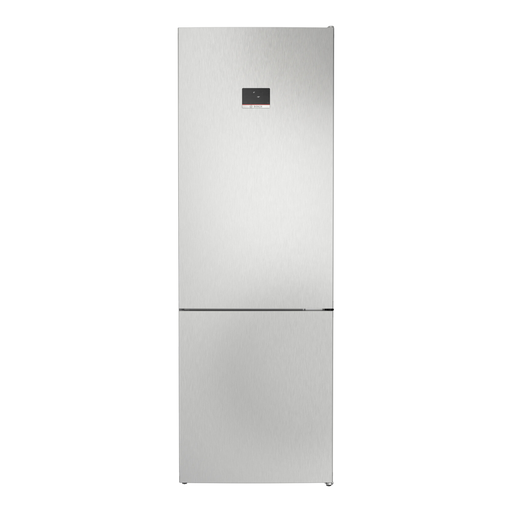
Bosch KGN497LDF, 440 L, grey, energy rating D
To see whether this fridge freezer is right for your household, compare its fridge and freezer capacities separately with your needs.
440 L total: 311 L for the fridge and 129 L for the freezer; energy consumption of 223 kWh/year and energy rating D stated.
View on Joybuy
 No image available
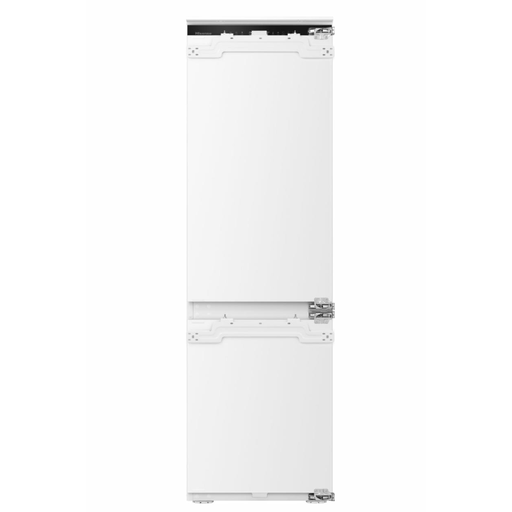
Hisense RB3B250SAWC, built-in, 252 L, energy rating C
This built-in model may be worth comparing if its housing and installation requirements suit your kitchen.
252 L total: 176 L for the fridge and 76 L for the freezer; energy consumption of 150 kWh/year and energy rating C stated. Installation must follow the appliance’s dimensions and integration instructions.
View on Joybuy
 No image available
Haier HTW5618ENMG, three-door, 360 L, energy rating E
The layout of the compartments can help you decide whether this style suits your fresh and frozen food needs.
360 L total: 235 L for the fridge and 125 L for the freezer; energy consumption of 271 kWh/year and energy rating E stated. The product name mentions Total No Frost.
View on Joybuy
 No image available
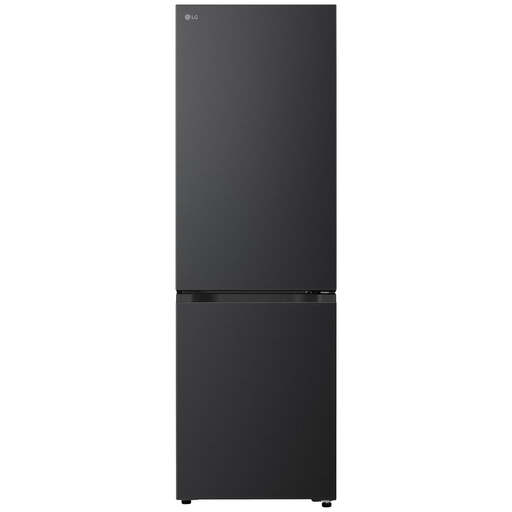
LG GBBS312CEV, black, 333 L, energy rating C
When comparing this fridge freezer with other models, look at all three capacity figures, not just the total.
333 L total, including 183 L for the fridge, 113 L for the freezer and a 37 L cooling compartment; energy consumption of 169 kWh/year and energy rating C stated.
View on Joybuy
Frequently asked questions
How do you read the energy consumption of a new fridge sold in France?
Check the exact model and its annual energy consumption in kWh on the energy label or product page. The French Ministry of the Economy explains that labelling requirements also apply to online sales. When comparing appliances, match their type and the capacity you need as closely as possible.
Do all fridge freezers need to be maintained in the same way?
No, features vary between models. Bosch lists the KGE398IBP as having LowFrost but not No Frost, while Hisense states that the RB5K330GSFC has Total No Frost. Follow the instructions for the appliance you own, and don’t assume this difference guarantees a specific energy saving.
Does a fridge have to display a repairability index in France?
Fridges aren’t included in the product categories subject to this index, as listed by the DGCCRF in its guidance dated 26 June 2025. The absence of an index doesn’t prove that a model can’t be repaired: check its service information and, if your current appliance breaks down, whether it can be repaired.
What should you know about the warranty and taking away your old fridge?
If you buy from a professional seller, the statutory guarantee of conformity is separate from any optional commercial extended warranty. The French Ministry of the Economy says it applies to new, second-hand and refurbished goods sold to consumers. When a new appliance is sold, the « one-for-one » take-back scheme requires the retailer to take back an equivalent used appliance free of charge. The DGCCRF advises checking the practical arrangements, particularly when ordering online.


