Who is this guide for?
The right replacement depends as much on the space you have and how often you use the freezer as it does on the stated energy consumption. The ADEME points out that refrigeration appliances run continuously, so it’s worth checking the annual kWh figure for the model you’re considering.
Households keeping an eye on their electricity use
You’re replacing an appliance that runs all year round and want to compare its annual kWh without choosing more capacity than you need. Compare its energy consumption with that of appliances of a similar format and capacity.
Households that regularly store frozen food
You freeze meals or stock up on frozen food, so check the freezer compartment capacity separately from the total capacity. If you often freeze large amounts of food at once, freezing performance tests may also help you decide.
People living in smaller homes or open-plan kitchens
You need to be able to install the appliance, open its doors and live with its noise day to day. Measure the space and access routes, then compare the stated noise levels of each model.
Which criteria should you prioritise?
Choose a format based on how you use frozen food, then compare the capacity, annual kWh and dimensions of the models still on your shortlist. The same energy label rating isn’t enough to compare appliances of different sizes.
Single-door fridge
Worth considering: if you rarely freeze food or already have another way to freeze it.
The trade-off: a small freezer compartment, if included, may not meet your needs if you regularly store frozen food.
Fridge-freezer
Worth considering: if you use a freezer regularly and want both compartments in one appliance.
The trade-off: a generous total capacity can hide a freezer compartment that’s too small for your needs.
Separate fridge and freezer
Worth considering: if you need a separate freezer for your regular stock of frozen food.
The trade-off: make room for two appliances and compare their combined annual energy consumption with that of a suitable fridge-freezer.
| Criterion |
What to check |
Who it matters to |
| Electricity consumption |
The annual kWh figure for the exact model and its usable capacity, compared with appliances of a similar format and capacity. |
If I’m replacing an appliance that runs continuously, I want to keep its energy consumption under control without choosing more capacity than I need. Around 40% of consumers might make this their top priority. |
| Freezer space |
The usable capacity of the fridge and freezer, listed separately. |
If I freeze meals or often buy frozen food, the total capacity doesn’t tell me whether I’ll have room for everything. Freezer capacity could be the top priority for around 30% of consumers. |
| Installation and noise |
The dimensions, clearance needed to open the doors and stated noise level in dB(A). |
In a compact or open-plan kitchen, I need to be able to install the appliance without it getting in the way day to day. Around 30% of consumers might prioritise how well it fits their space and its noise levels over other criteria. |
As a starting point for capacity, UFC-Que Choisir recommends 100 to 150 litres for one person, plus 50 litres for each additional person. Adjust this guide to suit your shopping habits, and always distinguish between the capacity for fresh food and the space for frozen food. The model’s EPREL record shows its declared capacity and annual energy consumption.
Mistakes to avoid before ordering
-
Choosing based only on the energy label rating
The rating doesn’t replace checking the exact model’s annual kWh figure or its capacity. An appliance that’s bigger than you need could affect the expected savings from replacing your old one.
First compare formats and capacities that suit your needs, then check their annual energy consumption.
-
Looking only at the total capacity
This figure doesn’t tell you how much space is set aside for the freezer. A small freezer compartment may not be enough if you regularly store frozen food.
Think about how much you usually keep in stock and check the capacity of each compartment before you choose.
-
Forgetting about installation, doors and noise
An appliance might look suitable on paper but be difficult to get into your kitchen or leave too little room to open the doors properly. Noise levels matter more if your kitchen opens onto a living area.
Measure the space and delivery access, check the installation clearances and compare the stated dB(A) levels.
-
Leaving arrangements for your old appliance until delivery
Replacing your fridge also means deciding what will happen to the old appliance and checking the collection options available.
Confirm the arrangements with the retailer before ordering and prepare the appliance according to the instructions you receive.
Brands to consider by model
These ranges and models are examples to help you identify which features to compare. They don’t mean that one brand is right for every household.
Bosch
One option for comparing freestanding fridge-freezers, looking at the capacity, noise levels and dimensions of each model.
- Bosch lists 218 l of fridge capacity, 103 l of freezer capacity and a noise level of 35 dB(A) for the KGN36VXCT.
- These figures apply to the KGN36VXCT. Compare the annual energy consumption and dimensions of the specific models you’re considering.
Liebherr
Worth a look if the layout of the fresh and frozen food compartments is an important factor in your choice.
- Liebherr lists BioFresh, NoFrost and two separate DuoCooling circuits for the CBNsfc 5223.
- These features describe this model; they don’t establish that the whole brand offers lower energy consumption or better performance.
Samsung
One to consider if you’re looking for a large capacity, while checking that you have enough width available.
- Samsung lists a 390 l capacity in a 60 cm width for the RL38C602DSA/EF.
- To assess its energy consumption, check the annual kWh figure for the exact model rather than assuming a connected feature will save energy.
Whirlpool
Worth considering if defrosting and compartment layout are important when choosing a fridge-freezer.
- Whirlpool lists Dual No Frost and FreshBox drawers for the W9C841COX.
- Check the capacity, dimensions and annual energy consumption for your chosen model: these features don’t replace those checks.
Fridges to compare on Joybuy
These models include fridge-freezers, a single-door fridge with a small freezer compartment and a large-capacity multi-door fridge. Start by choosing the format and capacity that suit your needs, then compare the annual kWh figures on the energy labels for the exact models.
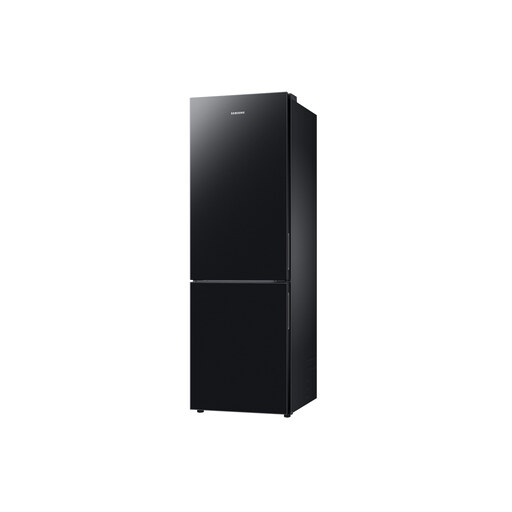 Image unavailable
Samsung RB33B612EBN, 344 L black fridge-freezer, class E
Worth a look if you want a single appliance for both fresh and frozen food. This model is listed with a total capacity of 344 L and a class E rating. Check the capacity of each compartment, the annual kWh figure and the dimensions to make sure it fits your space.
View on Joybuy
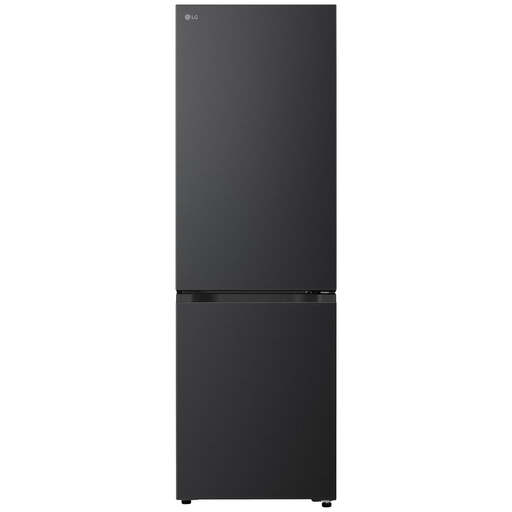 Image unavailable
LG GBBS312CEV, 333 L black fridge-freezer, class C
Worth comparing if you need a fridge-freezer for fresh and frozen food. It’s listed with a capacity of 333 L and a class C rating. Check the capacity of each compartment and the annual kWh figure for the exact model. Also make sure there’s enough space around the appliance for the ventilation clearances required for installation.
View on Joybuy
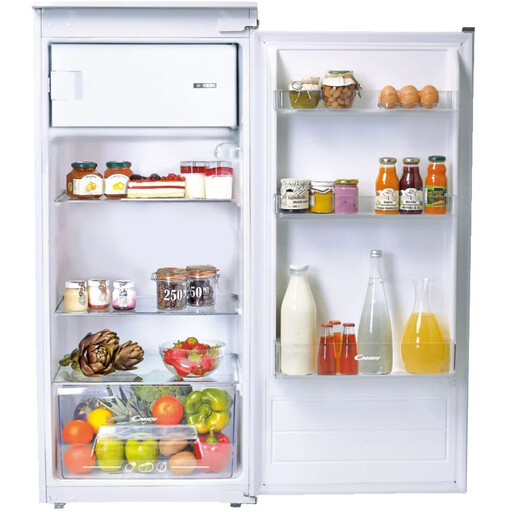 Image unavailable
Candy CIO 225 EE/N, 179 L single-door fridge
Worth considering if you rarely freeze food and want a single-door fridge with a small freezer compartment. The stated total capacity is 179 L, so check how much space is available for frozen food before you choose. The freezer compartment needs to be defrosted manually.
View on Joybuy
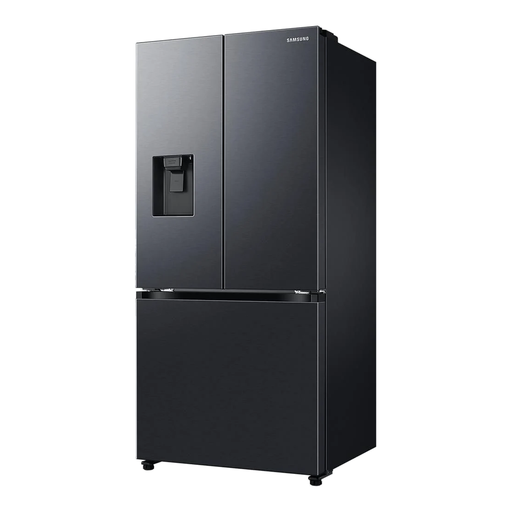 Image unavailable
Samsung RF50C530EB1, 495 L black multi-door fridge, class E
Worth a look if your storage needs call for a large-capacity multi-door appliance. It’s listed with a capacity of 495 L and a class E rating. Measure the space and delivery access, then compare its annual kWh figure with those of models that offer a suitable capacity for your household.
View on Joybuy
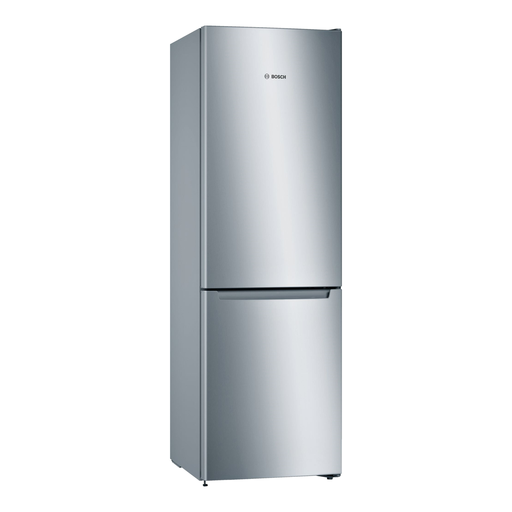 Image unavailable
Bosch KGN33NLEB, 282 L stainless steel fridge-freezer, class E
Worth comparing if you’re looking for a 282 L fridge-freezer with a bottom freezer. Check that the space split between the two compartments suits your shopping habits, then look at the annual kWh figure, noise level and installation clearances for the exact model.
View on Joybuy
Frequently asked questions
How do you compare the energy consumption of two fridges?
Compare their annual kWh figures when their format and capacity meet the same needs. Also check the capacity of the fridge and freezer compartments separately: the energy rating alone doesn’t sum up the consumption of appliances in different sizes.
What capacity should you allow for one person?
UFC-Que Choisir suggests starting with 100 to 150 litres for one person, then adding 50 litres for each additional person. Adjust this guide to how often you shop and how much space you need for frozen food.
Is a small freezer compartment enough to replace a fridge-freezer?
It may be enough if you rarely freeze food, but not if you stock up or regularly freeze meals. Check the compartment capacity and think about your habits before switching from a fridge-freezer to a single-door model.
Is No Frost essential?
No. It mainly suits people who prefer a particular approach to maintaining the freezer compartment. When comparing models, look at usable capacity, annual energy consumption and dimensions too, rather than focusing on this feature alone.
How should you arrange collection of your old fridge?
Check the collection options available for your order before booking delivery. That way, you can get your old appliance ready and find out what you need to do when it’s collected.


