Who this comparison is useful for

Households replacing a washing appliance

You are looking for a washing machine or dishwasher and want to compare electricity, water, capacity, Eco cycle duration and noise, rather than choosing based on the class alone. ADEME and the European Commission present this information as useful data for comparing the relevant appliances.

Households with an old or oversized refrigeration appliance

You have a fridge, fridge freezer or freezer that runs continuously and want to check whether its capacity and features still match your needs before replacing it. ADEME highlights that size and unnecessary features can increase energy consumption.

Shoppers choosing between replacement and repair

You want to reduce running costs without automatically replacing an appliance that still works. Durability or reparability ratings, where they apply to the product, add useful context to the energy comparison.

Buying priorities

Compare a washing appliance

Best considered: when replacing a washing machine or dishwasher, if you can compare similar capacities.

Trade-off: the Eco programme can reduce water and electricity use, but it is often longer.

Review continuously running refrigeration

Best considered: for an old fridge, freezer or fridge freezer whose capacity seems disproportionate.

Keep in mind: a newer, larger or more highly featured model is not automatically better suited to your household.

Keep or repair

Best considered: if the appliance still meets your needs and maintenance or repair is feasible.

Check: the appliance's actual condition, documented consumption and any applicable ratings before replacing it.

Priority What to check Your needs
Read comparable values Compare appliances in the same category. For washing appliances, note the kWh per 100 cycles, litres per cycle and Eco duration. I want to compare values that reflect real-life use, not just a class letter.
Choose the right capacity Check the kg capacity for a washing machine or the number of place settings for a dishwasher. Match this capacity to your usual loads. My appliance should accommodate my laundry or dishes without encouraging me to run regularly underfilled cycles.
Accept the Eco cycle's pace Compare the reference programme duration, water per cycle and noise level if the appliance is close to living areas. I can prioritise a longer cycle if it remains compatible with my daily routine.
Balance buying against repairing Assess the condition of your existing appliance, its documented consumption and any reparability or durability ratings where applicable. Before replacing an appliance that still works, I want to know whether maintenance or repair remains a reasonable solution.

Mistakes to avoid

  • Comparing only the energy class letter

    Two appliances may have different capacities, volumes, cycle durations or water consumption levels. The class does not replace checking the kWh per 100 cycles, litres per cycle and other information on the label.

    Compare appliances in the same category with a similar useful capacity, then note the figures and reference programme before carrying out any calculations.

  • Choosing a washing appliance that is too large

    A large capacity is not an advantage if it leads to more cycles with an underfilled drum or dishwasher.

    Assess your usual volume of laundry or dishes. ADEME states that a 7 kg washing machine is sufficient most of the time, while recommending that this guideline be adapted to each household's needs.

  • Treating an indicative annual cost as guaranteed savings

    Your bill depends in particular on the exact appliance, how often you use it and the electricity tariff on your contract.

    To estimate a cost specific to your household, use the consumption shown on the label for the exact model, your annual number of cycles and the actual price you pay per kWh.

  • Replacing a repairable appliance without checking its remaining useful life

    Buying sooner means acquiring new equipment even though some appliances have indicators that can help you assess repairability and longevity.

    For a washing machine, check the durability rating where it is displayed. For a dishwasher, look for the reparability rating and check the parts and whether repair is feasible.

Brand overview

There is currently no content to display in this section.

Joybuy products to compare

Joybuy options for comparing washing machines and a fridge freezer by capacity, stated consumption, water use where relevant, noise and installation requirements.
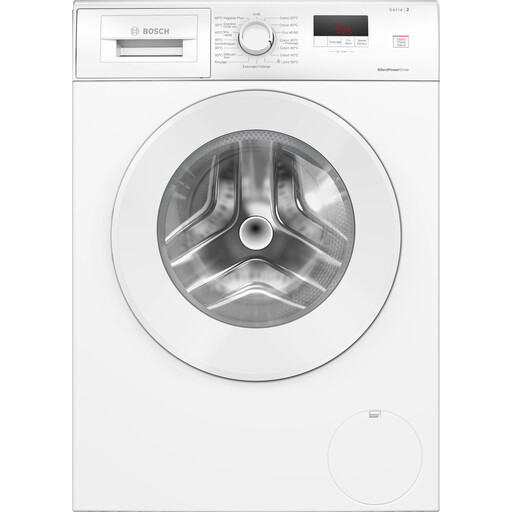
Bosch WGE02407FR 7 kg washing machine

Bosch WGE02407FR, 7 kg front-loading washing machine

For a moderate volume of laundry, this 7 kg model makes it easy to compare energy, water and Eco cycle duration directly.

40 kWh/100 cycles, 44 L/cycle, a 175-minute Eco programme and a noise level of 72 dB, with noise class A. Stated reparability rating of 8.6/10 and parts availability announced for 11 years.

Check the connection, drainage and positioning requirements before buying.

Joybuy

Hisense WF5I8043BWF 8 kg washing machine

Hisense WF5I8043BWF, 8 kg washing machine

This 8 kg washing machine may suit you if you are looking for an intermediate capacity with a stated depth of 47 cm.

33 kWh/100 cycles and 38 L/cycle stated for the Eco 40–60 programme; stated Eco duration of 3 h 38.

Check the durability or reparability rating and parts availability if you are deciding between replacing and keeping your current appliance.

Joybuy

Haier T Series 7 THASN276TM6-S 7 kg washing machine

Haier T Series 7 THASN276TM6-S, 7 kg top-loading washing machine

The top-loading design and stated width of 405 mm may appeal to households with limited width available.

7 kg capacity, 40 kWh/100 cycles, 42 L/cycle, a 3 h 28 Eco programme and a spin noise level of 77 dB, with noise class C.

Allow enough vertical clearance for the lid to open and check the reparability and parts information before buying.

Joybuy

Haier X Series 11 HW100-BD14397PGU1 10 kg washing machine

Haier X Series 11 HW100-BD14397PGU1, 10 kg washing machine

This 10 kg drum is worth considering for consistently large loads, rather than for lightly filled cycles.

41 kWh/100 cycles, 48 L/cycle, a 3 h 58 Eco programme and a noise level of 68 dB, with noise class A.

Make sure the large capacity matches your usual habits and check the reparability and parts information before replacing an existing appliance.

Joybuy
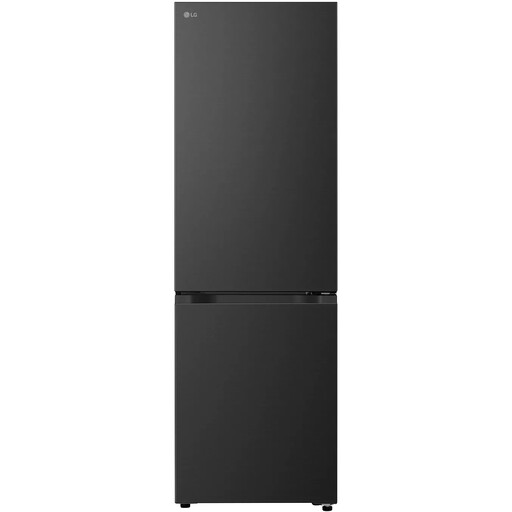
LG GBBS312AEV 333 L fridge freezer

LG GBBS312AEV, 333 L fridge freezer

When replacing a refrigeration appliance that runs continuously, compare this fridge freezer with models offering similar capacities and configurations.

Stated annual consumption of 108 kWh, total capacity of 333 L, including 220 L for the fridge and 113 L for the freezer, and a noise level of 29 dB, with noise class A.

Climate class T is stated for an ambient temperature of 16 to 43 °C; check that the installation location falls within this range.

Joybuy

Frequently asked questions

Which appliance categories have an energy label that is useful for this comparison?

The European Commission lists dishwashers, washing machines, washer-dryers, tumble dryers, fridges and freezers among the categories covered by energy labelling and ecodesign rules. For this decision, the most directly comparable data concerns continuously running refrigeration appliances and washing appliances with standardised per-cycle values.

How can I estimate annual electricity costs from the label?

For an appliance showing X kWh per 100 cycles, calculate X ÷ 100 × your actual number of annual cycles, then multiply the result by the actual price you pay per kWh including VAT. For a fridge or freezer showing annual consumption, multiply this figure by the actual price you pay per kWh including VAT. You must also know the consumption of the appliance you are comparing it with.

Does the Eco programme use less energy even though it takes longer?

Yes. ADEME states that the Eco mode on a washing machine or dishwasher reduces electricity and water consumption by using a lower wash temperature and a longer cycle. Check the displayed duration if you need to run several cycles on the same day.

Does an A rating guarantee the lowest running cost for my household?

No. The A to G scale is a performance guide, but running costs also depend on the category, capacity, number of cycles, useful volume, programme selected and your electricity tariff. Compare the figures on the labels of equivalent appliances.

Should I replace an appliance that is still working?

Not automatically. ADEME recommends keeping appliances for as long as possible and states that repair may be worth considering before replacement. Assess the appliance's condition, documented consumption, suitability for your needs and any applicable reparability or durability indicators.