Households replacing a fridge or freezer
Your fridge, fridge-freezer or freezer runs continuously. You want to reduce its energy use while keeping enough space for your food.


Start by replacing the appliance that accounts for the largest share of your actual energy use. A fridge or freezer runs continuously, while the benefits of replacing a dishwasher, oven or hob depend more on how often you use it. Then compare appliances in the same category, with a suitable capacity and on the same basis of energy consumption. The energy rating alone isn’t enough to compare different sizes or programmes. For a hob, check the technology, installation requirements and compatible cookware instead: unlike ovens, hobs don’t carry an energy label.
Your fridge, fridge-freezer or freezer runs continuously. You want to reduce its energy use while keeping enough space for your food.
You run cycles regularly and need to balance energy and water consumption, capacity, Eco programme duration and noise levels.
You use your oven or hob often and want to know which figures to compare. The European Commission distinguishes between the energy information available for ovens and that which applies to hobs.
Start by looking at which appliances run continuously and which you use often. When weighing up possible replacements, ADEME recommends considering the appliance’s size and features, not just its energy rating.
| Priority | What to check | Who it matters to |
|---|---|---|
| Fridge or fridge-freezer | Compare annual kWh consumption and fridge and freezer capacities across models that suit your household. | If my fridge runs day and night, I want to keep its energy use down without running out of space for food. Around 33% of consumers put this need first. |
| Freezer | Check annual kWh consumption and usable freezer capacity before considering a smaller size. | If I regularly need to store frozen food, I’m looking for a more energy-efficient freezer with enough capacity; around 17% of consumers make this their priority. |
| Dishwasher | Compare kWh per 100 Eco cycles, water consumption per cycle, capacity and Eco programme duration. | When I wash dishes frequently, I want a capacity I can actually fill and an Eco programme that fits my routine. Around 25% of consumers put this need first. |
| Oven or hob | For an oven, compare its capacity and kWh per cycle for each cooking mode. For a hob, check the technology, installation requirements and cookware. | If I cook often, I want appliances suited to the way I cook, without confusing an oven’s energy information with a hob’s; around 25% of consumers prioritise this need. |
A large fridge-freezer, a compact freezer and two dishwashers with different capacities won’t meet the same needs. The rating doesn’t replace checking the capacity or the energy consumption figures shown on the label.
First decide which dimensions and capacity you need. Then compare annual kWh consumption for fridges and freezers, kWh per 100 Eco cycles for dishwashers, or kWh per cycle for each cooking mode on an oven.
According to ADEME and the European Commission, the Eco programme is used as the reference for dishwasher energy data. You can’t directly use this figure to assess a quick or intensive programme.
Check the Eco programme duration and consider whether you’ll use it regularly before comparing the energy consumption figures shown.
The European Commission states that hobs aren’t subject to the same energy-labelling requirements as ovens. A particular technology or marketing claim isn’t an official energy rating.
Check the type of hob, its built-in dimensions and the available power supply. If you’re considering induction, make sure your cookware is compatible.
A brand to consider if you’re comparing fridges and freezers, ovens and dishwashers from the same manufacturer.
Worth considering when comparing ovens, hobs, fridges and freezers, and dishwashers.
A brand to consider if your choice depends on capacity, appliance size or the number of people in your household.
Worth considering if access to documentation and spare parts is an important factor in your replacement decision.
These models represent two replacement options: a fridge-freezer, which runs continuously, and a dishwasher, whose energy use depends in part on the cycles you run. Before choosing, compare the capacities and energy label figures of appliances in the same category.
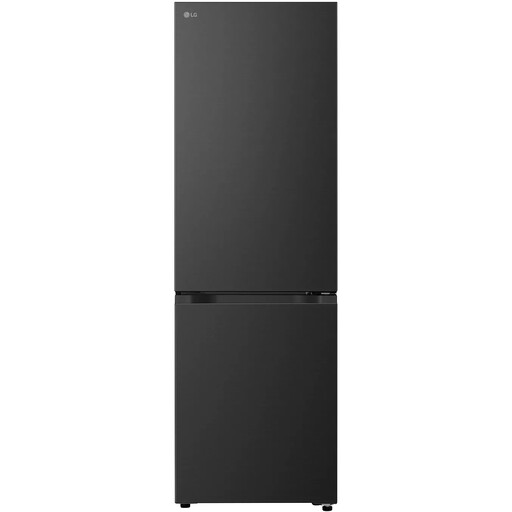 Image unavailable
Worth considering if you’re replacing a fridge-freezer and need a total capacity of 333 L. The product name indicates an A rating and No Frost technology. Check the capacity of each compartment and the annual kWh consumption on its label to compare it with a model of suitable capacity.
 Image unavailable
Worth considering if a 344 L fridge-freezer suits your usual storage needs. The product name indicates an E rating. To assess its energy use, check the annual kWh consumption, compartment capacities and dimensions rather than relying on the letter alone.
 Image unavailable
Worth considering if your household needs a total capacity of 444 L, without choosing a size larger than you need. The product name indicates an E rating and Total No Frost technology. Before comparing it with other fridge-freezers, check how the capacity is split between compartments, the dimensions and the annual kWh consumption.
 Image unavailable
Its tabletop design is worth considering if you’re looking for a dishwasher that can handle loads of up to 6 place settings. The product name indicates 7 programmes and a D rating. Check the kWh per 100 Eco cycles and the programme duration on the label before comparing its energy use with that of other models.
 Image unavailable
Worth considering if you regularly fill a 14-place-setting dishwasher and have room for its 60 cm width. The product name indicates a C rating. Check the kWh per 100 Eco cycles on the label to compare its energy use with that of models with a similar capacity.
No. Start by comparing appliances in the same category and with a similar capacity. According to ADEME and the European Commission, the relevant figures vary by appliance: annual kWh consumption and capacity for fridges and freezers, kWh per 100 Eco cycles for dishwashers, or kWh per cycle and oven capacity.
No. The European Commission states that hobs aren’t subject to the energy-labelling requirements that apply to ovens. If you’re replacing a hob, check its technology, dimensions and available power supply. If you’re considering induction, make sure your cookware is compatible.
In France, look for the repairability index shown for the model you’re considering, and check the repair options available for its specific reference. Information from the ministry responsible for ecological transition includes dishwashers among the products covered. The index is an additional factor, not a substitute for considering capacity and energy consumption.