
Livraison le jour même ou le lendemain

Qualité garantie

Débloquez vos offres de bienvenue: Livraison GRATUITE | Jusqu'à -80 % | 30 jours d'essai gratuits à JoyPlus
Téléchargez l'application
Buying an energy drink online may seem straightforward… until you need to compare sizes, ingredients and nutritional information. Between “boost” claims, fruity flavours and large cans, certain details can quickly increase the cost or make a product unsuitable for your habits.
Here are the key criteria to consider before choosing an energy drink, along with a selection of products suited to different needs.
A 500 ml can is not necessarily more concentrated than a 250 ml one. To find out how much caffeine you are actually consuming, start by checking the caffeine content per 100 ml, then calculate it based on the can’s total volume.
For example, a drink containing 30 mg of caffeine per 100 ml contains around 150 mg in a 500 ml can. This is worth bearing in mind if you already drink coffee, tea or other caffeinated products during the day.
A fruit energy drink may contain fruit juice or purée while still providing a significant amount of sugar. The juice percentage, ingredient list and “carbohydrates, of which sugars” line provide far more useful information than the picture of a fruit printed on the can.
Conversely, some sugar-free recipes use sweeteners. These may suit people looking to reduce their sugar intake, but their taste and composition differ from those of a classic recipe.
A pack of energy drinks containing 12 or 24 cans may reduce the price per can, but you need to have enough storage space and be able to consume them within a reasonable timeframe. Also check the best-before date shown on the packaging, particularly if you are ordering several weeks’ worth of stock.
Before completing an online energy drink purchase, note down these three details:
In France and the European Union, a drink containing more than 150 mg of caffeine per litre must display a statement indicating its high caffeine content, accompanied by a warning. According to their product information, the products featured here include recommendations advising against consumption by children, pregnant or breastfeeding women, and people sensitive to caffeine. Always take the time to check the labelling on the can you receive.
Taurine, guarana, ginseng, L-carnitine and B-group vitamins feature in many recipes. Their presence provides information about the product’s composition, but it is neither a medical guarantee nor proof of effectiveness for every individual.
To compare two drinks on a factual basis, focus instead on:
The smaller 250 ml sizes are practical for better controlling how much you consume and for putting a can in your bag. The 500 ml sizes are more suitable for long days or for people who would rather avoid opening several cans.
Store drinks in a cool, dry place away from direct light. Once the can has been opened, drink its contents promptly and follow the recommendations on the packaging.
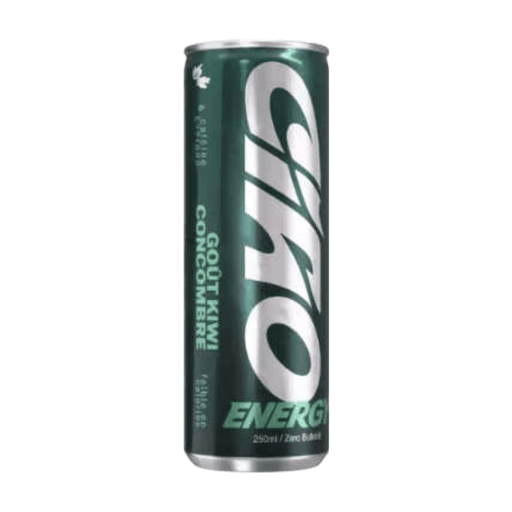
Why this product suits this profile : At 250 ml, this can lets you start with a more manageable serving. The pack of 24 is suitable for planned consumption at home or in the office.
The volume is clearly stated, and the product information lists 43 kcal and 10 g of sugar per 250 ml can.
A kiwi and cucumber flavour, caffeine from coffee and guarana, plus B3 and B6 vitamins and biotin, according to the product information.
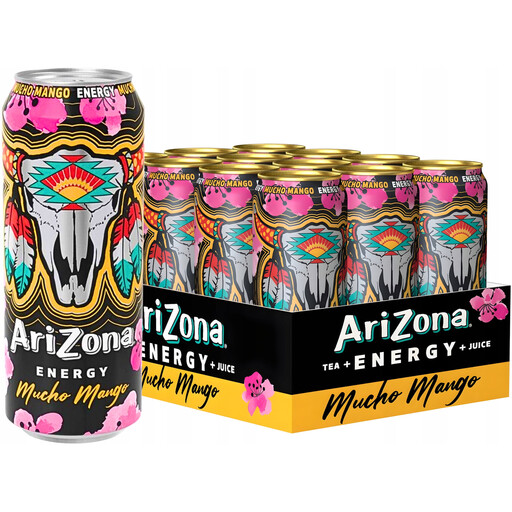
Why this product suits this profile : This product combines a large size, a fruity mango recipe and a pack of 12 cans to build up a supply at home.
The product information specifies the total volume, juice percentage and nutritional values: 45 kcal and 11 g of sugar per 100 ml.
A pack of 12 × 500 ml, juice and fruit purée, green tea extract, plus vitamins A and E listed in the ingredients.
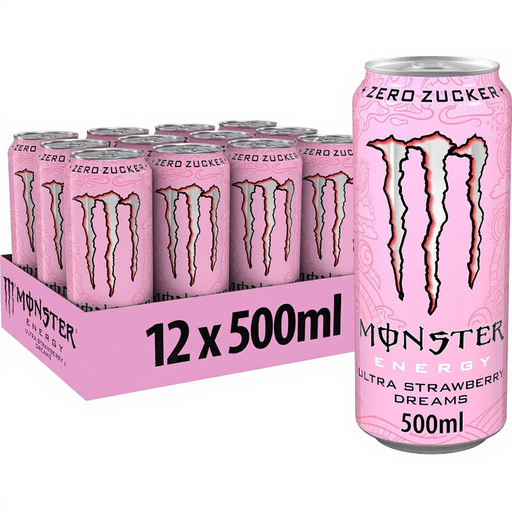
Why this product suits this profile : Regular users of the 500 ml size may prefer a recipe advertised as sugar-free, particularly for long days of studying or working.
The sugar-free claim is supported by precise figures: 0 g of sugar and 30 mg of caffeine per 100 ml, equivalent to 150 mg per 500 ml can.
A strawberry flavour, a pack of 12 cans, 10 kcal per can according to the product information, and B-group vitamins.
It depends on the recipe and the volume. A can containing 30 mg of caffeine per 100 ml provides around 75 mg in a 250 ml size and 150 mg in a 500 ml can. Remember to add this amount to your other sources of caffeine and follow the warnings shown on the label.
No. The “sugar-free” claim refers to the amount of sugar, not the caffeine content. MONSTER ENERGY Ultra Strawberry Dreams, for example, is advertised as sugar-free while containing 30 mg of caffeine per 100 ml. Always check these two details separately.
Keep unopened cans in a cool, dry place away from sunlight, up to the date shown on the packaging. Once opened, the drink should be consumed promptly. To avoid buying more than you need, choose the number of cans based on your usual consumption and the storage space available to you.