
Livraison le jour même ou le lendemain

Qualité garantie

Débloquez vos offres de bienvenue: Livraison GRATUITE | Jusqu'à -80 % | 30 jours d'essai gratuits à JoyPlus
Téléchargez l'application
An energy drink can be a handy companion for a commute, a study session or a busy day. But from one product to the next, the differences are far from trivial. With sizes ranging from 150 ml to 500 ml, the presence of sugar, caffeine content, fruity flavours or vitamin-enriched formulas, a poorly read label can quickly lead to a purchase that doesn't suit your needs.
Before choosing a pack, it's worth keeping three common pitfalls in mind.
The mention "high in caffeine" deserves a closer look. The dosage is usually given in milligrams per 100 ml, yet the drink is consumed by the can.
As a guide, the product pages mention the following:
People who are sensitive to caffeine, pregnant or breastfeeding women, and minors should follow the warnings on the packaging. Also, avoid combining several sources of caffeine without considering the total amount consumed during the day.
A sugar-free energy drink is not necessarily free of sweeteners. Depending on the recipe, manufacturers may use sucralose, acesulfame-K, steviol glycosides or erythritol.
To compare two products correctly:
For example, Monster Ultra Strawberry Dreams shows 0 g of sugars and 10 kcal per 500 ml, while Ciao Energy Apricot-Raspberry indicates 10 g of sugars and 43 kcal per 250 ml can. These two products therefore serve different purposes, even though they both belong to the energy drink category.
A small 150 ml or 250 ml can can be handy for occasional consumption. The 330 ml format offers a good compromise between quantity and portability. Large 500 ml formats are particularly common in packs intended for home storage.
To find an energy drink at the best price, compare the price per litre rather than the price of a single can. A pack of 12 or 24 units can lower the cost per can, provided the volume, the best-before date and your consumption habits genuinely match your needs.
The products below are presented based on the composition, format and usage information provided on their product pages. They do not constitute a medical recommendation.
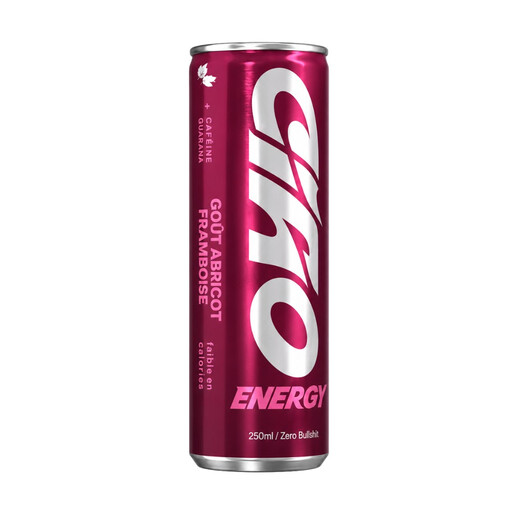
Why this choice suits this profile: its 25 cl format is easy to carry, and the pack of 24 cans is ideal for regular home consumption. Its fruity flavour also sets it apart from more classic recipes.
The product page states 10 g of sugars per can: this is therefore not a sugar-free recipe. This clarity allows you to make an informed choice, rather than relying solely on the "sugar-reduced" claim.
Caffeine from coffee and guarana, vitamins B3, B6 and B8, 43 kcal per can and manufactured in France.
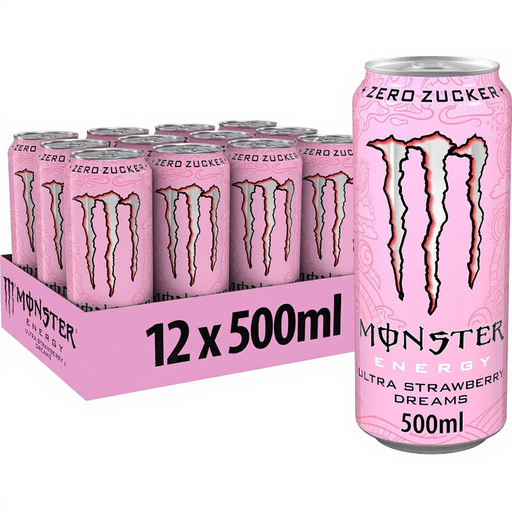
Why this choice suits this profile: this Monster energy drink combines a large format, a strawberry flavour and a sugar-free recipe. It will suit consumers who prefer a well-known brand and an easily recognisable product.
The product page clearly states 0 g of sugars and 10 kcal per 500 ml can. However, the caffeine content reaches 150 mg per can – something to consider before opting for this large format.
Zero sugar, 10 kcal per can, strawberry flavour and stated presence of taurine, ginseng, L-carnitine and B vitamins.
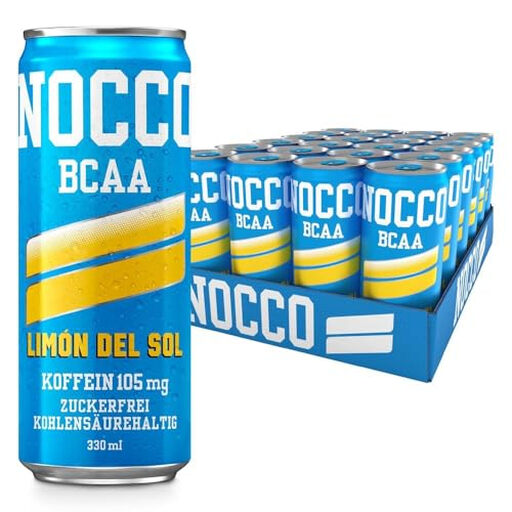
Why this choice suits this profile: its large pack is aimed at users looking for a functional, sugar-free drink with a clearly stated caffeine content.
The values per can are clearly detailed: 105 mg of caffeine, 0 g of sugars and 0 g of fat for 330 ml. However, this high caffeine content calls for measured consumption.
Sugar-free recipe, 2.5 g of BCAA per can, six stated vitamins and a pack of 24 units.
We have put together a comprehensive, real-time updated selection of products that meet these strict criteria and the requirements of European safety regulations.
The amount depends on the size and the recipe. A product showing 30 mg per 100 ml contains around 150 mg in a 500 ml can. Always check the portion you actually consume, as well as the "high caffeine content" warning on the label.
No. The absence of sugar does not mean the drink contains no caffeine. Monster Ultra Strawberry Dreams and NOCCO Lemon Del Sol are stated as sugar-free, while containing approximately 150 mg and 105 mg of caffeine per can respectively.
Keep the cans in a cool, dry place, away from sunlight and heat. Check the best-before date printed on the packaging. Once opened, a can should generally be consumed quickly, following the manufacturer's instructions.