
Livraison le jour même ou le lendemain

Qualité garantie

Débloquez vos offres de bienvenue: Livraison GRATUITE | Jusqu'à -80 % | 30 jours d'essai gratuits à JoyPlus
Téléchargez l'application
An energy drink can fit into many situations: your commute, a day at work, studying, or drinking on the go. Yet all too often, choosing a can comes down to its flavour, its design or the brand’s reputation.
Before you fill your basket, there are three pitfalls worth keeping in mind:
Caffeine is usually listed in milligrams per 100 ml. To find out the amount you’ll actually consume, simply apply that dosage to the volume of the can.
In France and the European Union, drinks exceeding 150 mg of caffeine per litre must display a statement about their high caffeine content, along with a warning aimed particularly at children, pregnant or breastfeeding women, and people sensitive to caffeine. Always check the label on the product you receive: recipes and distribution markets can vary.
A standard energy drink often contains between 10 and 12 g of sugars per 100 ml. With a 500 ml can, the total amount therefore rises quickly compared to a 250 ml size.
Sugar-free or reduced-sugar versions typically use sweeteners such as sucralose, acesulfame-K or steviol glycosides. To compare products, look instead at:
A fruity energy drink may contain fruit juice… or just flavourings. The ingredients list will tell you.
The 250 ml energy drink size suits those who want to keep control of how much they consume or carry a compact can. The 500 ml energy drink size is more for people who prefer a drink to sip for longer, but it means you need to check the total caffeine content carefully.
For regular consumption at the office or at home, a pack of 12 cans offers a good balance between supply, variety and storage space. The pack of 24 cans is better value for sharing, building up a stock or avoiding multiple orders. Store the cans in a dry place, away from heat and light, and serve them chilled following the manufacturer’s recommendations.
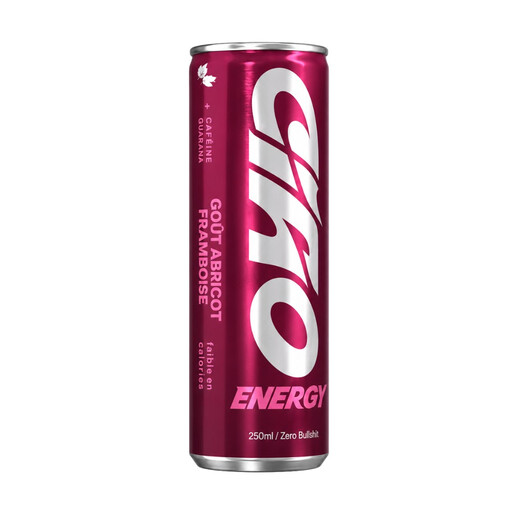
Why this choice suits this profile: At 250 ml, this size stops you drinking too much at once. Its pack of 24 cans makes it easy to build up a supply at home or the office, while its apricot-raspberry flavour offers a change from more standard recipes.
The listing states 43 kcal and 10 g of sugars per 250 ml can. That’s far more informative than a simple “fruity” claim.
Portable 250 ml size, pack of 24 cans, and caffeine from coffee and guarana according to the product listing.
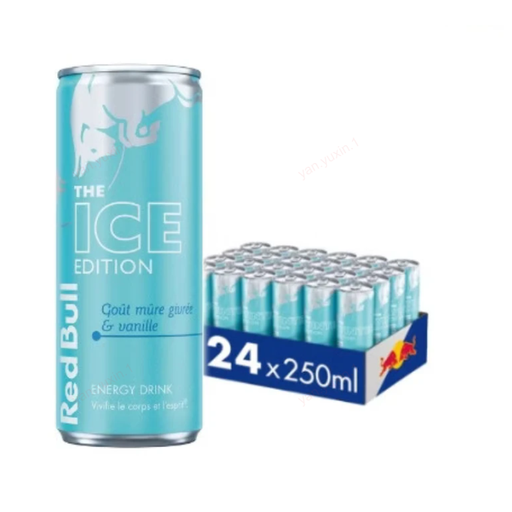
Why this choice suits this profile: This option focuses on a refined berry and vanilla flavour, in a consistent 250 ml size that’s practical for planned consumption or sharing.
The 250 ml size stops you choosing a large can just for its look. The listing states around 80 mg of caffeine per can.
A pack of 24 aluminium cans described as recyclable, with a flavour profile combining berries and vanilla.
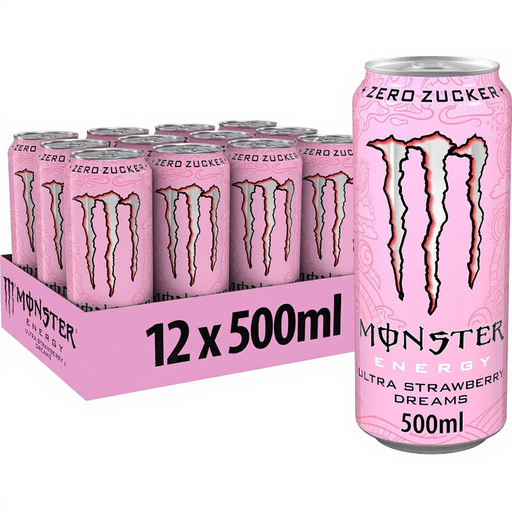
Why this choice suits this profile: Its 12 cans of 500 ml are aimed at those who prefer a large volume and are looking for a sugar-free energy drink with a strawberry taste.
The listing states 0 g of sugars and 30 mg of caffeine per 100 ml. A 500 ml can therefore provides 150 mg of caffeine: the volume is not a minor detail.
A recipe described as sugar-free, 500 ml per can and a strawberry flavour. Please observe the warnings on the packaging.
We’ve compiled a full selection, updated in real time, of products that meet these criteria and the requirements of European regulations.
It all depends on the brand and the size. A 250 ml can may contain around 80 mg of caffeine, while a 500 ml version can reach 150 to 160 mg depending on the recipe. Always check the “caffeine” line, both per 100 ml and for the full serving.
Not necessarily. Sugar and caffeine are two independent factors. The Monster Ultra Strawberry Dreams, for example, is described as sugar-free while still showing 30 mg of caffeine per 100 ml. The right choice therefore depends on the nutritional profile you’re after, but also on the amount of caffeine you want to consume.
Unopened cans keep until the best-before date shown on the packaging. Store them in a dry place at a moderate temperature, and do not freeze them. Once opened, the drink should be consumed quickly: avoid keeping it for several days. With a pack of 24 cans, check the date before buying and place the oldest ones at the front so you drink them first.