
Livraison le jour même ou le lendemain

Qualité garantie

Débloquez vos offres de bienvenue: Livraison GRATUITE | Jusqu'à -80 % | 30 jours d'essai gratuits à JoyPlus
Téléchargez l'application
An energy drink can come in handy in many situations: your morning commute, revision sessions, a long day at work or a workout. But with taurine, vitamins and fruity flavours highlighted on the packaging, comparing products is not always easy. The risk is ending up with a large multipack that suits neither your tastes, your caffeine intake nor your budget.
Here are the main criteria to consider before buying, along with a selection of drinks suited to different types of adults in France.
A sugar-free energy drink may still contain a significant amount of caffeine. Removing the sugar reduces carbohydrate intake, but does not necessarily lower the stimulant content. So take the time to check the sugars, caffeine and energy lines separately in the nutrition table.
As a guide, several products contain between 30 and 32 mg of caffeine per 100 ml. A 500 ml can may therefore contain 150 to 160 mg, depending on the recipe. The legally required statement ‘high caffeine content’ must appear on drinks exceeding the applicable threshold of 150 mg per litre.
‘Fruity’ primarily describes the taste and aromas. It does not mean that the drink is low in sugar. Some classic recipes contain around 10 to 11 g of sugars per 100 ml, which is more than 25 g in a 25 cl can.
By contrast, some fruit drinks use sweeteners and have a reduced sugar content. The best approach is to compare the values per 100 ml, then calculate them based on the can’s actual volume.
A multipack of energy drinks can reduce the price per can, but it also ties up more of your budget and storage space. A pack of 12 50 cl cans contains 6 litres; a pack of 24 25 cl cans also totals 6 litres. Choosing the right size therefore depends on more than just the number of cans: consider your expected consumption and the best-before date shown on the packaging.
Caffeine is generally listed in mg per 100 ml. To find out how much is in a can, multiply this figure by the number of hundreds of millilitres.
People who are sensitive to caffeine should adjust their consumption accordingly. Product recommendations generally advise against these drinks for children, pregnant or breastfeeding women, and people who are sensitive to caffeine. You should also avoid mixing them with alcohol: several product listings explicitly advise against this.
For regular consumption, compare the sugars per can, rather than relying solely on the claim displayed on the front of the packaging. A sugar-free formula may contain sucralose, acesulfame K or other sweeteners. This is a matter of taste and formulation, not a medical indication.
The classic recipes in this selection generally contain between 43 and 115 kcal per can, depending on the volume and sugar content. Sugar-free or reduced-sugar formulas, on the other hand, may contain just a few kilocalories per can.
Taurine, guarana, ginseng, L-carnitine and B vitamins are formulation ingredients. Their presence alone does not guarantee any particular effectiveness. Check the ingredients list and the quantities actually stated.
For an energy drink for sport, make sure you distinguish between your intended purpose: a drink containing caffeine is not automatically a hydration drink or a drink designed for exercise. For a workout, also consider the volume, sugar content, flavour and ease of carrying.
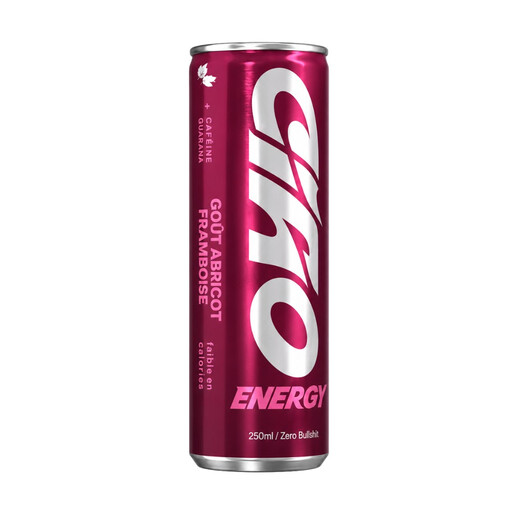
Why this choice suits this profile : The 25 cl size slips easily into a bag, while the multipack offers a better price per can than buying individually. Its fruity flavour will appeal to anyone looking for an alternative to classic recipes.
The product listing states 17 kcal and 4 g of sugars per 100 ml, as well as caffeine from coffee and guarana. It is therefore better to check the nutritional information before buying rather than focusing solely on the word ‘fruity’.
250 ml cans, 43 kcal per can according to the listing, vitamins B3 and B6, plus biotin, and a reduced-sugar formula.
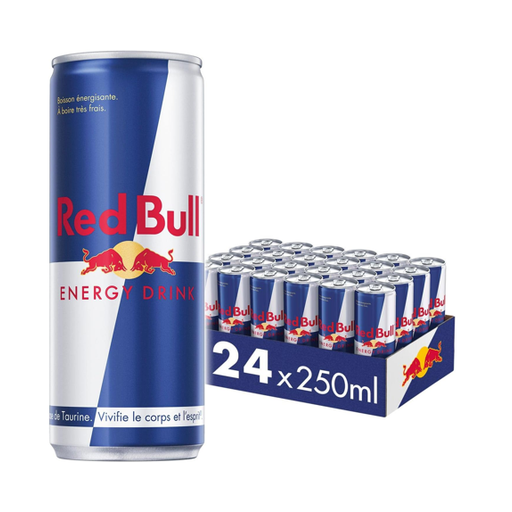
Why this choice suits this profile : This size is ideal for planned purchases, shared office supplies or taking small cans with you on the go. The classic recipe makes it easy to compare with other products of the same size.
The pack size and volume are clearly stated. The listing specifies 32 mg of caffeine and 11 g of sugars per 100 ml, so this is not a low-sugar option.
24 cans of 25 cl, approximately 80 mg of caffeine and 115 kcal per can according to the data provided.
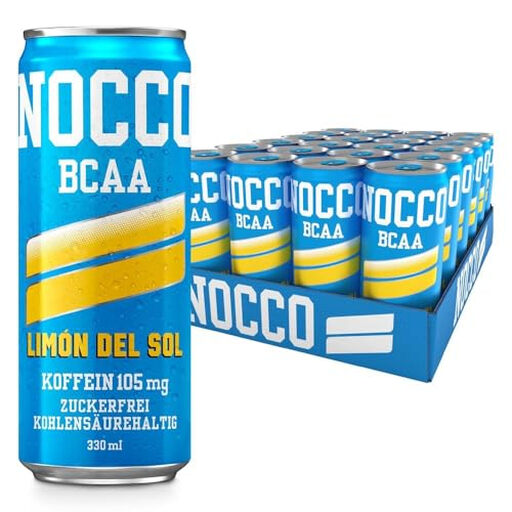
Why this choice suits this profile : This drink is aimed at adults looking for a sugar-free formula enriched with BCAAs and vitamins, particularly as part of a fitness routine. At 330 ml, it is more compact than a large 500 ml can.
The listing clearly distinguishes BCAAs from caffeine: 2 500 mg of BCAAs and 105 mg of caffeine per can. The ‘sugar-free’ claim is also accompanied by an energy content of 4 kcal per can.
0 g of sugars and fat, 24 cans of 330 ml, and six vitamins listed on the product page.
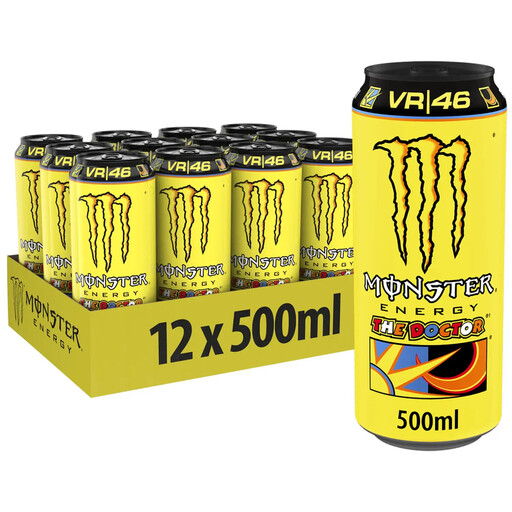
Why this choice suits this profile : At 500 ml, this large can is ideal for those who prefer a single drink to accompany a long period of activity and enjoy citrus-based recipes.
With such a large volume, you need to check the total caffeine content: the listing states 32 mg/100 ml and a high caffeine content. This product should therefore not be viewed as simply a fruity drink.
12 cans of 500 ml, 4 % fruit juice made from concentrates, plus taurine, caffeine and B vitamins listed among the ingredients.
We have put together a complete, real-time-updated selection of products that meet these demanding selection criteria and European safety rules.
Before confirming a multipack of energy drinks, calculate the price per litre and the price per can. A 50 cl size may seem better value, but it also contains more caffeine and a greater quantity of liquid to drink. For occasional consumption, 25 cl cans make it easier to limit the amount you consume.
Store cans in a cool, dry place away from sunlight and heat. Once opened, drink the beverage promptly and always check the date shown on the packaging. At the office, during revision sessions or while travelling, choose a size that is easy to store and genuinely suited to your consumption habits.
It depends entirely on the recipe. With 30 mg/100 ml, a 25 cl can contains approximately 75 mg of caffeine. With 32 mg/100 ml, it contains approximately 80 mg. Always check the label, as values may vary depending on the brand and flavour.
It may be suitable if you want to limit your sugar intake, but it does not automatically replace water or a drink specifically designed for hydration during exercise. Before including it in a workout, check its caffeine content, volume and your personal tolerance.
The shelf life depends on the best-before date shown on each pack and the storage conditions. Keep the multipack in a cool, dry place away from sunlight. Once a can has been opened, consume it promptly.